
Livraison le jour même ou le lendemain

Qualité garantie

Débloquez vos offres de bienvenue: Livraison GRATUITE | Jusqu'à -80 % | 30 jours d'essai gratuits à JoyPlus
Téléchargez l'application
Whether you're on a sunny country road, a shaded mountain bike trail, or climbing a steep mountain pass, your vision is the cornerstone of your performance and safety. Glare, wind, insects, or debris can quickly turn a great ride into an ordeal. Far from being a mere style accessory, the right pair of cycling glasses is a necessity.
This guide is here to demystify the technologies that matter and help you find the perfect pair for your riding style and needs, without drowning you in marketing jargon.
Before you settle on a model, let's review the technologies and materials that truly make a difference out on the road.
This is arguably the number one criterion: the choice of lenses. Two main technologies lead the pack:
A good pair of sports glasses must offer rock-solid protection.
To go unnoticed during hours in the saddle, your glasses must be a paragon of comfort. Lightweight sports glasses limit pressure points on the nose and behind the ears. Adjustable nose pads and non-slip rubber temple tips ensure a perfect fit, even when you're sweating or on rough terrain. Finally, a wraparound design is essential for a panoramic field of view with no blind spots.
We've selected a few gems that stand out for their technical specs and relevance to cyclists.
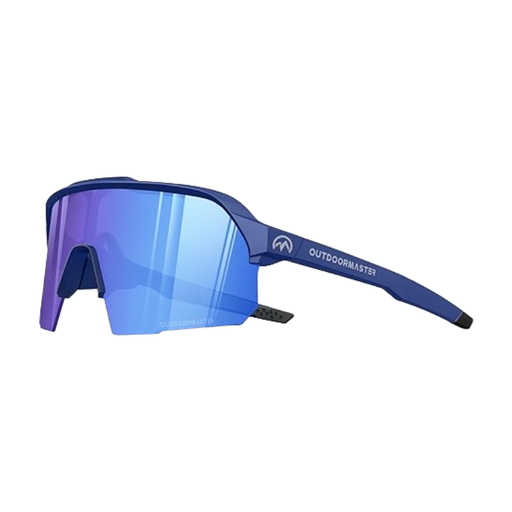
Key Features
This model is all about versatility. Its polarised lenses are already highly effective against glare, but the pair also comes with a clear lens. This is ideal for adapting your glasses to overcast conditions or late-day rides. A very clever 2-in-1 solution.
Pros
Who is it for?
For cyclists and all-round athletes (running, fishing, golf...) who want a high-performance, versatile pair that can adapt to the weather without needing to buy multiple pairs.
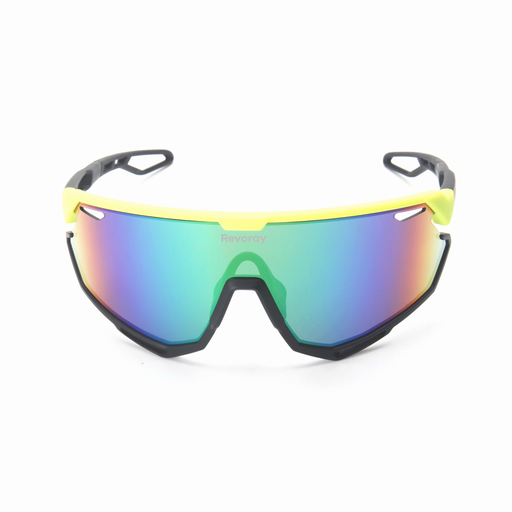
Key Features
The Revoray X3 is built for speed. With its aero design and a feather-light weight of just 30 grams, it's completely unnoticeable. Its single-piece lens offers an extra-large, completely unobstructed field of view—a decisive advantage for anticipating your line at full speed.
Pros
Who is it for?
The perfect choice for road cyclists and competitors for whom every gram and every aero detail counts. Ideal if you're looking to optimise your performance with a completely clear field of view.

Key Features
This model hits the grand slam: it's both photochromic and polarised. It doesn't just adapt to the light; it also eliminates glare. It is simply the ultimate technical solution for tackling all conditions with a single pair of glasses.
Pros
Who is it for?
For demanding athletes (MTB, triathlon, trail running...) who train on changing terrain where light and glare vary constantly (alternating between forest and open plains, lakeside paths...). In short, for those who want maximum adaptability without compromise.
Your gear isn't just for the tarmac. Whether for your e-cycling sessions on an indoor trainer or for relaxing in front of a screen, the right equipment makes all the difference. For flawless precision at your desk, check out our selection of gaming mice with no side buttons.
To put it simply: polarised lenses are anti-glare specialists (for wet roads, water), ensuring clearer vision in bright weather. Photochromic lenses, on the other hand, are like chameleons: they darken in the sun and lighten in the shade. Their key strength is versatility.
The UV400 standard guarantees that the lenses block 100% of ultraviolet rays (UVA and UVB), which are invisible but harmful to the eyes. Repeated exposure without protection can cause serious eye damage. For a sport like cycling where you spend hours outdoors, this is an absolutely non-negotiable safety feature.
Yes, but it's not always ideal. Road glasses are often streamlined for aerodynamics and wind protection. MTB glasses tend to focus more on maximum coverage to protect from debris (mud, branches) and often feature photochromic lenses, which are perfect for the changing light conditions in a forest. The best compromise? A versatile model with interchangeable lenses or photochromic technology.