
Livraison le jour même ou le lendemain

Qualité garantie

Débloquez vos offres de bienvenue: Livraison GRATUITE | Jusqu'à -80 % | 30 jours d'essai gratuits à JoyPlus
Téléchargez l'application
Whether you're a casual weekend rider or a seasoned competitor, choosing your cycling glasses is a crucial decision. It's a key piece of equipment for your comfort, and more importantly, for your safety. Yet, drowning in marketing jargon and a jungle of tech specs, it's easy to make the wrong choice. Our mission? To help you see things more clearly. Let's break down the pitfalls to avoid and the criteria that truly matter to find the perfect pair, whether you ride on asphalt or trails.
Before you even start comparing models, let's identify the most common mistakes. They often stem from slick marketing promises that are disconnected from the reality of riding.
1. Sacrificing Comfort at the Altar of Design A pair of glasses might seem perfect in the store. But after an hour in the saddle, the verdict is in: pressure points on your nose, arms that dig into your temples, a frame that slips with the slightest drop of sweat. The cause? Often a frame that's too rigid or poorly balanced. An attractive design will never replace impeccable comfort—a non-negotiable criterion for sports sunglasses.
2. The Confusion Around "Total Protection" The "UV protection" claim is brandished everywhere, but it often hides incomplete information. Protection worthy of the name must meet a specific standard. Focusing solely on UV rays while neglecting protection against impacts (gravel, branches) or glare is a mistake that can prove dangerous, both on the road and in MTB.
To avoid getting duped, focus on these few objective technical features. They are the true guarantors of the quality and performance of your future glasses.
The safety of your eyes is the absolute priority. Two points must be checked without fail:
The comfort of your sports glasses, for both men and women, largely depends on the frame. The star material of the moment is TR90. This thermoplastic ticks all the right boxes:
The type of lens determines your perception of the environment. Polarized cycling glasses are especially popular with road cyclists. Their special filter neutralises blinding glare from wet pavement or car bodies. The result: a sharper view, better-defined contrasts, and significantly reduced eye strain. Be aware, however, that for MTB in forests where reading the terrain is paramount, non-polarized, high-contrast lenses are often a wiser choice.
To move from theory to practice, here are three models that check all the boxes, each tailored to a specific type of cyclist.
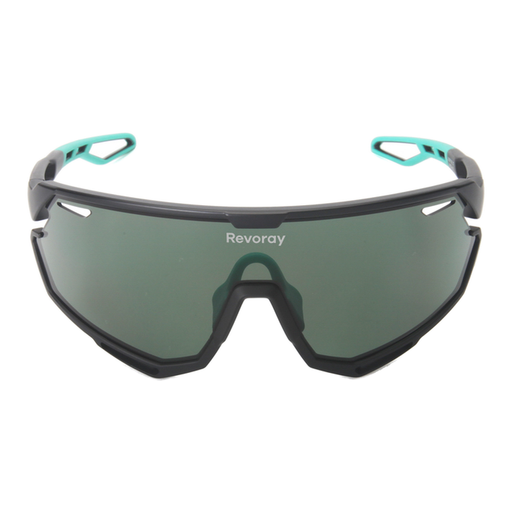
Why it's a great choice: Ideal for those who prioritise safety on the trails. The single-piece polycarbonate lens offers a panoramic field of view and superior protection against debris and branches—ever-present risks in MTB.
It doesn't just settle for a simple UV mention. It goes all-in on impact resistance with its PC lens and on comfort with an ultra-light TR90 frame (around 30g), which eliminates pressure points.
Full UV400 protection and an ultra-durable single-piece lens for maximum safety. Aerodynamic design that reduces wind resistance.
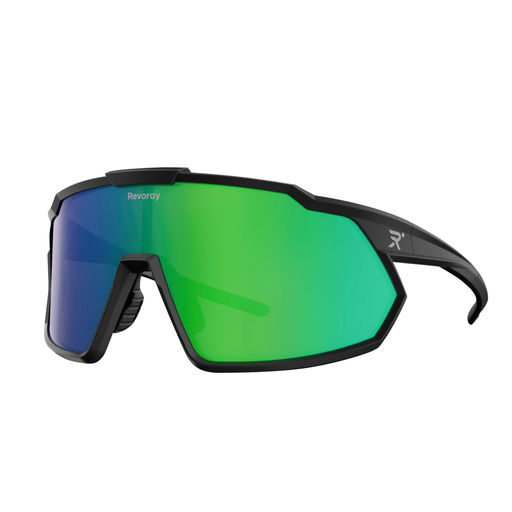
Why it's a great choice: Perfect for logging miles on the asphalt. The TAC polarized lenses drastically reduce road glare, improving visibility and visual comfort. The lightweight frame and adjustable nose pads ensure a flawless fit.
It tackles the comfort trap head-on. Its TR90 frame weighs only 33g and its silicone nose pads are adjustable, ensuring a custom fit that stays put, even after several hours in the saddle.
Exceptional visual clarity thanks to HD polarized lenses. ANSI Z87.1 certification for impact resistance, a true mark of reliability.
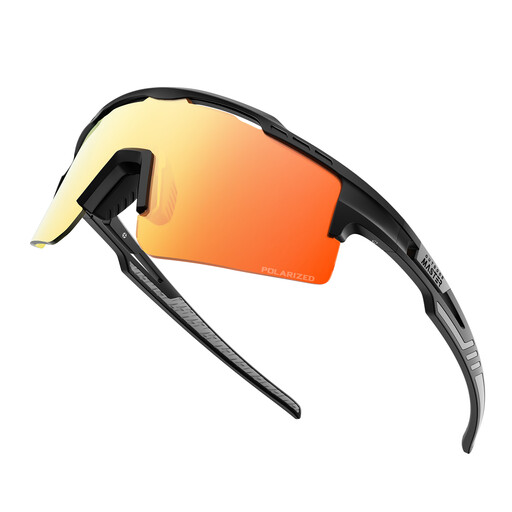
Why it's a great choice: For those who want gear that has as much style as it does technical prowess. The Revo Orange lens offers a bold look while providing HD visual clarity and effective polarized protection.
Proof that style doesn't have to come at the expense of performance. It combines a sleek design with a feather-light TR90 frame and impact-resistant TAC polarized lenses, avoiding the false compromise between looks and function.
Distortion-free HD visual experience. Comes with a complete kit: hard case, microfibre pouch, and retention cord.
We've put together a complete selection of models that meet our strict selection criteria for performance and safety.
The best practice is simple: first, rinse them under clean water to remove dust and larger debris. Then, use a clean, dry microfibre cloth to gently wipe the lenses. Above all, never use your jersey, a paper towel, or alcohol-based cleaners, as they can permanently damage the lens coatings.
Absolutely. TR90 is renowned for its exceptional longevity. Its flexibility allows it to absorb impacts and bend without breaking, where a rigid plastic would snap. It's a material designed to handle the stresses of intensive sports use.
Polarized lenses are incredibly effective against glare on the road or near water. Their main drawback? In low-light conditions (dense forest, dusk), they can darken your vision. They can also make it difficult to read some LCD screens (GPS computer, smartphone). The choice really depends on your primary riding environment.