Cyclists planning a group stop
After your ride, easy-to-share bite-sized treats can be a great way to enjoy a moment together. Choose a bag size to suit your group and check the allergens before serving.


For a bike ride followed by a get-together, choose a large bag of bite-sized chocolates based mainly on the number of people, portion sizes and allergens. If you plan to eat them while riding, compare the carbohydrates in your planned portion with your fuelling plan: the weight of the bag alone won’t tell you how much you’ll be getting.
After your ride, easy-to-share bite-sized treats can be a great way to enjoy a moment together. Choose a bag size to suit your group and check the allergens before serving.
If you plan to eat while riding, focus on the carbohydrates in the portion you’ll take with you, rather than the total weight of the bag.
For an occasional treat or something to share, compare the sugars and fat per 100 g, then read the ingredients list and allergen information for the product you choose.
First decide whether the bag is for eating during your ride or sharing afterwards: the two uses call for different checks.
| What to consider | What to check | Who is it for? |
|---|---|---|
| Fuelling during exercise | Carbohydrates per 100 g and the amount in your planned portion. | If I plan to eat while cycling, I need to know how many carbohydrates I’m actually taking with me. Around 29% of consumers make this their priority. |
| Sharing after your ride | The net weight and, if stated, the number of pieces. | If I’m welcoming a group at the finish, I want an amount that’s easy to share without having to plan the same number of pieces for everyone. Sharing is the priority for around 36% of consumers. |
| Ingredients and portions | Sugars and fat per 100 g, then the amount you plan to serve. | If the bag is going to stay open for several stops, I want to know what each portion contains. Around 21% of consumers prioritise this comparison. |
| Allergens and storage | Any listed allergens and traces, along with the storage instructions on the pack. | When several people are helping themselves, I need to identify any recipes that aren’t suitable for some members of the group and store the rest as instructed on the pack. This is the top priority for around 14% of consumers. |
The total weight won’t tell you how many carbohydrates you’ll consume during your ride. Chocolate bites also contain fat.
Decide how much you’ll take with you, then compare its carbohydrate content with your plan. World Athletics sets its endurance guidelines in grams of carbohydrates per hour, not in the weight of confectionery.
In France, Santé publique France describes Nutri-Score as a voluntary label. Its absence alone doesn’t tell you anything about the chocolate’s composition.
Read the nutrition declaration, ingredients and allergen information. If Nutri-Score appears on the pack, use it as additional information.
A selection of bite-sized treats may contain several ingredients and allergens. The name of the selection doesn’t tell you whether every piece is suitable for everyone.
Check the information on the pack you’ve bought before sharing, and provide a separate option if needed.
The DGCCRF guidance cited in relation to the “soda tax” concerns non-alcoholic soft drinks in the DROM, not the labelling of a bag of chocolates.
When comparing these bags, look at their ingredients, nutrition information and format rather than relying on this rule about drinks.
For a selection of ready-to-serve bites, Lindt France offers a 500 g bag of LINDOR Assorti containing 38 pieces.
Kinder Schoko-Bons are individually wrapped bites available in several sizes, including bags from 125 g to 500 g, according to Kinder France.
Carrefour offers a 200 g bag of milk chocolate and hazelnut balls. Compare this with the sizes you need for your group.
E.Leclerc’s Marque Repère range includes a variety of recipes and pack sizes, including a 500 g selection.
If you want to portion out chocolate to add to a snack for sharing, Auchan offers organic dark chocolate chips in a resealable 100 g bag, with at least 50% cocoa.
These two bags of chocolate confectionery are suited to sharing after a bike ride. If you plan to eat them while riding, check the carbohydrates in the portion you intend to take with you separately.
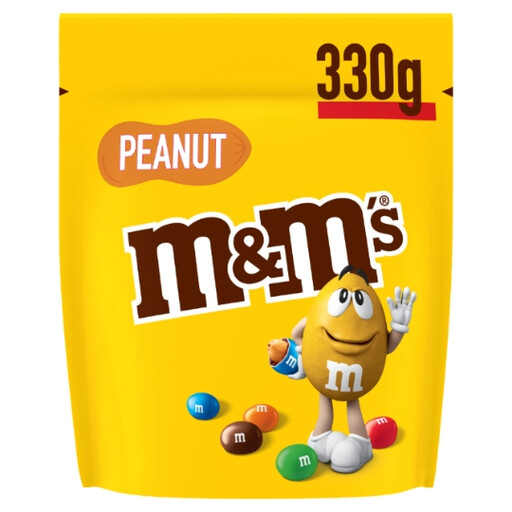 Image unavailable
This bag of peanut chocolates is intended for sharing after your ride.
If you want to calculate the carbohydrates in a portion, check the values on the packaging: the portion information for this product doesn’t match the figures per 100 g. Also check the allergens for everyone who’ll be helping themselves.
 Image unavailable
These milk chocolate-coated balls can be served at a group stop after your ride.
The title states 192.5 g, while the description says 192 g: check the net weight on the pack. When estimating a portion, don’t infer the number of pieces or their carbohydrate content from the bag’s weight alone; check the allergens too.
No. Santé publique France says that displaying Nutri-Score is voluntary. To compare pre-packed chocolates, check the nutrition declaration and ingredients list; if the logo is present, it provides additional information.
Not for the comparison here: the DGCCRF guidance cited on this subject relates to non-alcoholic soft drinks in the DROM. It doesn’t mean the same rule applies to a bag of chocolates.
Chocolate provides carbohydrates, but choose how much to take based on your plan, not the size of the bag. For endurance exercise lasting 1 to 2.5 hours, World Athletics recommends 30 to 60 g of carbohydrates per hour; for exercise lasting over 2.5 hours, intake can be up to 90 g per hour using multiple sources of carbohydrates. Compare these guidelines with your planned portion and try your choice during training.
Read the allergens highlighted in the ingredients list and any trace warnings on the pack you’ve chosen. Depending on the recipe, products from Kinder, Carrefour and Auchan may list milk, soya and hazelnuts, or possible traces of other allergens. Don’t assume that one product’s ingredients apply to a whole selection.
Follow the instructions on the packaging. Reseal it if it’s designed to be resealed, and follow any guidance about heat or moisture.