
Livraison le jour même ou le lendemain

Qualité garantie

Débloquez vos offres de bienvenue: Livraison GRATUITE | Jusqu'à -80 % | 30 jours d'essai gratuits à JoyPlus
Téléchargez l'application
Cutting dies have revolutionised the world of crafting. They bring unparalleled precision and finesse to personalising cards, scrapbook pages, and other decorations. But with an overwhelming number of options available, it's easy to make a mistake, and a promising purchase can quickly lead to disappointment. To ensure your tools live up to your creativity, let's review the most common pitfalls to avoid.
Two classic mistakes often ruin the experience: buying dies that are incompatible with your machine, or choosing low-quality metal dies. In the first case, the tool is simply unusable. In the second, the overly soft metal bends quickly, producing imprecise cuts with frayed edges that will spoil your creations. Also, be wary of highly intricate designs: while they may look beautiful in photos, they can sometimes be impossible to cut cleanly without the right paper and equipment.
To avoid these setbacks, you just need to check a few key points. By focusing on the right criteria, you'll make smarter, more durable purchases.
This is the essential starting point. Not all scrapbooking cutting dies are universal. Machine manufacturers (like Sizzix, Cricut, or others) have their own specific opening widths and "sandwich" heights (the stack of cutting plates).
Before any purchase, check two things:
The durability and precision of a cutting die depend directly on the quality of its metal. Budget models are sometimes made of soft alloys that dull or bend after just a few uses.
For a clean cut and a long lifespan, opt for dies made of carbon steel. This material provides the necessary rigidity to cut paper without crushing it and holds its edge for much longer. It's a mark of quality for all your DIY metal cutting projects.
Dies aren't just for cutting. Some are designed to create raised patterns in paper, a technique called embossing.
To help you make an informed choice, we've selected a few options that meet these criteria for quality and versatility, suitable for different types of crafters.
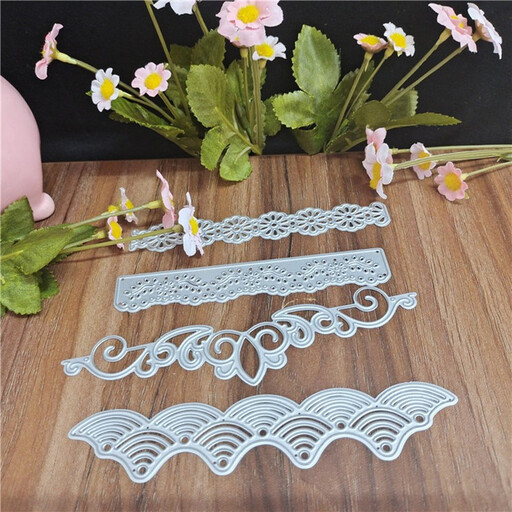
Why it's a great choice: Ideal for getting started without breaking the bank. This set of basic geometric shapes (frames, tags) is highly versatile and perfect for making your first cards, gift tags, or album decorations.
Its carbon steel construction ensures a clean cut and prevents any risk of bending. The simple shapes are easy to work with and compatible with most machines, eliminating concerns about compatibility or complexity.
A versatile starter kit for a multitude of creative projects at a great price.
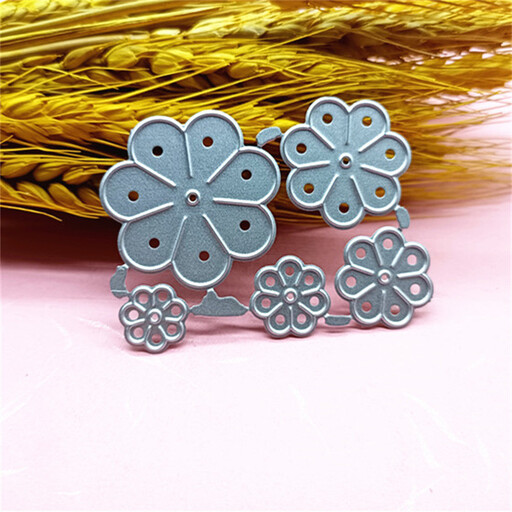
Why it's a great choice: Perfect for fans of nature and floral designs. This set allows you to cut multiple elements (petals, leaves) to assemble for embellishments with a stunning effect of volume and depth.
Here, layering isn't a hidden complexity; it's the product's main feature. You know you're buying a tool for detailed work, which encourages you to prepare the right paper and technique.
Ideal for creating unique 3D embellishments that will give a highly professional finish to your cards or scrapbook pages.
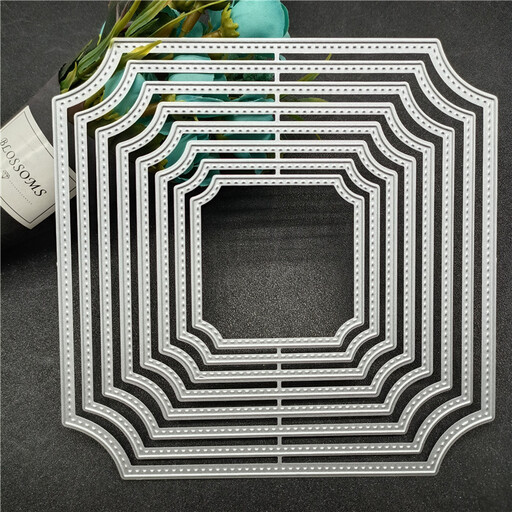
Why it's a great choice: This set is for crafters who love to structure their cards with frames and windows. It's perfect for invitations and event cards (weddings, birthdays) that require a polished presentation.
The function of these dies is clear: to create frames and backgrounds. Their utility is primarily practical and structural, which avoids the trap of a purely decorative die that's often difficult to integrate into a balanced composition.
A set of 8 frames in various sizes and styles offers immense freedom for creating layering effects and rich compositions.
Explore our complete and up-to-date selection of products that meet our quality criteria and current standards.
After each use, remove any small, stuck pieces of paper with a fine brush or a pointed tool. For storage, it's best to keep them flat on magnetic sheets: this prevents them from bending and allows you to find them at a glance.
It all depends on the complexity of the die. For most shapes, standard cardstock (between 160 and 220?g/m?) is perfect. For highly detailed dies, a slightly thinner paper will often yield better results. The best approach is to do a few test cuts!
The problem is often a lack of pressure. Check the configuration of your plate "sandwich." Sometimes, simply adding a shim (a plain sheet of cardstock) above or below your die is enough to increase the pressure and achieve a perfect cut. Also, make sure the cutting edge of the die is facing the paper.