
Livraison le jour même ou le lendemain

Qualité garantie

Débloquez vos offres de bienvenue: Livraison GRATUITE | Jusqu'à -80 % | 30 jours d'essai gratuits à JoyPlus
Téléchargez l'application
Cutting dies are little treasures for anyone who loves personalising cards, scrapbook albums, and other creative projects. But let's be honest: the market is a jungle where the best and the worst products sit side-by-side. Make one wrong choice, and your creative hobby can turn into a nightmare: torn paper, imprecise cuts, or that brand-new cutting die that gives up the ghost after just three passes through your machine.
As expert editors, our mission is to guide you through this jungle. Let's cut through the marketing jargon and get real. Here are the classic pitfalls to avoid and the essential criteria for investing in scrapbooking dies that won't let you down.
To avoid these pitfalls, here is the checklist to keep in mind before every purchase. A few seconds of verification can save you hours of creative frustration.
This is the number one, non-negotiable criterion. Most cutting dies are designed for the market's leading machines (Sizzix Big Shot, Cricut Cuttlebug, etc.), but thickness and size can still hold some surprises.
Pro tip: When in doubt, only choose dies whose product page explicitly lists your machine as compatible.
The performance of a metal cutting die comes down to its composition. Carbon steel is the gold standard here. It combines the hardness needed for a lasting sharp edge with just enough flexibility to withstand pressure without warping. A quality die should guarantee hundreds of flawless cuts without losing its edge.
Not all dies are suitable for all projects. In both card making and scrapbooking, the choice of design is strategic.
To help you visualise these criteria, here are a few options from our catalogue, tailored to specific needs.
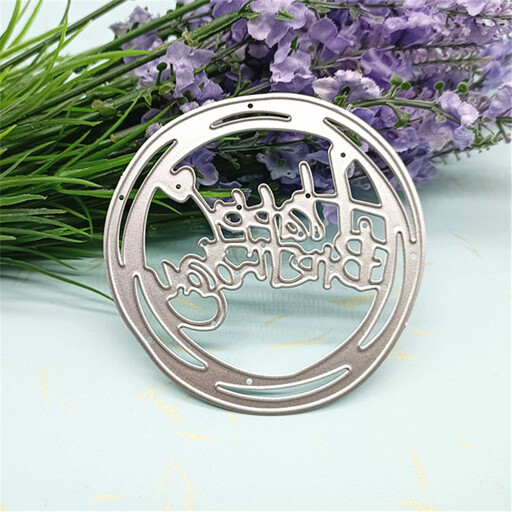
Why we recommend it: It's the ideal starting point. The "Happy Birthday" design is a card-making staple, perfect for creating personalised cards in minutes. Its compact size makes it compatible with most machines, including smaller models.
With its simple design and solid letters, the cut is clean and effortless, even for a beginner. Say goodbye to the risk of tearing that's common with overly thin fonts!
An ultra-versatile and timeless design, the perfect centrepiece to start your collection of birthday dies.
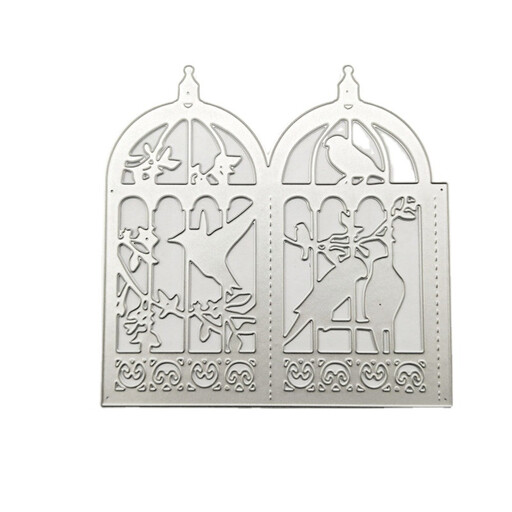
Why we recommend it: Ideal for preparing for a special event like a wedding. This die allows you to create invitations, menus, or table decorations with a unique touch of elegance. Its design is distinctive enough to define the visual identity of your big day.
Despite its romantic style, the design is built on clean lines and robust connection points. The result: a flawless cut, even on thick cardstock.
A targeted theme (wedding dies) for creating perfectly coordinated and unforgettable stationery.
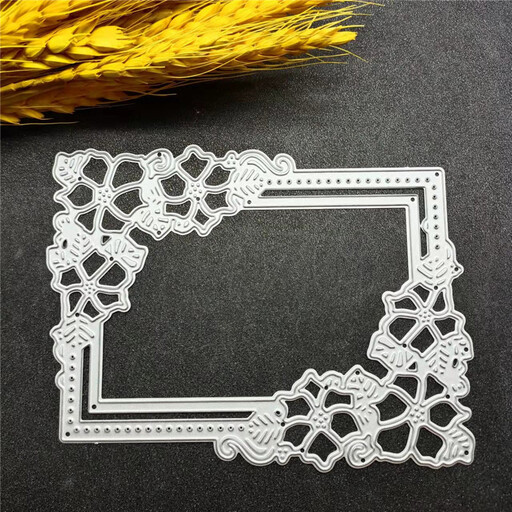
Why we recommend it: Scrapbooking fans love to compose rich, textured pages. This die is the dream tool for cutting a decorative frame to highlight a photo or message. It's the perfect asset for adding depth to an album page.
The frame's structure provides rigidity to the whole piece and ensures a clean cut, even on the fine floral details. The lines are thick enough to prevent any risk of tearing.
The ability to create frames and windows, an essential element for truly successful scrapbooking layouts.
Now that you have all the information you need, explore our complete selection of dies and creative tools.
Don't get them confused! Their functions are completely different. A cutting die (or die plate) is a metal tool that cuts a precise shape from paper using a machine. A scrapbooking stencil, on the other hand, is a template (often plastic) used as a guide for applying ink, paint, or tracing a design.
After each session, clean out any small paper scraps stuck in the die with a fine brush or a pointed tool. For complex designs, here's a tip: running the die through with a sheet of wax paper from time to time helps lubricate the metal and makes it easier to eject the cut-out. For storage, it's best to keep them flat on magnetic sheets so they don't warp.
Absolutely! Most thin dies are perfect for paper embossing. The secret is to replace your usual cutting plate with a silicone embossing mat. This soft mat allows the die to impress a raised pattern onto the paper without cutting through it. It's a fantastic technique for adding texture and dimension to your creations.