
Same-day & Next-day Delivery

Quality Guaranteed

Unlock Your Welcome Offers: FREE Delivery | Up to 80% OFF | Free 30-day JoyPlus trial
Download the APP
Cutting dies have revolutionised the world of crafting, bringing a level of precision and detail to our scrapbooking and card making projects that was previously impossible. But with a plethora of options available, how do you find your way? It's easy to fall into the usual traps: a design that looks stunning in a photo but proves unusable, or a die that damages your paper instead of enhancing it... disappointment is never far behind.
Backed by our product selection expertise at Joybuy, our mission is to help you navigate this jungle. This guide breaks down the mistakes to avoid and the essential criteria to check, ensuring your next cutting dies are a source of creativity, not frustration.
Before you fall for a design, watch out for hidden flaws that can turn your creative session into a nightmare.
The myth of universal compatibility: Be wary of sellers who promise universal compatibility. In practice, the thickness of a metal cutting die varies. A die that's too thick can strain and damage your machine, while one that's too thin won't cut properly, even after several passes. The result: wasted time and paper.
The fragility of ultra-detailed designs: Complex and filigree designs are gorgeous, but their intricacy often means they're fragile. The cutting points can be so fine that they bend after just a few uses. Worse, the cut paper gets stuck in the die and systematically tears when you try to remove it, making the die almost useless for clean work.
The quality of the steel and cut: A clean, crisp cut depends entirely on the quality of the steel and the sharpness of the cutting edges. Low-end dies, made from poor-quality steel, dull very quickly. Instead of slicing through the paper, they crush it, leaving frayed edges and a disappointing result that cheapens your creations.
To avoid making the wrong choice again, focus on these three technical points. They are your guarantee of a smooth experience and results that live up to your ambitions.
In crafting jargon, the "sandwich" refers to the stack of plates, paper, and the die that you run through your machine (like a Sizzix Big Shot, Cuttlebug, etc.). Most dies are designed for a standard thickness, but caution is advised.
The choice of design should be suited to your project and the paper you're using.
Some dies are more versatile than they appear. With the right silicone mat for your machine, a metal cutting die can also be used for paper embossing. It won't cut, but will leave a raised impression on your sheet. This dual function is a real asset, allowing you to create subtle textures with the same tools. Check if the die's design is suitable for this (designs with solid areas are often very effective).
To help you visualize these criteria, here are a few tried-and-true options suited for different profiles.
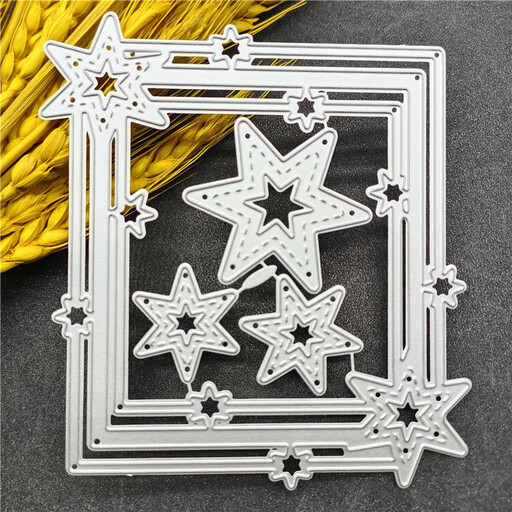
Why we chose it: Perfect for beginners, this die features a simple and ultra-versatile frame shape. It allows you to quickly create a focal point on a greeting card or scrapbook page without fussing over complex details.
Its sturdy design with clean cutting lines avoids the trap of overly fragile patterns. The cut is crisp, and the paper releases effortlessly.
Its simple geometric shape ensures a flawless cut with most machines and papers, even light cardstock.
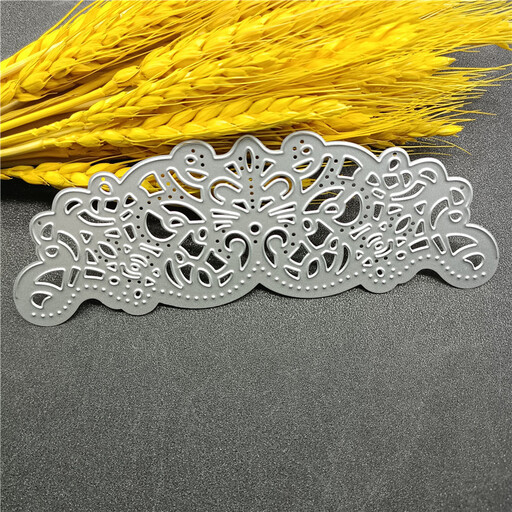
Why we chose it: Perfect for wedding invitations, refined greeting cards, or photo album pages. This die creates a delicate border that adds an instant touch of elegance to any project.
Although detailed, the pattern is designed for durability. The connection points are strong enough to prevent the die from bending, while still ensuring a precise cut.
The design is optimized for easy release, especially with the wax paper technique, which preserves the integrity of the delicate lace cut-out.
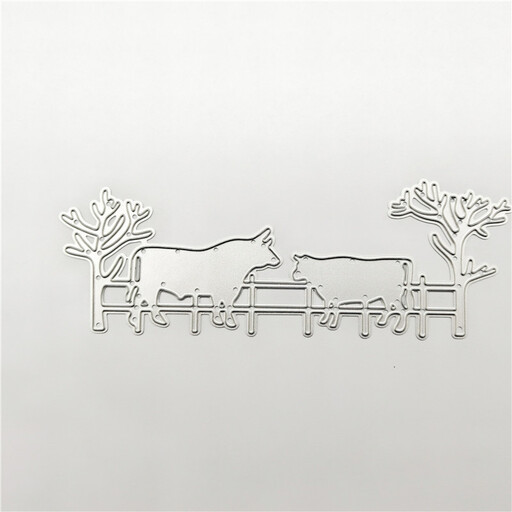
Why we chose it: For those who love to customize their creations with specific themes. This set is perfect for kids' birthday cards, country holiday albums, or school projects.
The solid shape of the animals ensures a clean and easy cut, even on cardstock. No fragile little pieces that risk breaking or cutting poorly.
This die can also be used as a stencil to color the shape onto a background, offering dual creative use.
Explore our complete selection of products that meet our quality criteria and standards.
1. Which die-cutting machine is compatible with these dies? Most carbon steel dies, like the ones we feature, are compatible with the most popular manual die-cutting machines (Sizzix Big Shot, Spellbinders Platinum, etc.). The secret is to correctly adjust your "sandwich" of plates according to your machine manufacturer's recommendations.
2. How do I maintain my cutting dies to extend their lifespan? After each session, use a small brush or a fine pick to gently remove any paper residue. Store your dies flat, preferably on magnetic sheets, to prevent them from bending or bumping into each other. This will preserve the sharpness of the cutting edges.
3. Can cutting dies be used for paper embossing? Yes, absolutely. To emboss instead of cut, simply replace one of your cutting plates with a silicone embossing mat (usually sold separately by machine manufacturers). The die will then press the paper into the soft silicone, creating a raised pattern without cutting it. It's an excellent technique for adding texture.