
Livraison le jour même ou le lendemain

Qualité garantie

Débloquez vos offres de bienvenue: Livraison GRATUITE | Jusqu'à -80 % | 30 jours d'essai gratuits à JoyPlus
Téléchargez l'application
The star accessories of creative card making and scrapbooking, cutting dies are invaluable tools. They allow you to cut perfect shapes endlessly, bringing a professional finish to all your creations. However, the market is flooded with options, and it's easy to end up with a disappointing die: one that warps, cuts poorly, or worse, tears your paper. To help you invest in tools that last, we've broken down the common pitfalls to avoid and the essential criteria for making the right choice.
Nothing is more frustrating than starting a crafting project with unsuitable materials. Here are the classic mistakes that turn a great idea into a real headache.
To ensure you get flawless cuts and keep your dies for years, a few technical points need close inspection.
The robustness of a die primarily depends on its material. Opt for models made of carbon steel. This alloy offers the best compromise between hardness, which ensures a durable cutting edge, and a certain flexibility to withstand the machine's pressure without breaking. Sufficient thickness is also a guarantee of sturdiness, ensuring even cutting pressure across the entire design surface.
Before checking out, always verify compatibility with your machine (Sizzix Big Shot, Cricut Cuttlebug, and other popular brands). Product descriptions normally provide this information. When in doubt, a quick measurement will do: measure the width of your machine's opening and compare it to the die's dimensions.
An intricate design isn't a deal-breaker if it's cleverly engineered. For delicate cuts like flower dies or lace-like patterns, check for small holes on the non-cutting side of the die. These essential ejection points are indispensable for dislodging the paper with a pointed tool without risking tearing everything. Some dies go even further, combining cutting and embossing for a 2-in-1 effect in a single pass.
To illustrate these tips, here are a few models that meet specific needs while adhering to our standards for quality and practicality.
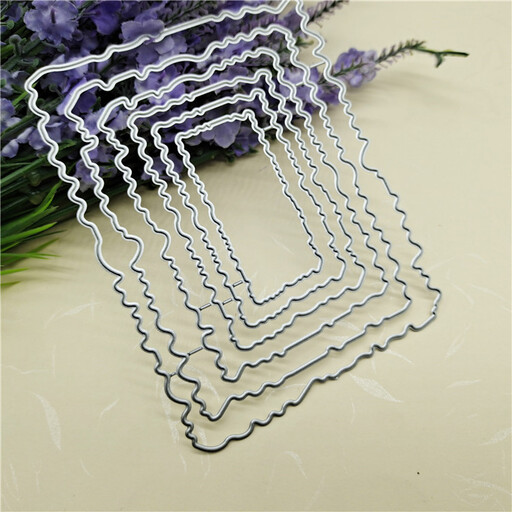
Why it's a great choice: Perfect for getting started, this set of rectangular frames is an ultra-versatile staple. It allows you to create card backgrounds, tags, or frame photos in a scrapbook album. Its simplicity is its greatest strength.
With its simple, clean shape, there's no risk of the paper tearing upon removal. The cut-out releases effortlessly, which is ideal for building confidence.
The set includes several nesting sizes, perfect for playing with layers (the famous *matting & layering*) and adding dimension to your creations.
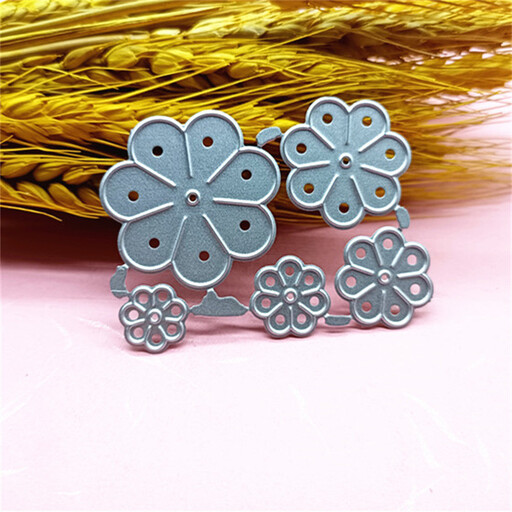
Why it's a great choice: For fans of detailed floral arrangements, this type of set is a must-have. It brings together several petal and leaf dies, designed to be assembled in layers to form stunning 3D flowers.
Instead of a single, overly complex floral die, this set breaks the flower down into simple elements. Each petal cuts and releases easily, without the risk of tearing.
Its modularity unleashes creativity. You can vary the paper colours for each layer and assemble the flowers in countless ways.
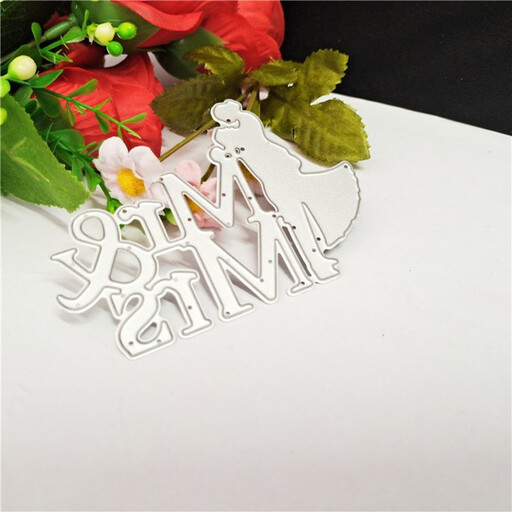
Why it's a great choice: Essential for personalising wedding invitations, menus, or table decorations. This "Mr & Mrs" design adds an immediate touch of elegance and ensures flawless typography every time.
The typography is well-designed: the letters are connected by sturdy points to prevent the word from warping. Their thickness ensures a clean, robust cut.
A themed die like this one (or a Christmas die for the holidays) is perfect for mass-producing uniform, professional decorations. A precious time-saver when organising a large event.
Discover our complete and up-to-date selection of products that meet our strictest quality criteria.
After each session, remove any remaining paper bits with a small brush or a piercing tool. For stubborn residue, run a sheet of wax paper with the die through your machine; this cleans and lightly lubricates the cutting edge. Always store them flat, ideally on magnetic storage sheets, to prevent them from warping.
There are several possibilities to explore. First, the wear on your cutting plates: if they are too deeply grooved, the pressure is no longer even. Consider flipping them over or replacing them. You can also add a piece of cardstock (a shim) to your "sandwich" to increase the pressure. Finally, if the die is old or of poor quality, its blade may simply be dull.
They are not the same, even though they both go through the same machine. A cutting die is a metal shape with a sharp edge for cutting paper. An embossing folder is a plastic folder with a raised pattern. It doesn't cut the paper but presses it to impress a texture. It's worth noting that some thin dies combine both functions, cutting the outline while embossing details in the centre.