
Livraison le jour même ou le lendemain

Qualité garantie

Débloquez vos offres de bienvenue: Livraison GRATUITE | Jusqu'à -80 % | 30 jours d'essai gratuits à JoyPlus
Téléchargez l'application
Who hasn't felt that thrill of unboxing new cutting dies, only to be disappointed when a cut tears through your precious paper? Or when a design, once applied, fails to do justice to your original vision? The market is flooded with options, but let's be clear: not all dies are created equal. The pitfalls are numerous and can quickly turn a promising creative card making project into a real headache.
To avoid unpleasant surprises, let's review the most common pitfalls. These include low-quality metal dies that dull in record time, designs so intricate they only work with a specific type of paper, and the classic size incompatibility with your die-cutting machine. This guide is here to arm you against these setbacks and help you invest in tools that won't let you down.
For flawless cuts every time, a few technical details deserve your attention. This is the secret to building a reliable and durable tool collection, ready to take on any of your DIY crafting projects.
A cutting die's performance primarily depends on its material. Most high-quality models are made from carbon steel. This material offers the perfect balance of thinness and strength, ensuring cutting edges that are both sharp and long-lasting. A well-made carbon steel die will give you clean cuts, even on thick or textured paper. Conversely, a low-quality metal will dull quickly, leaving behind imprecise cuts and frayed edges.
While most scrapbooking dies are universal and compatible with the leading machines on the market (Sizzix, Cricut, etc.), checking the dimensions is still essential. This is especially true for large-format dies, such as borders or page backgrounds. Simply make sure the die's width does not exceed that of your machine's platform. A quick check on the product page will save you the disappointment of receiving an unusable tool.
Highly detailed designs—a flower cutting die with delicate pistils, a lace-style cutting stencil—are stunning, but they require high-precision manufacturing. If the die isn't perfectly machined, the smallest elements may get stuck in the paper or tear upon removal. For these complex designs, opt for reputable brands or dies where the manufacturing quality is evident, even in photos. This is a crucial point for succeeding in your paper embossing and precision card making projects.
To illustrate these criteria in practice, here is our selection of top picks, suited for different types of creators.
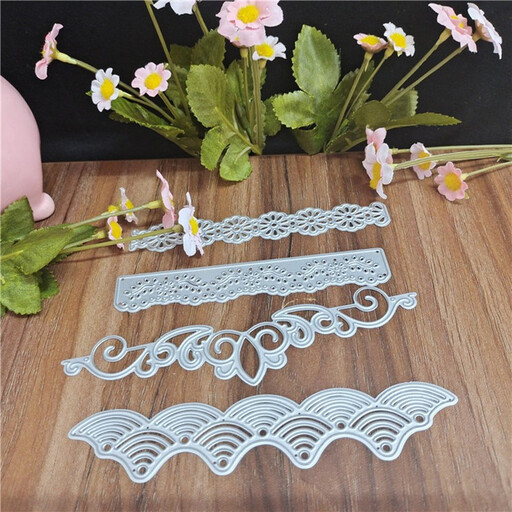
Why this pick? Perfect for getting started without breaking the bank, this set offers ultra-versatile basic shapes (tags, frames) that will fit into a multitude of projects. It's the ideal starter kit for building your first collection of affordable dies and getting some practice.
Its simple, clean designs minimise the risk of tearing paper, a common issue with overly intricate, low-quality dies. The "carbon steel" mention is a good indicator of durability and cutting precision.
Unbeatable value for money to acquire several essential shapes in a single purchase.
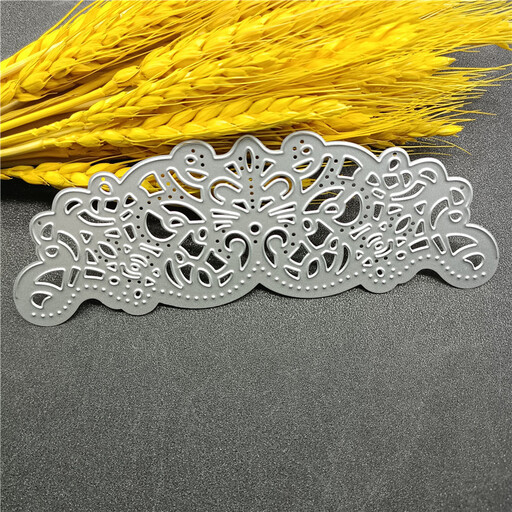
Why this pick? For lovers of refined finishes, this die creates delicate borders that add an instant touch of elegance to a greeting card or invitation. It's the perfect tool for levelling up to high-end creative card making.
Its design is specifically engineered to create a flawless border. The structure evenly distributes the machine's pressure, ensuring a clean cut along the entire length, even with such a fine pattern.
Allows you to create sophisticated finishes and gives a near-professional dimension to your paper creations.
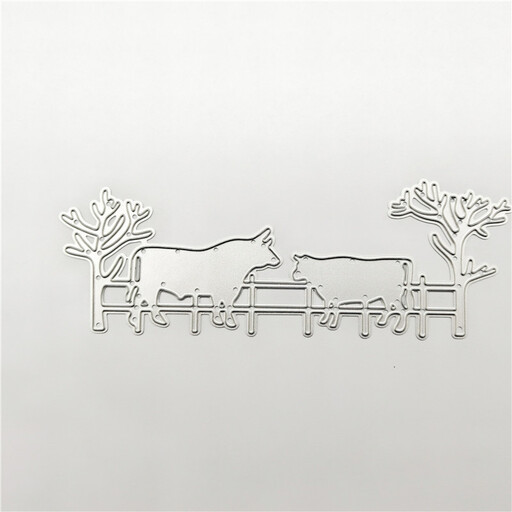
Why this pick? Essential for scrapbookers creating themed albums (farm holidays, new baby, etc.). A figurative die like this one instantly becomes the centrepiece of a scrapbook page or a child's birthday card.
The design, while detailed, is based on solid and sturdy shapes. This ensures a clean cut and easy removal, without the risk of tearing finer parts like the legs or tail.
Adds a strong, immediate touch of personalisation to illustrate a specific memory or theme.
Discover our full selection of products that meet our quality criteria and safety standards.
Most dies are universal, but the crucial point to check is the width. Simply measure your machine's opening (where you insert the cutting plates), then compare this measurement to the die's dimensions listed on the product page. As long as the die's width is less than your machine's, you're good to go!
After each use, remove small paper scraps with a stiff-bristled brush or a fine-tipped tool (a simple pick will do). Pro tip: for very delicate designs, place a sheet of wax paper between the die and your cardstock to make removal easier. Finally, store your dies flat, ideally on magnetic sheets, to prevent them from bending or getting damaged.
A cutting die (or die) is a metal tool with a sharp edge that, as its name suggests, cuts shapes out of paper. An embossing folder is different: it's most often a two-part plastic folder. It doesn't cut the paper, but instead impresses a raised pattern onto it through pressure. The two techniques are also very complementary in creative card making.