
Livraison le jour même ou le lendemain

Qualité garantie

Débloquez vos offres de bienvenue: Livraison GRATUITE | Jusqu'à -80 % | 30 jours d'essai gratuits à JoyPlus
Téléchargez l'application
The cutting die, or simply die to insiders, is the magic tool that transforms a simple sheet of paper into a small work of art. But in the vast world of crafting, the selection is so overwhelming that it's easy to get lost and end up with a drawer full of disappointing purchases. As a product expert at Joybuy and a passionate DIY enthusiast, I'm here to guide you and help you avoid unnecessary spending.
To start, here are the 3 pitfalls to absolutely avoid:
Fortunately, a successful purchase comes down to a few simple, yet essential, criteria.
To be confident in your investment, don't rely solely on the design. Here are the technical points to inspect closely.
This is the heart of the matter. A good die must be durable and cut well. Most quality cutting dies are made of carbon steel. This material offers the best balance between hardness (for a long-lasting sharp edge) and a certain flexibility to withstand the machine's pressure. As a general rule, a thicker die is more robust and distributes pressure more evenly, ensuring a clean cut across the entire design.
A highly detailed metal cutting stencil isn't off-limits, provided it's intelligently designed. The cutting lines must be spaced far enough apart to avoid weakening the paper. For creative card making, it's often smarter to layer several simple shapes rather than using a single, ultra-complex die. Also, consider an embossing folder, which doesn't cut but creates a raised texture. It is much less temperamental with paper than very fine cutting dies.
No, machine die cuts are not universal! Each cutting machine (Sizzix, Cricut, etc.) has its own opening width. Before buying, always check the die's dimensions. Most product pages list them precisely. The thickness also plays a crucial role in the famous "sandwich" (the stack of plates) you create to get the ideal cutting pressure.
To illustrate this advice, here are a few models that check all the boxes, for different uses and budgets.
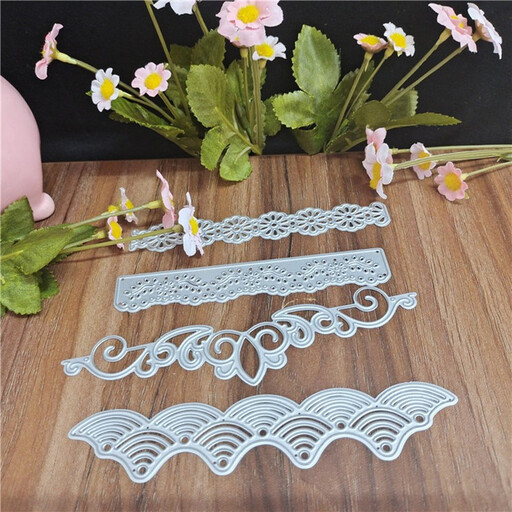
Why we chose it: Perfect for getting started without breaking the bank. This set includes ultra-versatile basic shapes (tags, frames...) that you'll use for a multitude of projects, from scrapbooking to card making.
The mention of carbon steel is a guarantee of sturdiness. These dies are made to last and won't bend after the second use.
With these four shapes, you can already explore numerous techniques and decorate cards as well as album pages. A true Swiss Army knife for starting out.
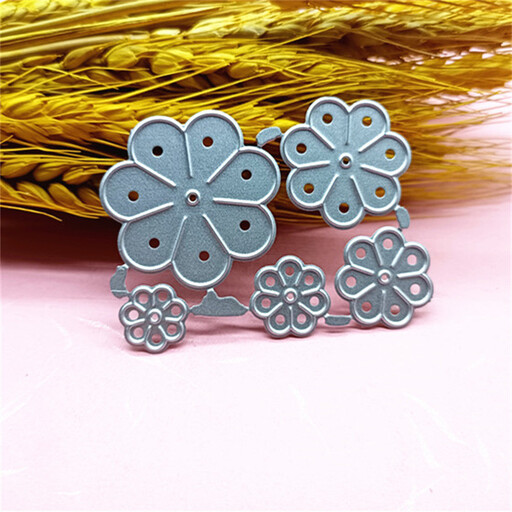
Why we chose it: Essential for creating paper bouquets and botanical decor. This set cuts separate elements (petals, leaves) to be assembled, adding volume and realism to your compositions.
Rather than a single complex die that risks shredding the paper, this set relies on assembling simple shapes. This avoids the "paper shredder" effect while achieving a stunningly detailed final result.
The freedom to create 3D effects by playing with different paper colours and textures. Each creation becomes unique.
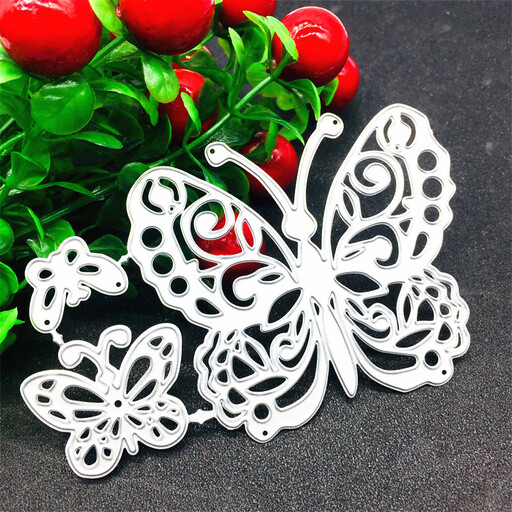
Why we chose it: For when you need a centerpiece that makes a statement. This large, finely detailed butterfly becomes the focal point of a card, announcement, or album page.
Although detailed, its design is smart: the cut lines are clean and the open areas are large enough not to tear good quality cardstock.
A single pass through the machine is all it takes for maximum visual impact. The perfect tool for quick creations that still pack a punch.
Discover our full selection of products that meet our quality criteria and safety standards.
After each cut, use a small brush or a piercing tool to remove any stuck paper bits. This ensures a flawless cut next time. For storage, it's best to keep them flat on magnetic sheets to prevent them from bending or bumping into each other.
A cutting die has a thin, raised blade to slice through paper. An embossing folder doesn't cut; it's usually made of plastic and works as a pair to "press" a raised pattern onto the paper. Pro tip: some thin cutting dies can also be used for embossing by adding a silicone mat to your "sandwich."
No, and this is a crucial point. The first criterion is width: a die wider than your machine's opening simply won't fit. Thickness also varies, which will require you to adjust the plates in your "sandwich" to find the perfect pressure. The golden rule: always check the die's dimensions and compare them with your machine's specs before you check out.