
Livraison le jour même ou le lendemain

Qualité garantie

Débloquez vos offres de bienvenue: Livraison GRATUITE | Jusqu'à -80 % | 30 jours d'essai gratuits à JoyPlus
Téléchargez l'application
The secret to a successful card or scrapbook page? It's often that one small detail that makes all the difference: a perfect cut. Finding the ideal cutting die for a card-making or scrapbooking project can transform a simple creation into a unique and refined piece. But with an overwhelming variety of shapes, sizes, and styles, it can be hard to know where to start. This guide is here to help you make sense of it all and choose wisely for your DIY crafting projects.
Our mission: to give you concrete advice and practical tips for finding the scrapbooking dies that truly match your vision, all without the marketing fluff.
Before you fall for a new design, there are three key things to check to ensure your purchase is compatible with your machine and creative projects.
This is the essential starting point. Most dies are compatible with popular consumer die-cutting machines (like the well-known Sizzix Big Shot, Cricut Cuttlebug, and other manual presses). However, you should always check the die's dimensions against the opening width of your machine. A die that's too wide simply won't fit through the rollers, and that's a guaranteed disappointment.
Dies come in a virtually endless variety of designs. To make the right choice, ask yourself what role they will play in your creations:
A good die is recognisable by its ability to produce a clean, precise cut, even on the most intricate designs. Carbon steel models are generally a hallmark of quality, known for both their durability and their sharp cutting edge on various paper weights. Quick tip: for very complex designs, don't hesitate to run it through the machine a few times or add a metal shim to increase the pressure for a perfect result.
Here is a small selection of dies that caught our eye for their versatility and originality, perfect for elevating your creative card-making projects.
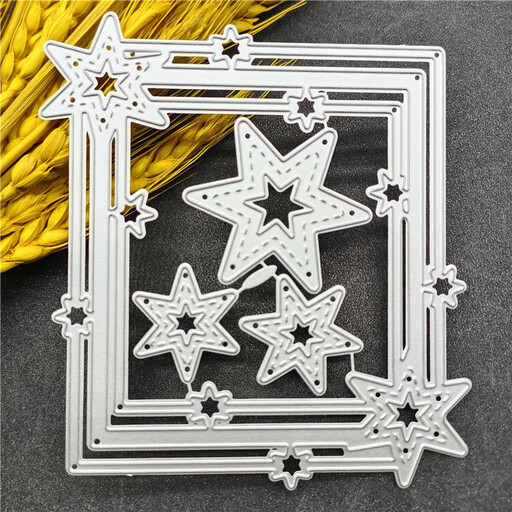
What makes it special: This set contains several nesting star frames. It's a clever design that allows you to create spectacular layering effects by using papers of different colours. The star motif, both festive and poetic, works for any season.
What we love:
Who is it for? For crafters who love to play with perspective to give their projects another dimension. An excellent staple for framing photos in an original way.
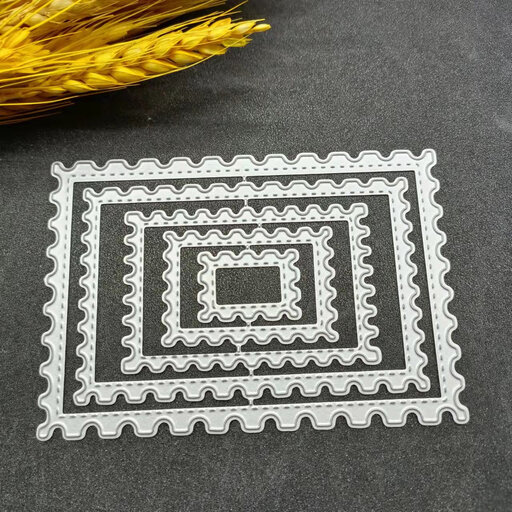
What makes it special: This set combines a rectangular postage stamp-style frame with a soft, wavy border. It's a design that evokes correspondence, travel, and nostalgia—perfect for creative card-making with a personal touch.
What we love:
Who is it for? For card-making fans who want to create unique cards with a vintage or "travel journal" aesthetic. It will also find its place decorating the pages of a travel journal.
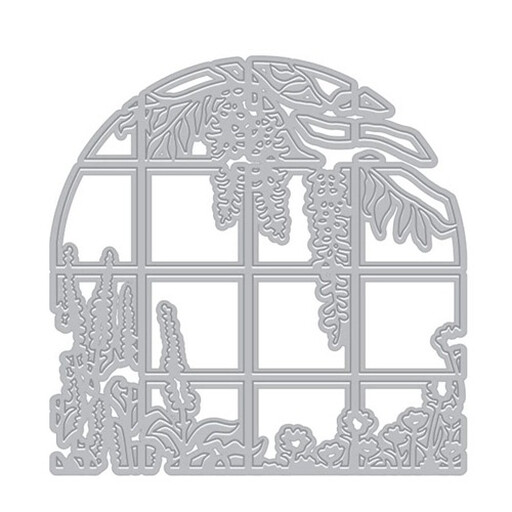
What makes it special: Very on-trend, the arch shape is an architectural classic that immediately brings a touch of elegance and structure. This die allows you to create windows or frames that are both soft and sophisticated, like a door or an arched opening.
What we love:
Who is it for? For those who love chic, clean designs. It's the perfect tool for wedding invitations, greeting cards, or album pages with a refined aesthetic.
Of course, the world of cutting dies doesn't stop here! Our selection is just a taste of the possibilities available to you. Alphabets, floral patterns, animals, geometric shapes... there's a die for every idea.
Explore a wider range to find the tool that will bring your next creative spark to life.
It's simple! A cutting die is a metal tool with sharp edges used to cut a precise shape from paper. An embossing folder is a plastic sleeve that contains a recessed and raised pattern. You place the paper inside, run it through the machine, and the pattern is pressed onto the sheet in relief, without cutting it. Note that some very thin dies can also be used for light embossing.
Yes, absolutely! In addition to paper and cardstock, many dies can cut thin materials like felt, craft foam, vinyl, vellum, and even thin sheets of cork or soft metal. Just be sure to check the recommendations for your machine and the die manufacturer. Highly detailed designs, for example, work best on thinner materials.
To ensure they last a long time, maintenance is a breeze. After each use, remove any small, stuck pieces of paper with a small brush or a fine-tipped tool. For storage, it's best to keep them flat on magnetic sheets. This prevents them from warping and makes them much easier to find at a glance.