
Livraison le jour même ou le lendemain

Qualité garantie

Débloquez vos offres de bienvenue: Livraison GRATUITE | Jusqu'à -80 % | 30 jours d'essai gratuits à JoyPlus
Téléchargez l'application
Think a cutting board is a trivial purchase? Think again: it's a cornerstone of your kitchen. The wrong choice means a double penalty: your knives get dull, your worktop becomes a breeding ground for bacteria, and your beautiful new board ends up warped in just a few weeks. As the Head of Product Selection at Joybuy, my mission is to guide you through the jungle of options to find a durable model that's perfectly suited to your needs, far from the siren song of marketing.
Before you head to the checkout, let's review the common misconceptions and classic pitfalls that turn a purchase into a regret:
To avoid these traps, forget the marketing fluff and focus on the technical specifications that truly matter for the quality and longevity of your board.
The material is the heart of the matter. It dictates the maintenance, the lifespan of your knives, and, of course, hygiene.
More than the material, it's often the small details that turn a simple board into an indispensable kitchen ally.
Here is our selection of models that check all the boxes for durability, practicality, and suitability for specific uses.
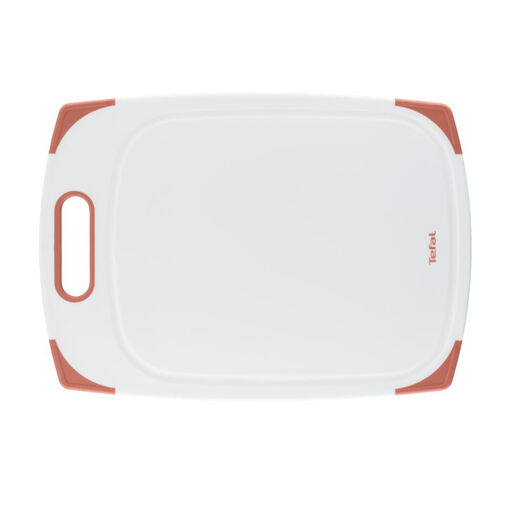
Why we chose it: For anyone who wants a simple, effective, and hassle-free solution for daily prep. It brings together the essential features for safe and clean use.
It directly tackles the problem of a sliding board thanks to its non-slip design. Its integrated juice groove puts an end to overflowing juices, a classic flaw of entry-level boards.
Dishwasher-safe, equipped with a practical handle for easy handling and storage... It's the ultimate ultra-functional tool for heavy use.

Why we chose it: Perfect for those who love to entertain and juggle between prep and serving. This set offers the necessary versatility with elegant surfaces of different sizes, ideal for presenting a charcuterie board or a cheese platter.
More than just a decorative item, its carbonisation treatment limits moisture absorption and thus the risk of warping. By offering a cutting board set, it immediately sidesteps the "one-board-fits-all" trap.
The trio of sizes, integrated handles, and juice grooves on each board make it an all-in-one solution for both kitchen prep and table service.
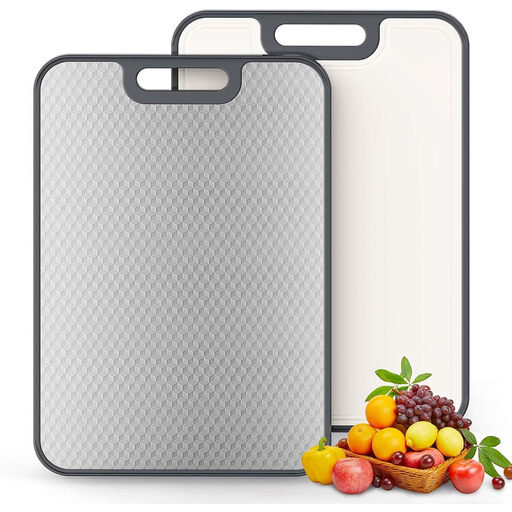
Why we chose it: For those who don't compromise on hygiene. Its dual-sided design is the ultimate solution for hermetically separating meat from vegetables and eradicating any risk of cross-contamination.
It bypasses the problem of bacteria-trapping grooves by offering a stainless steel side. Completely non-porous, it's perfect for meat. It's the most definitive answer to the one-board-fits-all trap.
Its dual sides (stainless steel for meat, wheat straw composite for vegetables) and dishwasher-safe design make it the perfect combination of maximum hygiene and practicality.
We've curated a complete selection of boards that meet our demanding selection criteria and current safety standards.
Wash your wooden cutting board by hand with warm, soapy water right after use. Most importantly, never let it soak! Dry it immediately and thoroughly with a cloth. To nourish it and prevent it from drying out or cracking, apply a food-grade mineral oil (or grapeseed oil) to its entire surface about once a month.
Yes, and for hygiene reasons, it's non-negotiable. Ideally, you should have at least two boards: one reserved for raw meat and fish, and another for ready-to-eat foods (vegetables, fruits, bread, cheese). A cutting board set, often featuring colour codes, is the simplest solution to avoid any risk of cross-contamination.
It's time to discard your plastic board as soon as it's marked by numerous deep, hard-to-clean cuts. These grooves are breeding grounds for bacteria and can trap food residue. In short: if the surface is no longer smooth and a good cleaning is no longer enough to get it pristine, it's time to replace it for your safety.