
Livraison le jour même ou le lendemain

Qualité garantie

Débloquez vos offres de bienvenue: Livraison GRATUITE | Jusqu'à -80 % | 30 jours d'essai gratuits à JoyPlus
Téléchargez l'application
A good cutting board is an essential companion for any recipe. Yet, choosing one can often be a real headache. Boards that slip, get scratched by the first knife cut, or absorb stubborn odours—the frustrations in the kitchen are many. Our guide is here to break down the materials and features on the market, helping you find the board that's perfectly suited to your habits and your kitchen.
Let's review the key criteria for finding the cutting board that will be your daily partner, combining durability, hygiene, and a joy to use.
Before diving into our selection, here are the key points to consider to make the right choice.
The material affects not only your board's lifespan but also the preservation of your knife edges and food safety.
Certain design details can truly transform your experience.
We have selected three models that stand out for their smart design and everyday efficiency.
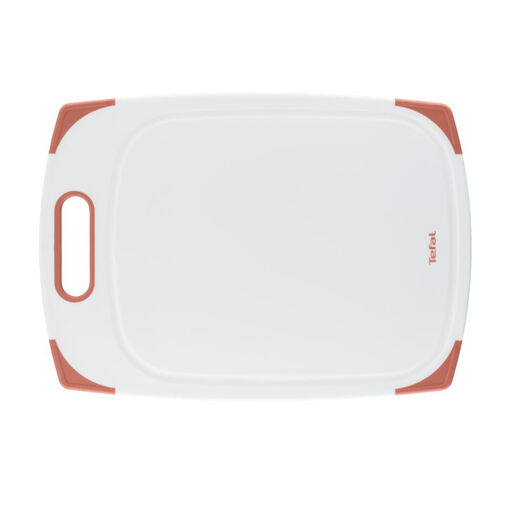
Why it stands out: This plastic cutting board from Tefal gets straight to the point: it's simple, effective, and designed for daily use. Its clever design incorporates the essential features for most home cooks, with an emphasis on safety and easy maintenance.
Pros:
Who is it for? For anyone who wants a functional, safe, and hassle-free board for everyday food prep.
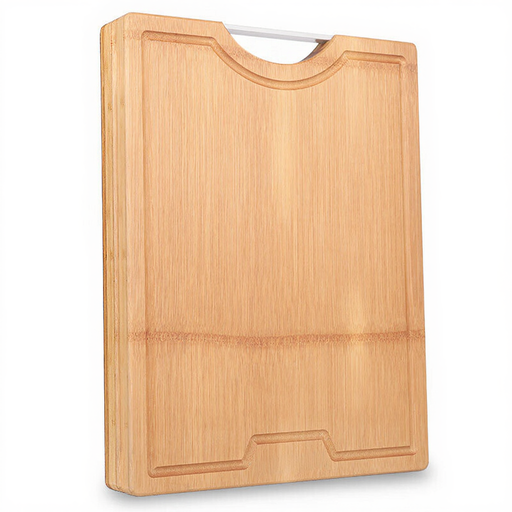
Why it stands out: Carved from solid Moso bamboo, this board is impressive with its 3 cm thickness, guaranteeing rock-solid stability and durability. Its reversible design makes it a versatile tool for discerning cooks who value organisation and hygiene.
Pros:
Who is it for? For fans of premium materials looking for a large, ultra-stable work surface capable of handling the most ambitious prep work.
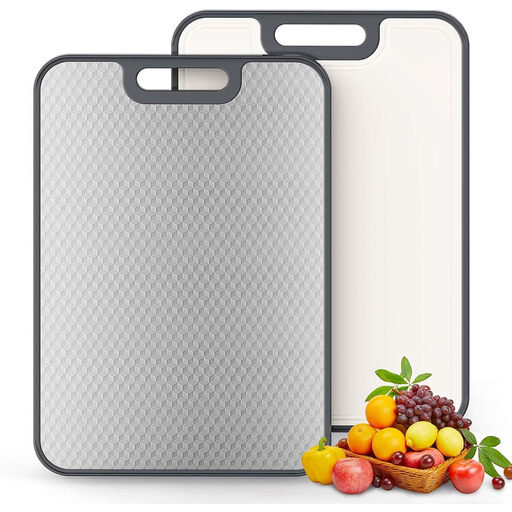
Why it stands out: This hybrid model offers a formidable 2-in-1 concept: one side made of 304 food-grade stainless steel and the other of PP plastic made from wheat straw. This clever design allows you to reserve an ultra-hygienic surface for meat and a gentler surface for your blades when cutting vegetables.
Pros:
Who is it for? For modern, hygiene-conscious cooks who want an all-in-one solution to properly separate foods without cluttering their kitchen.
Choosing a board is, above all, a personal choice. If our top three picks don't tick all your boxes (size, material, design), don't worry.
? Explore our full range of kitchen boards on Joybuy to find the model that will fit perfectly into your daily routine.
Non-porous materials like plastic (HDPE) and stainless steel are considered the hygiene champions. Easy to clean and disinfect, they are perfectly dishwasher-safe. However, a well-maintained bamboo or wood cutting board (cleaned after each use, dried thoroughly, and oiled) can be just as sanitary. Ultimately, hygiene depends as much on the material as on the rigour of your maintenance routine.
It's simpler than it sounds. After each use, wash your bamboo board by hand with warm water and mild soap. Rinse and dry it immediately with a cloth, then let it finish air-drying vertically. Golden rule: never let it soak or put it in the dishwasher! To nourish the wood and extend its life, apply a thin coat of food-grade mineral oil once a month.
Absolutely. It's a golden rule for preventing cross-contamination between raw meat and fish on one side, and ready-to-eat foods (vegetables, fruit, bread) on the other. To do this, you can use different coloured boards or, even smarter, opt for a reversible cutting board—a practical, space-saving solution.