
Livraison le jour même ou le lendemain

Qualité garantie

Débloquez vos offres de bienvenue: Livraison GRATUITE | Jusqu'à -80 % | 30 jours d'essai gratuits à JoyPlus
Téléchargez l'application
An indispensable accessory, the cutting board is nonetheless often an afterthought. The result? A purchase you quickly regret. Between materials that warp, vague marketing promises, and impractical designs, a frustrating experience is never far off. Before you decide, let's break down the common pitfalls and essential criteria to find the board that will truly fit your kitchen habits.
The market is flooded with models, but they are far from equal. Here are the most common issues that can render a board unusable or unhygienic after just a few months.
To avoid making a mistake, focus on the few points that truly make a difference in performance and durability.
The choice of material is arguably the most important. Each option has its own advantages and disadvantages.
Beyond the material, certain features can completely transform the user experience.
Rather than an endless list, here is our targeted selection: one profile, one ideal board, in line with the criteria we've just discussed.
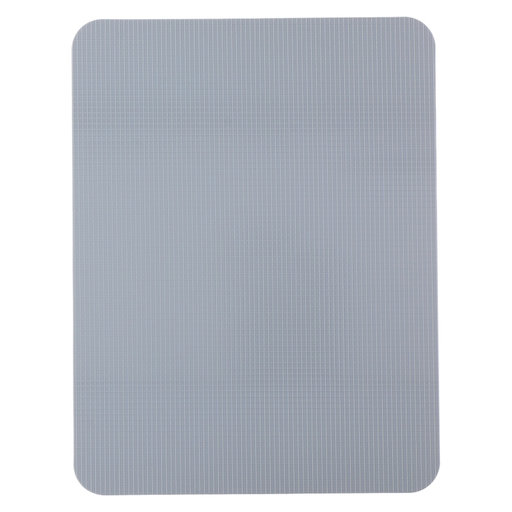
Why it's a perfect match: Ideal for those who prioritise hygiene and simplicity. This set allows you to dedicate a board to each food type (meat, vegetables, etc.), limiting the risk of cross-contamination. Their flexibility makes it easy to transfer chopped ingredients to the pan.
This set directly addresses the "all-in-one board" pitfall. The different colours encourage hygienic separation of foods. Although thin, they are designed for daily use and are dishwasher-safe for optimal cleaning.
Non-slip surface for added safety. Flexible design for easy pouring of ingredients. Stackable for compact storage.
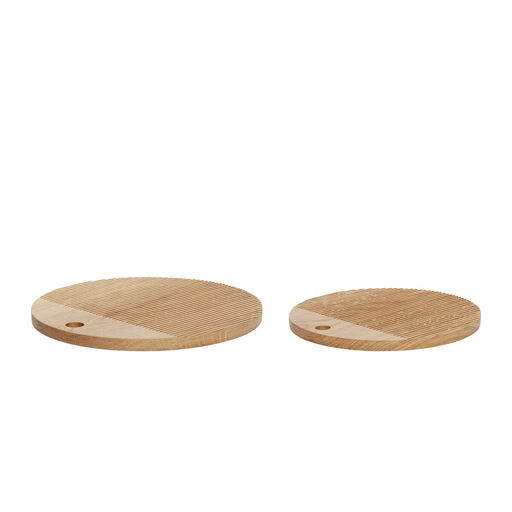
Why it's a perfect match: For those who love to host and appreciate beautiful objects, this set of FSC-certified solid oak boards is perfect. The two sizes and round shape are ideal not only for prep but also for elegantly serving an appetizer board, cheeses, or tapas.
This product avoids the "style over substance" trap. The solid oak is a durable and robust material for cutting, while the refined finish makes it an elegant serving piece. The wood is sourced from responsibly managed forests.
Dual-purpose: prep and serving. Made from FSC-certified solid oak. Set of two sizes for greater versatility.
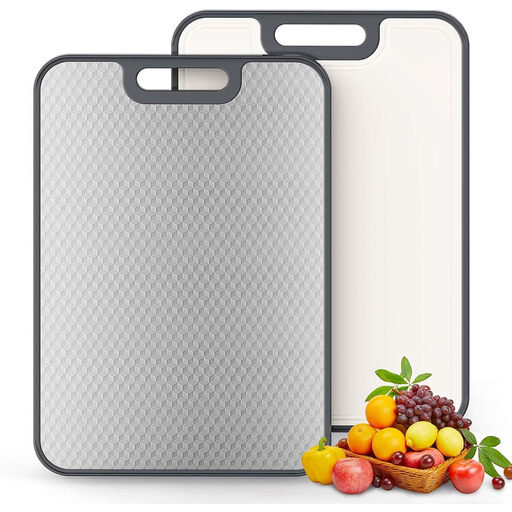
Why it's a perfect match: This board combines the best of both worlds: a stainless steel side for maximum hygiene with meats and fish, and a wheat straw composite (PP) side, which is gentler on knives, for vegetables and fruits. It's the all-in-one solution for the cook who values efficiency and cleanliness.
It solves the single-material dilemma by offering two specialised surfaces. The stainless steel side is non-porous and odour-resistant, while the textured PP side reduces wear on knives. Its robust design and dishwasher compatibility ensure good durability.
Double-sided design for clear food separation. Textured surface to reduce scratches. Dishwasher-safe for easy cleaning.
Explore our full selection of products that meet our standards for quality and safety.
Yes, it is highly recommended for hygiene reasons. Ideally, you should have at least two boards: one reserved for raw foods (meat, poultry, fish) and another for ready-to-eat foods (vegetables, fruits, bread, cheese). A set of different coloured boards is a simple solution to avoid any confusion and cross-contamination.
Proper maintenance significantly extends the life of a wood cutting board. After each use, wash it by hand with hot water and a little soap, then dry it immediately and completely with a cloth. Never let it soak in water or put it in the dishwasher. About once a month, apply a thin layer of food-grade mineral oil to nourish the wood and prevent it from drying out or cracking.
Non-porous materials like plastic (PP/PE) and stainless steel are generally considered the easiest to keep hygienic because they do not absorb liquids and can often be sanitised in the dishwasher. However, a well-maintained wooden board also has interesting natural antibacterial properties. The most important thing is how you clean and separate the use of your boards. A plastic board full of deep scratches can become a breeding ground for bacteria if not replaced in time.