
Livraison le jour même ou le lendemain

Qualité garantie

Débloquez vos offres de bienvenue: Livraison GRATUITE | Jusqu'à -80 % | 30 jours d'essai gratuits à JoyPlus
Téléchargez l'application
A good cutting board is an indispensable kitchen tool. Yet, with the overwhelming variety of materials, sizes, and features, making the right choice can quickly become a daunting task. Should you opt for the charm of wood, the practicality of plastic, or the hygiene of stainless steel? Will your board only be used for chopping, or could it also double as a serving platter?
This guide is here to help you navigate the options. We'll break down the essential criteria for finding the board that perfectly suits your habits, maintenance needs, and kitchen style.
Before diving into our selection, here are the key points to consider to make the right choice.
The choice of material is arguably the number one criterion. Each option has its own advantages:
Will your board only be used for dicing vegetables, or do you envision it taking center stage on your table? Many models are designed to be multifunctional. A beautiful wooden board can be transformed into a serving board to present cheeses, cured meats, or appetizers for cocktail hour. A two-in-one that is as practical as it is beautiful.
Certain details can truly make a difference in daily use:
Here are a few models that caught our attention for their materials, design, and versatility.
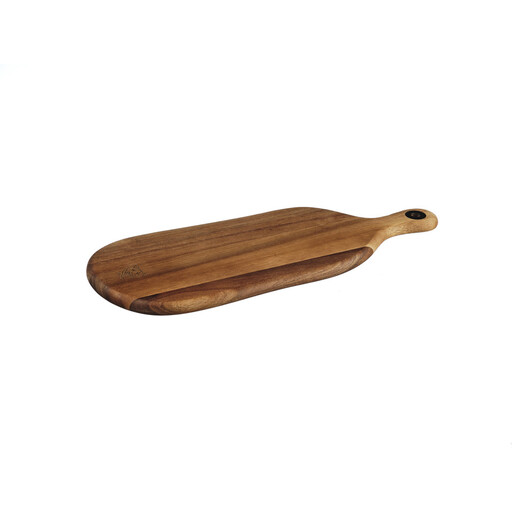
Why it stands out: This board immediately captivates with its natural elegance. The acacia wood not only offers great durability but also a unique grain that makes each piece one-of-a-kind. Its elongated shape makes it perfect for both kitchen prep and table service.
Key features:
Who is it for? For those with an eye for design who are looking for a board that can transition from kitchen to table with style. Ideal for those who love to entertain and care about the presentation of their appetizers or cheese platters.
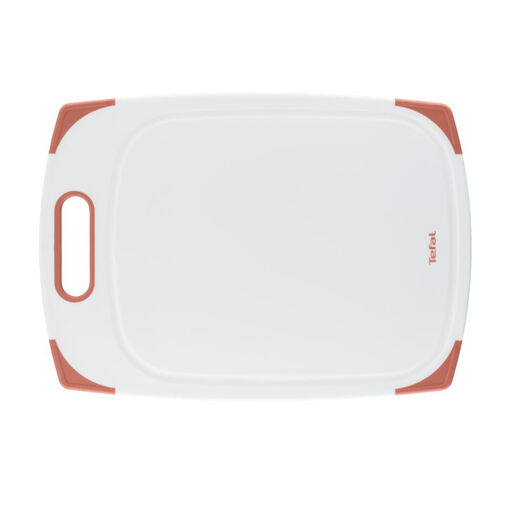
Why it stands out: Tefal designed this board with a focus on efficiency and safety. Its non-slip edges ensure unbeatable stability, while its juice groove and handle simplify daily use.
Key features:
Who is it for? For busy cooks who want a functional, safe, and ultra-easy-to-clean tool. Perfect for families and anyone who prioritizes convenience above all.
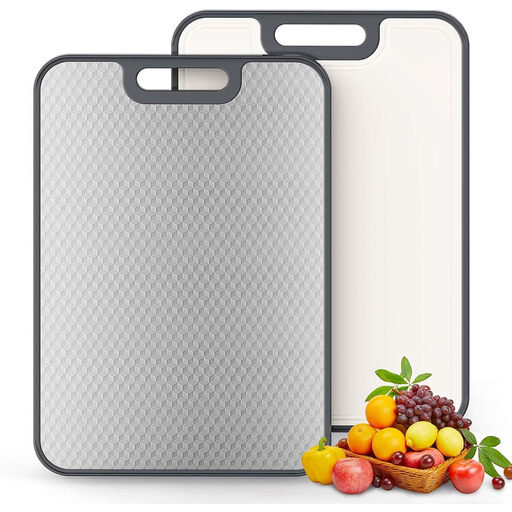
Why it stands out: This double-sided cutting board offers a clever solution for separating food types. One stainless steel side is reserved for meat and fish, while the other, made of a wheat straw composite, is perfect for fruits and vegetables.
Key features:
Who is it for? For those concerned with food hygiene who want to avoid cross-contamination at all costs. The smart choice for those who regularly cook raw meat or fish.
Didn't find the perfect match in this selection? Every kitchen is unique, and there are many other models available to suit your needs, whether in terms of size, material, or design.
? Discover our entire selection of cutting boards
1. How do you maintain a wooden cutting board? After each use, wash your wooden board by hand with hot water and a little dish soap. Dry it immediately with a cloth and store it upright so it dries evenly. Most importantly, never let it soak or put it in the dishwasher. To nourish it and extend its life, apply a food-grade mineral oil once a month.
2. When should you replace your cutting board? It's time to replace your board, whether wood or plastic, when it has numerous deep grooves. These scores are difficult to clean and can become a breeding ground for bacteria, even after washing. A heavily worn surface can also make cutting less safe.
3. Can you use the same board for meat and vegetables? No, it is strongly discouraged to use the same surface for raw meat and for foods that will be eaten raw (e.g., vegetables for a salad, fruits) without meticulous cleaning between each use. To eliminate any risk of cross-contamination, the ideal solution is to have two separate boards or to opt for a double-sided cutting board designed for this purpose.
By the Joybuy Product Recommendation Officer