
Livraison le jour même ou le lendemain

Qualité garantie

Débloquez vos offres de bienvenue: Livraison GRATUITE | Jusqu'à -80 % | 30 jours d'essai gratuits à JoyPlus
Téléchargez l'application
Sometimes, a few cushions are all it takes to transform a living room, while a pillow has a direct impact on the quality of your sleep. But choosing cushions and pillows for the home is not simply a matter of style: an appealing material can prove difficult to care for, unsuitable dimensions can throw off the balance of a sofa, and a certification alone does not guarantee universal comfort.
Here are the criteria to consider before buying a decorative cushion, a pillow for sleeping or any other textile accessory for your home.
A colourful cushion, or one with tassels or a velvet finish, can easily catch the eye. However, its suitability for everyday use also depends on its shape, filling and care requirements. Tassels add texture, but they require extra care in homes with young children.
A rectangular cushion measuring 40 x 65 cm will look different from a square 40 x 40 cm model. On a sofa, combining several sizes generally helps create a more balanced arrangement. In a bedroom, also remember to check compatibility with pillowcases and the depth of the bed.
For a pillow, height matters just as much. A model 20 cm thick will feel more enveloping than a 5 cm pillow, but the right choice depends mainly on your sleeping position, body shape and personal preferences.
The STANDARD 100 by OEKO-TEX label indicates that the product has been tested for certain substances, in accordance with the relevant standard. It does not automatically mean that a cushion will be softer, more durable or suitable for every sensitivity.
The terms ‘hypoallergenic’ and ‘dust-mite resistant’ should also be considered in context. Check the product page, materials, listed certifications and care instructions. These terms describe characteristics claimed by the manufacturer; they are not a medical guarantee.
For a pillow, make sure you distinguish between the cover and the filling. A duck-feather pillow offers a soft feel with more structure, while synthetic filling may suit those who prioritise easy care or prefer to avoid feathers.
Before placing your order, check the washing temperature, whether the cover is removable and any restrictions regarding drying. Some cushions can be machine-washed at 30 °C but should not be tumble-dried. Cotton velvet can be sensitive to friction and overly vigorous agitation.
For sleeping pillows, several models can be machine-washed at up to 40 °C. Always follow the care label and make sure the filling is completely dry before using the pillow again.
A 60 x 60 cm pillow is suitable for people who like a generous surface area. The 50 x 70 cm size is more in line with traditional bedding dimensions. For decoration, the 45 x 45 cm size is easy to layer, while a 40 x 65 cm cushion can provide lumbar support or add a graphic touch to a bed.
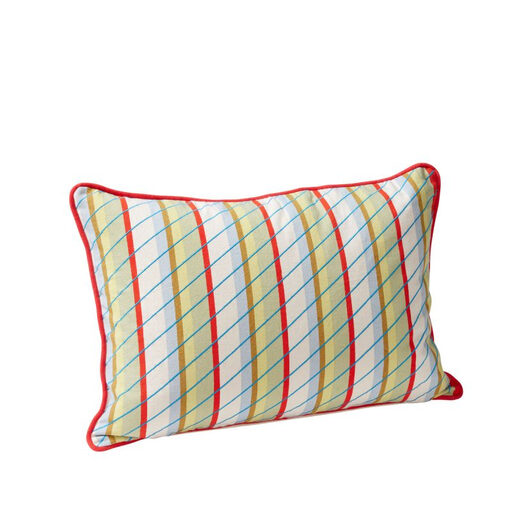
Why this choice suits this profile : Its rectangular 40 x 60 cm shape and multicoloured design make it easy to refresh a sofa or armchair without rethinking your entire décor.
The materials and care instructions are clearly specified: 100% cotton, machine-washable at 30 °C, and not recommended for tumble drying.
Cotton described as STANDARD 100 by OEKO-TEX certified, a practical size and detailed care instructions.
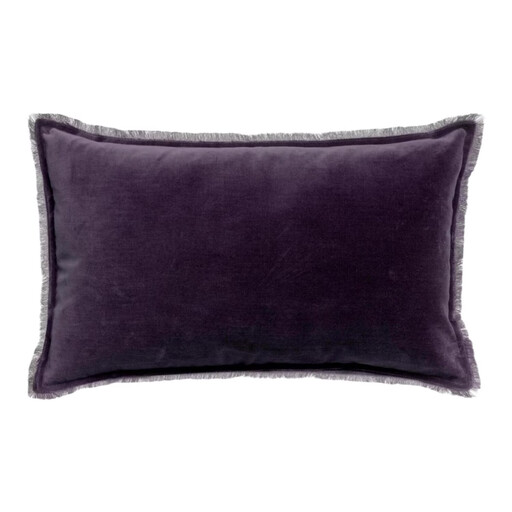
Why this choice suits this profile : The cotton velvet, raisin shade and tassels naturally complement an elegant, bohemian or contemporary interior.
The product page recommends spot cleaning and advises checking the label before machine-washing. This is a useful precaution for avoiding problems with velvet.
100% cotton velvet, filling included, 40 x 65 cm size and tassel detailing.
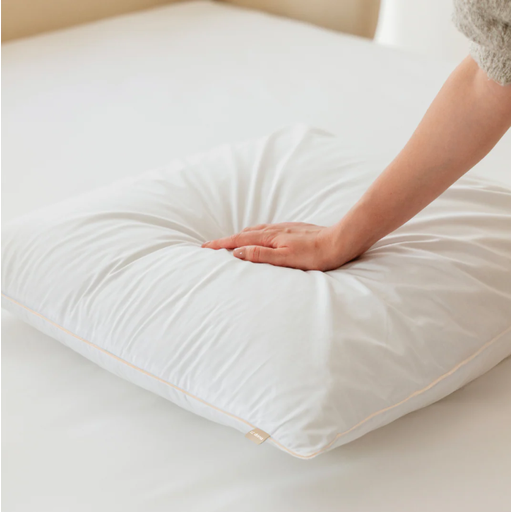
Why this choice suits this profile : Its generous square shape and natural filling are suited to people looking for a plump pillow for the bedroom.
The product page details the composition: 90% duck feathers and 10% down, with a 100% cotton cover and machine-washable at up to 40 °C.
60 x 60 cm size, stated thickness of 20 cm, cotton cover and certifications listed on the product page.
We have put together a complete, real-time updated selection of products that meet these demanding criteria and European safety standards.
The 40 x 40 cm size works well for layered arrangements. The 45 x 45 cm size has more visual presence, while a 40 x 65 cm rectangular cushion can complete the arrangement or support the lower back. Before piling up several cushions, measure the seat depth to avoid taking up too much space.
Start by checking the care label. Cotton can often be washed at a moderate temperature, but velvet, tassels and certain fillings may require spot cleaning or a delicate cycle. Do not use bleach if the product page prohibits it, and make sure the cushion is completely dry so that it retains its shape.
A duck-feather pillow does not feel the same as a synthetic-fibre model. Compare the volume, firmness, cover, care requirements and exact composition. If you want to be able to machine-wash your pillow regularly, a soft pillow made from synthetic fibres may prove more practical. If you are looking for a model described as hypoallergenic, check the certifications and information provided on its product page. If you have a particular sensitivity, this information does not replace advice from a healthcare professional.