Families serving several bowls
A large carton of ready-made soup is easy to share at lunchtime. Before opening it, plan what you’ll do with the leftovers and follow the storage instructions on the carton.


For serving several bowls at lunch, a large carton of ready-made cupboard soup is convenient if your household can use up the leftovers after opening. For portions prepared as needed, an individual carton or a dried soup may be a better fit, provided you have access to hot water for the latter. Then compare the amount served, salt, ingredients and allergens for each recipe, rather than relying on the word “vegetable” alone.
A large carton of ready-made soup is easy to share at lunchtime. Before opening it, plan what you’ll do with the leftovers and follow the storage instructions on the carton.
A small carton or sachet lets you prepare just the amount you want. For a dried soup sachet, check the prepared volume and make sure you have access to hot water.
A recipe’s name alone doesn’t tell you how much salt it contains or whether it includes allergens. Compare the nutritional information with the amount you’ll actually serve, and read the ingredients list. Manger Bouger lists soups among the products that can contain salt that isn’t immediately obvious.
Choose this if: you want to pour and heat soup that’s already prepared, particularly for several people.
Bear in mind: a large carton may leave you with leftovers. Auchan’s listing for a Liebig soup says to refrigerate it and consume within 48 hours of opening; check the instructions for the product you’re buying.
Choose this if: you want to prepare portions as needed and have access to hot water.
Bear in mind: this isn’t ready to pour; depending on the recipe, you may also need to cook it.
| What to consider | What to check | Who is it for? |
|---|---|---|
| Format and quantity | Total volume, amount per bowl and stated number of portions. | When several people are having lunch together, I want to serve enough bowls without opening more soup than necessary. Around 33% of consumers rank serving quantity as their top concern. |
| Salt, ingredients and allergens | Salt per 100 ml or per prepared portion; ingredients list and declared allergens. | If ingredients are particularly important to my household, I need to check the exact recipe, even when it’s called a vegetable soup. Checking ingredients and salt comes before other criteria for around 25% of consumers. |
| Preparation | Instructions and equipment needed: heating, adding hot water or cooking. | For a quick lunch, I want to be able to prepare the soup with the equipment I have. Around 25% of consumers prioritise ease of preparation. |
| Storage and leftovers | Date and storage conditions; instructions for after opening. | If lunch only uses part of a large carton, I want to be able to use the rest within the stated time. Storage is the main concern for around 17% of consumers. |
For a lunch made from cupboard ingredients, a carton of ready-made soup and a dried soup sachet require different steps. The sachet needs hot water and may need to be cooked.
Read the product description and instructions before you buy, especially if you won’t have the necessary equipment at lunchtime.
A vegetable soup may also contain vermicelli, croutons, dairy ingredients or allergens. Manger Bouger also points out that soups can contain salt.
Compare the salt content for the amount you’ll serve, then check the ingredients and allergens. If there’s a Nutri-Score on the packaging, don’t use it as a substitute for this information.
The date on the packaging doesn’t replace the instructions that apply once the soup has been opened. An Auchan listing for a Liebig product says it should then be refrigerated and consumed within 48 hours.
Check the instructions for the specific product before opening a large carton.
If your household can’t finish the carton within the stated time, some of it may go to waste.
Serving sizes and ingredients vary between a small sachet portion and a family-sized carton. The stated number of portions doesn’t, on its own, tell you how much each person will eat at lunch.
Decide whether the soup will be the only course or part of the meal, then check the prepared volume and ingredients of the product you’ve chosen.
The brand offers instant dried soups to consider when you want to prepare portions as needed.
The retailer offers ready-made soups in cartons under its own brands and other brands.
The retailer’s product listings let you compare carton soups, including recipes with or without vermicelli.
The brand offers ready-made soups in cartons, with formats to suit the number of bowls you want to serve.
These products need to be prepared with hot water or cooked. Choose them for portions made as needed rather than as ready-made cartons that only need heating. For each one, check the finished volume and that the recipe suits the lunch you have planned.
 Image unavailable
Worth considering if you want to prepare one portion at a time and have access to hot water.
This product comes in three 20 cl portions. Before serving, check the salt content per prepared portion and the allergens in this recipe.
 Image unavailable
Worth considering if you want to make noodle soup to share in small bowls and have a saucepan and heat source.
The stated format is 69 g for 0,70 L. To prepare it, bring the water to the boil and simmer for five minutes, so this isn’t ready-made soup that just needs heating. Check the allergens and salt content on the packaging for the variant you choose.
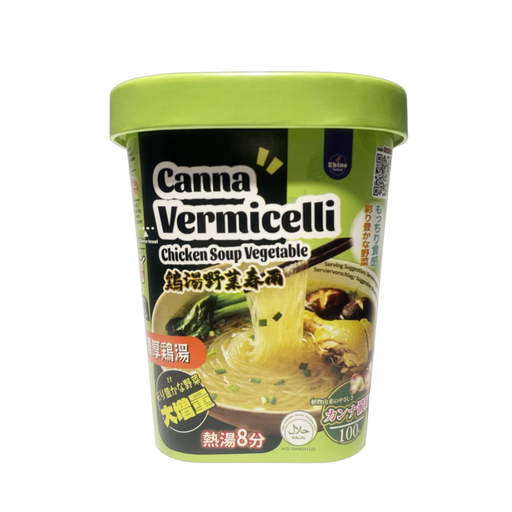 Image unavailable
A vermicelli soup to prepare in a cup with boiling water, worth considering when you want to serve individual bowls.
Allow for the stated preparation time. If serving size or salt content affects your choice, check the packaging; also check the net weight and allergens of the product you receive.
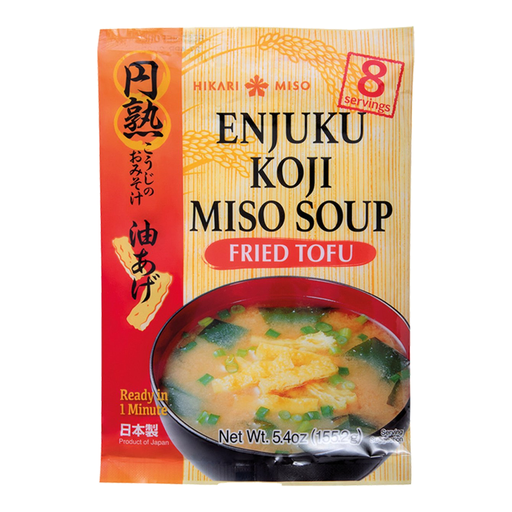 Image unavailable
Worth considering if you’re looking for a miso soup to prepare with hot water for lunch.
The stated total weight is 155,2 g. Before choosing this Aburaage variant, check the packaging for the number of portions, prepared volume, ingredients and allergens.
It depends on the wording on the packaging: a use-by date (DLC) is different from a best-before date (DDM). According to the French Ministry of the Economy, a use-by date must be followed, while a best-before date relates to the product’s quality. In all cases, follow the storage instructions and check that the packaging is intact.
Follow the instructions on the carton you’ve bought, as they vary by product. For example, Auchan says to refrigerate a Liebig Pursoup soup and consume it within 48 hours of opening.
Read the ingredients list for the exact recipe and check which allergens are highlighted, as required by DGCCRF guidance for pre-packed foods. Even a soup described as a vegetable recipe may contain other ingredients, so don’t assume that one variety has the same ingredients as another.
No. To compare salt, check the amount shown in the nutritional information and relate it to the portion you’ll serve. If a Nutri-Score is shown, it doesn’t replace this information or the ingredients list.
No. Dried soup needs hot water and may need to be cooked, while ready-made soup in a carton is already prepared and can be heated according to its instructions. Also check the stated finished volume: the Royco product featured here is listed as three 20 cl portions.