If you want to have a separate soup ready to serve during or after a baking session, choose a carton if you want soup that’s already liquid, or a dehydrated sachet if you don’t mind adding water. A tin can also do the job, provided the label confirms it can be stored in the cupboard and the tin is undamaged. In every case, check the ingredients and allergens for the recipe you choose; don’t assume these soups are suitable for using in baking.
Who this choice is for
Parents planning a backup meal
If you want to serve soup during or after baking without taking up fridge space beforehand, check that the product can be stored at room temperature. Also check the date, the condition of the packaging and how it needs to be prepared.
Households mindful of allergens
The exact recipe matters more than the format alone. In France, allergens included in the ingredients of pre-packed foods must be highlighted, says the DGCCRF. Check for any ‘may contain’ warnings before serving, too.
People comparing recipes
To compare salt and other nutritional values, use the same basis for each product: per 100 g or per 100 ml. Check the ingredients too, as well as how much you plan to prepare or serve.
What to check
For soup you plan to keep in the cupboard, first confirm the storage instructions. Then choose a recipe that suits your household and is practical to prepare during your activity.
| Criterion |
What to check |
Who it matters to |
| Ingredients and allergens |
Check the ingredients list, highlighted allergens and any ‘may contain’ warnings for the exact product. |
If I need to check the ingredients before serving soup to the children, I can’t rely on the brand alone or on a ‘no preservatives’ claim. Around 40% of consumers prioritise this check. |
| Cupboard storage |
Check the storage instructions before opening and the date on the pack. For a tin, check its condition too. |
If I want a backup meal that doesn’t need fridge space, I need a product whose label confirms it can be stored at room temperature. This is a priority for around 40% of consumers. |
| Preparation |
Compare the number of portions and the steps involved, including adding water to a dehydrated sachet. |
While the children are baking, I’d rather keep the steps needed to serve the soup to a minimum. Around 20% of consumers prioritise ease of preparation. |
Mistakes to avoid
-
Mistaking chilled soup for cupboard soup
Liquid soup sold in the chilled aisle isn’t suitable for storage at room temperature just because it comes in a carton or bottle.
Follow the storage instructions for the exact product, and distinguish between the use-by date and the best-before date shown on the packaging.
-
Assuming a ‘no preservatives’ claim tells you what’s in it
This claim doesn’t tell you anything about allergens. Depending on the recipe, soups may contain milk, celery, wheat or egg, for example.
Read the ingredients list and allergen information for the product you’re buying. Don’t assume the features of one recipe apply to an entire brand.
-
Using a damaged tin
The DGCCRF says that dents, rust or a bulging tin may be signs that the product has deteriorated.
Set aside any tin showing these signs, and don’t eat its contents if you have any doubts.
-
Assuming soup is suitable for baking
A soup chosen as a backup meal won’t necessarily be suitable for a recipe, particularly a sweet bake.
Plan to serve it separately. If you want to add it to a dish, follow a specific recipe and check its ingredients, quantities and allergens.
Brands to know when comparing formats
Liebig
Liebig offers liquid soups in cartons, among other products. Check that your chosen product is intended for storage at room temperature before opening.
- Carrefour lists a Liebig soup in a pack of two 30 cl cartons.
- Formats and ingredients vary by recipe, so check the allergens listed on each pack.
Knorr
Knorr dehydrated soups are an option if you’re happy to add water and follow the recipe instructions.
- The brand gives preparation instructions and the number of portions for its sachet soups.
- Ingredients vary: the vegetable and vermicelli recipe shown by Knorr contains wheat and egg, among other ingredients.
Royco
Royco offers instant soups to prepare, rather than liquid soup already packed in a carton.
- Royco says its recipes are ready in two minutes. Follow the instructions for the product you choose.
- Check the ingredients, allergens, portions and storage instructions for each recipe.
Cupboard soups available on Joybuy
This selection includes a liquid soup in a carton and dry soups that need to be prepared. Choose one for a meal to serve separately from the baking, after checking the ingredients, storage instructions and preparation directions for each product.
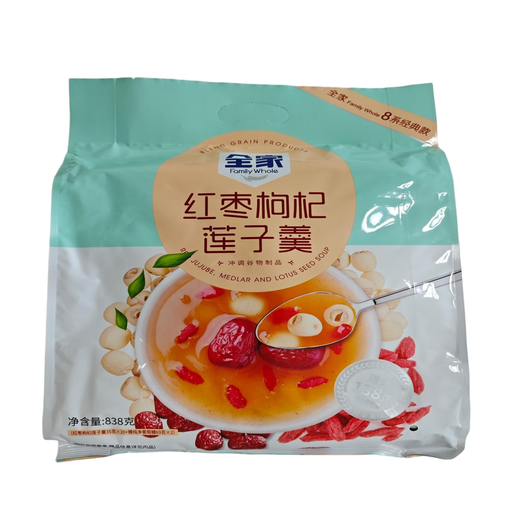 Image unavailable
Family Whole soup with red dates, goji berries and lotus seeds, 838 g
A dry soup to consider if you’re happy to prepare it with hot water. An adult should handle the hot water. Check the ingredients and storage instructions on the packaging.
View on Joybuy
 Image unavailable
Liebig Mouliné soup with 12 vegetables, 2 × 30 cl
A ready-to-serve liquid soup for anyone who’d rather not reconstitute a sachet. The pack contains two 30 cl cartons. Check the storage and reheating instructions, as well as for celery, milk and any ‘may contain’ warnings.
View on Joybuy
 Image unavailable
Royco dehydrated vermicelli soup with carrot and mushroom, makes 3 × 20 cl portions
A soup to reconstitute if 20 cl portions suit your needs. An adult should add the hot water. The recipe contains gluten, celery, milk and chicken, among other ingredients, and may contain traces of other allergens.
View on Joybuy
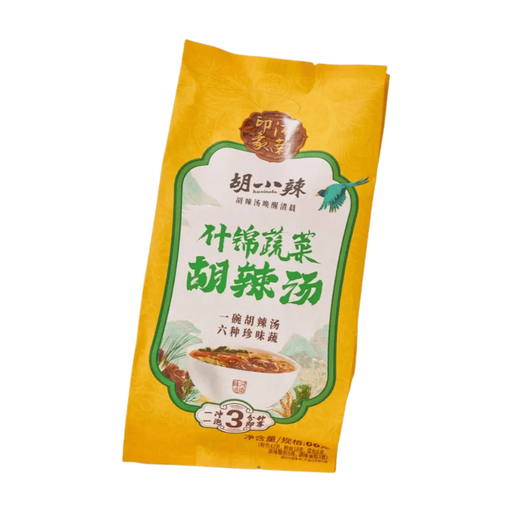 Image unavailable
Haoxiangni spicy instant vegetable soup, 66 g
A dry soup to choose if its spicy flavour suits the meal you have planned. It needs boiling water and 3 to 5 minutes to stand, so an adult should prepare it. Also check for gluten, soya and sesame.
View on Joybuy
Frequently asked questions
How can I tell if a soup can be stored in the cupboard?
Before buying, read the storage instructions for the exact product. Soup labelled ‘keep refrigerated’ must stay in the fridge, even if its packaging looks like that of a soup designed for cupboard storage. Check the date on the pack, too.
What should I check on a tin of soup?
Inspect the tin before putting it away and before using it. The DGCCRF warns that bulging, rust or dents may be signs of deterioration. Don’t eat the contents if you have any doubts.
Is Nutri-Score enough to choose a soup for the family?
No: it doesn’t replace checking the ingredients, allergens and portion sizes. To compare the nutritional information for two soups, check that the values are given on the same basis: per 100 g or per 100 ml.
Is dehydrated soup prepared in the same way as soup in a carton?
No: dehydrated soup needs water added according to the recipe instructions, while liquid soup in a carton is already hydrated. If you’re serving it during an activity with children, take the preparation steps into account and make sure an adult handles the hot water.


