Someone on their own, in a hurry in the evening
If you want to make a single bowl without having leftovers to deal with, compare individual sachets and smaller containers. Check, though, whether the sachet only needs hot water or requires cooking.


For a quick weekday dinner, choose a format based on how many bowls you need to serve and how much preparation you can manage. A single-serving sachet needs hot water, while a ready-to-heat soup can simply be poured and warmed. A jar may offer a more substantial recipe, but the product name alone won’t tell you whether it’s enough for a meal. Then compare the portions, ingredients, allergens and nutritional information for each product.
If you want to make a single bowl without having leftovers to deal with, compare individual sachets and smaller containers. Check, though, whether the sachet only needs hot water or requires cooking.
If you’re serving several bowls, check the container size and the stated number of portions. Carrefour and Auchan, for example, stock 1 L cartons of ready-to-heat soup. If you won’t finish it in one meal, the storage instructions after opening matter too.
If salt or particular ingredients influence your choice, compare the nutritional information on the same basis and read the allergen information for the specific recipe. Anses lists soups and broths among the dietary sources of salt.
A “cupboard soup” could be a dehydrated preparation, a ready-to-heat soup in a carton or a jarred recipe. Before opening, each is stored according to the instructions on its packaging. These formats require different preparation methods and offer different ways to manage portions.
Worth considering: if you want to make one bowl at a time and have the water or cooking equipment required.
Bear in mind: preparation varies by recipe. A sachet that needs cooking isn’t as convenient as a soup you can make up in a mug.
Worth considering: if you want to pour and heat several bowls without having to reconstitute the soup.
Bear in mind: if you don’t finish the container, follow the storage instructions for after opening.
Worth considering: if you’re looking for a recipe with ingredients such as vegetables, pasta or beans that suit the dinner you have in mind.
Bear in mind: check the recipe and its allergens rather than assuming that a jar on its own makes a complete meal.
| What to consider | What to check | Who is this for? |
|---|---|---|
| Preparation and portion size | The amount of soup made by each sachet, and whether you need hot water or to cook it. | When I’m dining alone, I want to make one bowl without opening a large container; around 29% of consumers prioritise this need. |
| Salt and ingredients | Salt per 100 ml and per portion, as well as the ingredients list and any highlighted allergens. | If I’m keeping an eye on what’s in my bowl, the recipe name isn’t enough; around 29% of consumers say this is their top consideration. |
| What dinner looks like | The number of portions and the ingredients actually included in the recipe. | I want to serve several bowls or choose a recipe that suits the dinner I have planned; around 24% of consumers put this need first. |
| Cupboard stock | Pack size, the date shown and storage conditions. | When I’m stocking up for weekday evenings, I want quantities I’ll be able to use; around 18% of consumers prioritise this need. |
A ready-to-heat carton, a dehydrated sachet and a jar don’t all need preparing in the same way, and won’t necessarily make the same number of bowls.
Start by choosing the preparation method that suits your evening, then check the volume and number of portions for the product you’ve chosen.
The recipe name won’t tell you how much salt it contains or which allergens it includes. Anses reminds consumers that soups and broths contribute to dietary salt intake.
Check the salt per 100 ml and per portion, then read the ingredients list. If a Nutri-Score is shown, use it to support your decision, not as a substitute for this information.
A 1 L container may provide several portions, but any leftover soup must be stored according to the instructions on the packaging.
If you’re eating alone, compare a smaller pack with a larger container and decide when you’ll have the remaining bowls.
These brands showcase different cupboard soup formats. The features of one product don’t necessarily apply to the rest of the range.
Dehydrated soups in sachets to compare if individual portions are important to you.
Ranges of ready-to-heat soups, including 1 L containers and some smaller packs.
Ready-to-heat soups in a range of sizes, alongside instant soups from other brands.
A dehydrated tomato and vermicelli soup to consider if this type of recipe appeals to you.
ALDI own-brand ranges to explore for ready-to-heat or instant soups.
These products are mainly sachet soups, along with a konjac preparation that needs heating. To choose between them, distinguish between soup to make up in a cup, a sachet that needs cooking and a multipack of portions to heat.
 Image unavailable
Worth considering if you want to make each bowl separately: the pack contains three 20 cl portions. Check the preparation instructions and allergens on the sachet, rather than assuming that the details for another Royco soup apply to this recipe.
 Image unavailable
For evenings when you want to make one bowl of miso soup at a time, this pack contains eight pieces. If you’re comparing the salt content of a bowl, refer to the information for the prepared portion and check the allergens on the packaging too.
 Image unavailable
This noodle soup may suit you if you can heat water in a saucepan; it isn’t a sachet you can simply make up in a cup. The product name gives its weight as 69 g and its volume as 0.70 L. Check the instructions and allergens before choosing it for dinner.
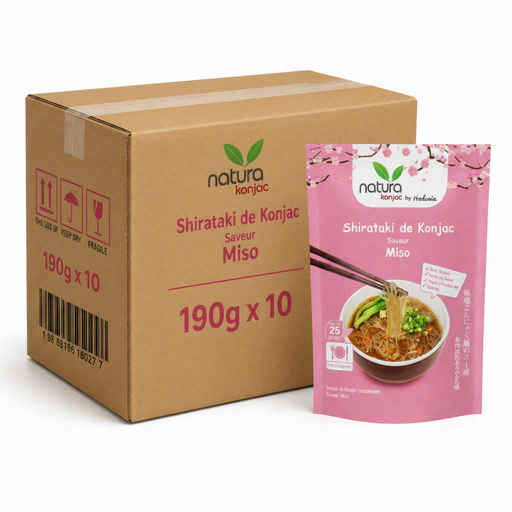 Image unavailable
Worth considering if you’re looking for portions to heat rather than a dehydrated soup: the pack contains ten 190 g units. This konjac and miso preparation may not be the classic ready-to-heat soup you’re after, so check how to heat it and the nutritional information for each portion.
 Image unavailable
Consider this 85 gr sachet if you can cook the soup rather than simply adding hot water to a bowl. Check the number of portions stated on the packaging and, if the soup is your whole dinner, consider how a portion fits into your meal.
It depends on the recipe, how much you serve and what else you’re having. If you’re planning to eat the soup on its own, check the nutritional information per portion and the ingredients rather than relying on words such as “velouté” or “vegetables”.
Compare their nutritional values on the same basis, particularly per 100 ml of prepared soup where this is given, then check what’s actually in a bowl. According to Manger Bouger, Nutri-Score is calculated per 100 g or 100 ml; it doesn’t replace the ingredients or allergen list.
Follow the storage temperature and time limit after opening shown on the packaging. If you’re only planning to have one bowl, check these instructions before choosing a large container.
For a product with a best-before date, the DGCCRF says it may be used after that date if the packaging is intact, although its taste and quality may change. Don’t confuse this with a use-by date, and don’t eat the product if its packaging is damaged.
Check the ingredients list on the packaging you receive: the DGCCRF states that allergens must be highlighted there. Check every recipe, even if you already know the brand.