
Livraison le jour même ou le lendemain

Qualité garantie

Débloquez vos offres de bienvenue: Livraison GRATUITE | Jusqu'à -80 % | 30 jours d'essai gratuits à JoyPlus
Téléchargez l'application
After neutering, many adult cats live mainly indoors and expend less energy. Choosing the right kibble for a neutered cat isn't simply about picking the flavour on the packet. The ingredients, daily portion size, format and your pet's individual needs matter far more than the promises plastered across the packaging.
The label "for neutered cats" alone isn't enough to judge a recipe. Two products aimed at neutered cats can have very different levels of protein, fat, fibre and minerals. Always compare the analytical constituents as well as the feeding recommendations.
Grain-free kibble for neutered cats often replaces wheat or maize with peas, potato or tapioca. This feature may suit a particular preference or sensitivity, but it doesn't guarantee a better nutritional balance on its own. The recipe as a whole and your cat's tolerance remain the priority.
A bulk bag of kibble may reduce the price per kilogram, but an open bag that's been sitting around for too long gradually loses its freshness. You also need to consider the daily portion size and your storage space. For a single cat, several smaller bags can be more practical than one very large pack.
For feeding a neutered adult cat, look for the phrase complete food, intended for neutered or castrated adult cats. This status means the product is designed to form the daily ration, provided you follow the manufacturer's recommendations.
Age matters too. The products featured here are generally aimed at cats from 1 year old. They are not automatically suitable for kittens or for pregnant or nursing queens.
Protein helps maintain muscle mass, while the fat content influences energy density. For a less active indoor cat, a carefully measured portion often counts for more than a simple percentage on the packet.
Here are some objective benchmarks taken from the product sheets:
These figures alone aren't enough to determine the best recipe for each animal. Compare them against your cat's activity level, weight and body condition.
The feeding guidelines on the pack are a starting point. For example, Ultima for neutered cats recommends between 25 and 40 g per day for a cat weighing 2 to 3 kg, then between 50 and 60 g for a cat weighing 4 to 5 kg. Adjust the portion afterwards according to activity and weight changes.
A bowl of clean, fresh water must always be available. Kibble for neutered cats that claims to support urinary health does not replace veterinary attention if your cat has difficulty urinating, blood in the urine or a sudden change in habits.
When changing your cat's food, allow for a gradual transition over 5 to 10 days, mixing the old and new food together. This method helps limit digestive upsets caused by a sudden change.
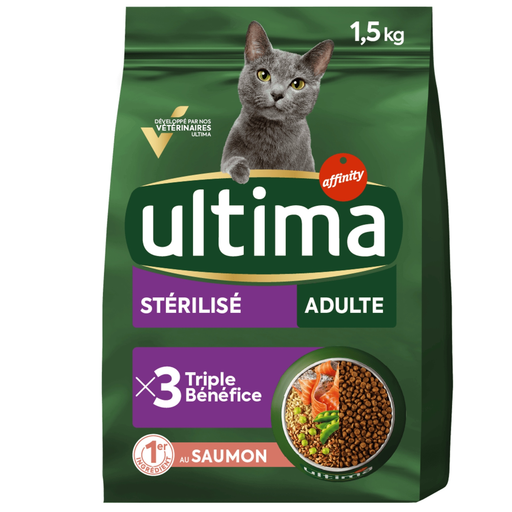
Why this choice suits this profile: At 1.5 kg, this size lets you try salmon kibble for neutered cats without committing a large budget or having to store a bulky bag.
The product sheet details the portions, ingredients and analytical constituents, rather than relying on a vague promise about weight control.
Salmon at 15%, 35% protein, 12% fat, taurine at 1,100 mg/kg and ammonium chloride listed in the additives.
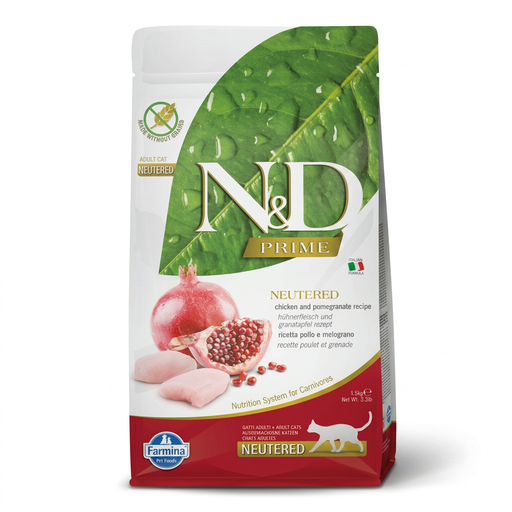
Why this choice suits this profile: This grain-free recipe is aimed at owners who want a composition focused on chicken and animal-based protein.
The grain-free claim comes with a detailed ingredients list – it shouldn't be taken as a universal guarantee of good tolerance.
Fresh and dehydrated chicken, 38% protein, 16% fat, taurine at 1,500 mg/kg and L-carnitine at 200 mg/kg.
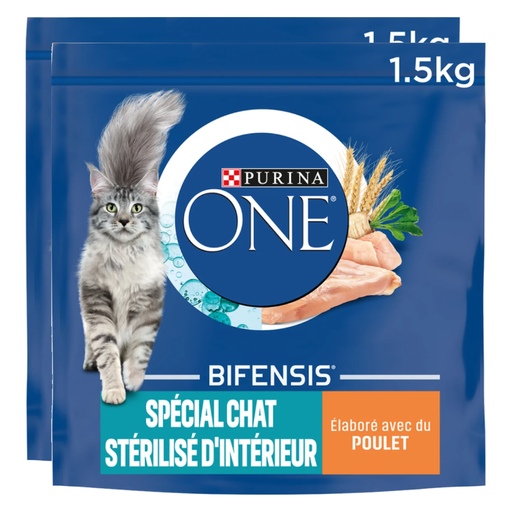
Why this choice suits this profile: The 3 kg format suits a household that wants to reduce how often they restock, while keeping two separate bags to preserve freshness.
The recipe is clearly intended for neutered or castrated cats living mainly indoors, not for a general adult diet.
Chicken at 15%, 37% protein, 13% fat, 5.5% fibre and added chicory at 2%.
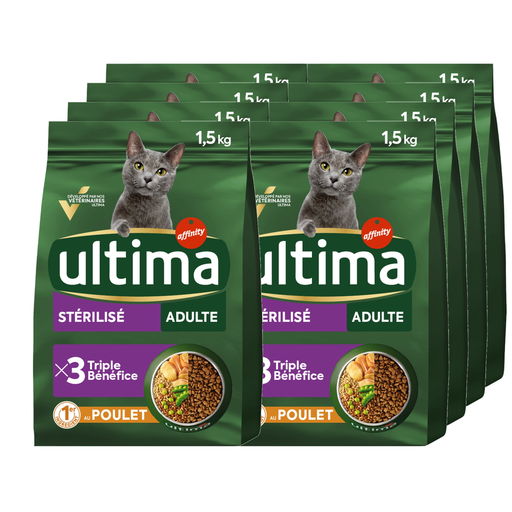
Why this choice suits this profile: A 12 kg bag can work for several cats or regular consumption, provided you can store it in good conditions.
The large format only makes sense if the bag is properly resealed, stored in a dry place and used before the date on the packaging.
Chicken at 17%, 35% protein, 12% fat, taurine at 1,100 mg/kg and pea and beet fibre.
We've put together a comprehensive, real-time updated list of products that meet these strict selection criteria and European safety regulations.
Start with the portion indicated on the packet based on your cat's weight, then regularly monitor their body shape and weight changes. Treats must be counted as part of the daily intake. A less active cat may need a smaller amount than one that plays a lot or goes outside regularly.
Yes, combining kibble and wet food is perfectly fine as long as the total ration remains consistent. Wet food provides more water, while kibble is easy to measure and store. Reduce the quantities of each food to avoid exceeding your cat's energy needs.
Follow the date on the packaging and reseal the bag carefully after each use. Store it in a cool, dry place, preferably in its original packaging inside an airtight container. If the smell, texture or your cat's appetite changes, don't serve the product and check its storage conditions.