Shoppers looking to identify sourdough
You want to see sourdough in the ingredient list, rather than relying on a taste or a traditional image. A stated proportion can help you understand the recipe; also check separately whether it contains yeast.


If sourdough is your deciding factor, choose a croissant whose ingredient list names it explicitly, along with its proportion if one is given. If you’re more interested in an all-butter recipe or something that takes little preparation, compare those criteria separately. Sourdough doesn’t mean there’s no yeast, or that the croissant is fermented exclusively with sourdough. An unbaked product also needs time, an oven and suitable storage.
You want to see sourdough in the ingredient list, rather than relying on a taste or a traditional image. A stated proportion can help you understand the recipe; also check separately whether it contains yeast.
The number of croissants, the stated butter content and how much time you have before serving may matter more than whether sourdough is mentioned. Distinguish a ready-to-eat croissant from an unbaked product that needs proving and baking.
Check the exact product before buying: the recipes mentioned include wheat and milk, and some also contain eggs. For prepacked foods, the European Union’s Your Europe portal explains that any allergens present must be emphasised in the ingredients list.
First decide whether your priority is declared sourdough, an all-butter recipe or when the croissants need to be served. Then check the allergens for the product you’ve chosen.
| Criteria | What to check | Who is it for? |
|---|---|---|
| Declared sourdough | Look for “sourdough” in the ingredients, check its proportion if one is given, and then check separately for yeast. | If I choose this croissant for its sourdough, I want to be able to confirm it’s on the label. Around 37% of consumers make this their priority. |
| All-butter recipe | Look for “all butter”, check the butter content if stated, and see what other fats are listed. | For my brunch, I prioritise the recipe over a mention of sourdough. This comes first for around 27% of consumers. |
| Allergens | Check the allergens for the exact product and, if necessary, any warnings about traces. | When I’m buying for someone who needs to avoid certain ingredients, I have to check the pack I’ve chosen before serving; around 18% of consumers prioritise this check. |
| Pack size and preparation | Check the number of pieces, the weight and whether the product is ready to eat or unbaked and needs preparing, as well as its storage instructions. | If I need to serve them quickly, the proving and baking time affects my choice. Ease of preparation is the top priority for around 18% of consumers. |
These criteria describe different qualities, not the same one under four names. The Brioche Pasquier croissant mentioned lists 7% sourdough and also contains yeast. The Auchan butter croissants x4 mention dried spelt sourdough and state a butter content of 21.5%, but don’t give the proportion of sourdough. The Lidl all-butter product states 27% butter, but its ingredients list doesn’t mention sourdough. These details can help you choose according to what matters to you; they don’t provide an overall ranking of the recipes.
A recipe can contain both ingredients: the Brioche Pasquier croissant mentioned lists both sourdough and yeast. So a mention of sourdough alone doesn’t mean the croissant is fermented exclusively with sourdough.
If this distinction matters to you, read the full ingredients list and look separately for “sourdough” and “yeast”.
The 7% sourdough listed by Brioche Pasquier isn’t the same as the 21.5% butter stated by Auchan or the 27% butter stated by Lidl. Auchan mentions sourdough but doesn’t give its proportion.
Compare butter with butter and sourdough with sourdough, and only when the products provide the information you need.
The recipes mentioned include wheat and milk; Lidl’s also lists eggs. A description such as “all butter” doesn’t replace checking the ingredients.
Check the label of the specific product every time you buy it, including any warnings about traces if they’re relevant to the person who’ll be eating it.
The 60 g Bridor croissant shown by the brand is unbaked and ready to prove. It needs proving and then baking, unlike a ready-to-eat pastry.
Before choosing this format, make sure you can follow the manufacturer’s storage and preparation instructions.
Allow time before serving, and make sure you have the storage space the product requires.
The details below relate to the specific products mentioned, not every croissant sold by each brand or retailer.
A packaged product to consider if you want the ingredient list to state the proportion of sourdough.
A pack of four butter croissants to consider if you’re shopping for something to serve quickly.
An all-butter product to consider if the stated butter content matters more to you than the presence of sourdough.
An unbaked croissant, ready to prove, for serving occasions where you can bake it in the oven.
A retailer whose pastry category makes it easy to browse different croissant formats and brands.
This selection features a croissant filled with hazelnut and cocoa, so it’s different from the plain all-butter croissants mentioned above. If you’re looking for sourdough or planning to serve it at a particular time, check the recipe and the pack’s preparation instructions before buying.
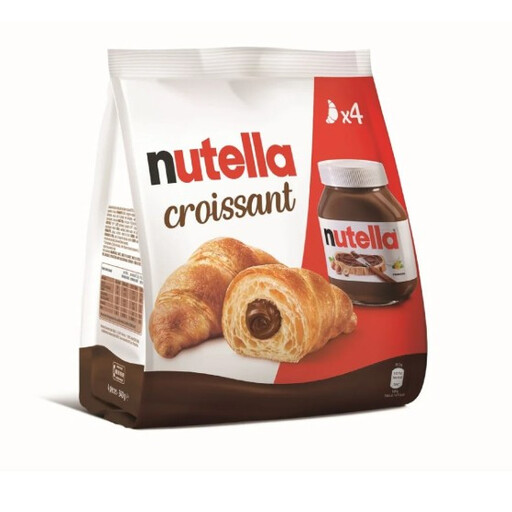 Image unavailable
This pack is a good choice if you’re looking for a hazelnut and cocoa filling rather than a plain croissant. Before serving, check the ingredients list, allergens and storage and preparation instructions on the pack. Don’t assume from the product name that it’s all butter or fermented exclusively with sourdough.
No. The Brioche Pasquier croissant mentioned lists 7% sourdough and also contains yeast. If you’re looking for a recipe fermented exclusively with sourdough, seeing this ingredient on the label isn’t enough to be sure. Check the full ingredients list and the manufacturer’s preparation information.
First check that sourdough appears in both ingredients lists, then compare the proportions if they’re stated on a comparable basis. Brioche Pasquier lists 7% for the product mentioned; Auchan lists dried spelt sourdough in its butter croissants x4, but doesn’t give the proportion.
Read the information on the exact pack: the products mentioned include wheat and milk, and some also contain eggs. For prepacked foods, the European Union’s Your Europe portal says that any allergens present must be emphasised in the ingredients list.
No. The 60 g Bridor product shown by the brand is unbaked and ready to prove. Follow its storage, proving and baking instructions, and check where it’s available before planning to serve it.