Who is this guide for?

Parents organising a school snack

If a child has a food allergy or an individual support plan (PAI), check the croissant’s ingredients and the arrangements in place for their snack. The French Ministry of National Education and Éduscol describe measures such as avoiding allergens or having food supplied by the family, depending on the PAI.

Families who want to serve a snack without baking

A pre-baked product means you won’t need to use the oven just before serving. Lidl lists a made-with-pure-butter croissant that’s ready to eat, while Carrefour also offers a pack of ten fresh croissants made with Charentes-Poitou AOP butter. Check the recipe and allergens for the product you choose.

Parents preparing a snack for a small group

Croissants that need baking let you plan ahead at home, provided you have enough time, an oven and suitable storage. The products listed by Auchan, Carrefour and Bridor each have their own preparation instructions.

What should you check?

Start with the requirements of the place where the snack will be served, then choose a recipe and format to suit the time you have available for preparation.

CriteriaWhat to checkWho is it for?
Allergens and school requirements Ingredients and allergens in the product you buy, any stated traces, and the school’s or PAI’s requirements, if applicable. If the snack is going to school, I first need to know whether each child can have this product under the arrangements in place. Around 33% of consumers put this compatibility first.
Recipe preference The highlighted ingredient or product description, and the ingredients in the exact product; check how it needs to be prepared, too. For a special snack, I first look for a clearly identified recipe, without assuming that ‘made with pure butter’ tells me anything about allergens. This is a priority for around 27% of consumers.
Ready to serve Whether it’s labelled ‘ready to eat’, the number of pieces, and the transport or storage conditions. If the snack starts soon after I arrive, I want to be able to hand out the croissants without baking them. Around 20% of consumers prioritise ease of serving above all else.
Baking for a group Number of pieces, storage, whether defrosting is needed, and baking instructions. When I’m preparing a snack at home for several children, I can plan to use the oven and let the croissants cool before serving. Around 20% of consumers prioritise being able to plan the preparation.

Mistakes to avoid

  • Assuming ‘made with pure butter’ means ‘allergen-free’

    This describes the recipe, not whether the product is suitable for someone avoiding a particular food. The Bridor, Carrefour, Auchan and Lidl products mentioned here all list wheat and milk; depending on the product, other allergens or traces may also be stated.

    Read the label on the croissants you actually buy. For a school snack, also check the school’s requirements and the PAI, if there is one.

  • Choosing frozen croissants without allowing time to prepare them

    A product that needs baking must be stored and prepared according to its own instructions. Auchan says to bake its pack of six croissants for 15 to 20 minutes at 180 °C; Carrefour says to store its frozen Classic’ product at −18 °C.

    If there’s no oven available before snack time, choose a product that’s ready to eat. Otherwise, allow time for the croissants to cool before serving, too.

  • Assuming all products from a retailer have the same ingredients

    Two products from the same retailer can have different recipes, allergens and preparation methods. Fresh croissants have different serving requirements from frozen croissants that need baking.

    Check the exact product name and format, then read the packaging for the pack you’ve chosen rather than relying on details from a different product.

Brands and retailers to know

Bridor

Bridor offers 60 g professional croissants in its Classique and Les Savoureux ranges.

  • Bridor’s product sheets give details of ingredients, allergens, storage and preparation for the products mentioned.
  • You’ll need to plan for baking and cold storage. The Classique product contains wheat and milk, while Les Savoureux also contains eggs.

Carrefour

Carrefour offers frozen Classic’ croissants, as well as fresh croissants made with Charentes-Poitou AOP butter.

  • The fresh AOP pack contains ten croissants. Its designation identifies the butter used in the recipe.
  • Classic’ is a frozen product that must be stored at −18 °C. Check the requirements and allergens for the specific product you choose.

E.Leclerc / Epi d’Or

E.Leclerc lists a six-pack of Epi d’Or croissants made with pure butter, weighing 360 g in total.

  • E.Leclerc’s product page lists nutritional values per 100 g and a Nutri-Score D for this product.
  • Check availability with your chosen store or Drive service before buying.

Auchan

Auchan offers a frozen pack of six croissants made with pure butter, weighing 360 g, for baking at home.

  • Auchan’s product page states that this product contains 24% butter and should be baked for 15 to 20 minutes at 180 °C.
  • Traces of nuts and soya are listed. Check the label before choosing these for a snack where allergies need to be taken into account.

Lidl

Lidl offers a pre-baked croissant made with pure butter, ready to eat.

  • There’s no need to bake this product just before snack time.
  • The product lists wheat, milk and eggs. Lidl’s warnings about possible traces across its bakery range mean you should check what’s suitable for each child.

ALDI / MANNAPAIN

ALDI lists a MANNAPAIN product: a pack of six croissants made with pure butter, ready to bake.

  • The product details specify the number of pieces and that baking is required.
  • Before choosing these for a snack, read the packaging for ingredients, allergens and baking instructions.

Croissants to prepare, available on Joybuy

These three products are suited to a snack prepared at home: two packs of unfilled croissants and one pack filled with cocoa and hazelnut. The filled croissants are for when you fancy a filling, rather than for the same ‘made with pure butter’ recipe preference.

FOURNIL DE PIERRE croissants to bake, pack of six, 360 g

FOURNIL DE PIERRE, croissants to bake x6, 360 g

A pack of six for a snack you can plan to bake at home. Check the instructions before deciding when to serve them. The product contains wheat, milk and eggs; the label on the pack and the school’s or PAI’s requirements are what matter.

View on Joybuy

FOURNIL Organic croissants, pack of six, 420 g

FOURNIL Organic, croissants x6, 420 g

This pack of six is better suited to planned preparation than serving straight away. Check the full baking instructions on the packaging. The product contains wheat, milk and eggs; also check any stated traces and the requirements for the snack.

View on Joybuy
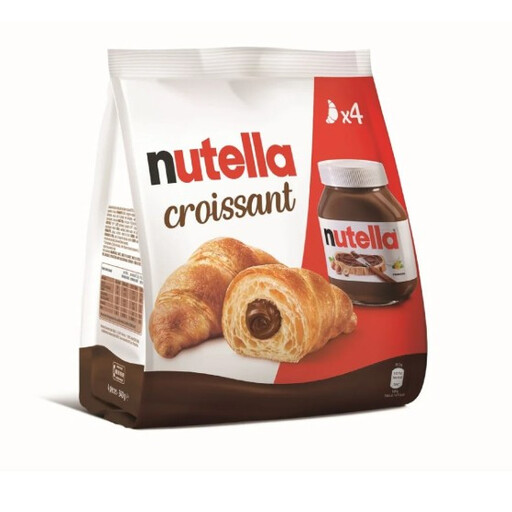
NUTELLA croissants filled with cocoa and hazelnut, pack of four, 340 g

NUTELLA, cocoa and hazelnut filled croissants x4, 340 g

This pack of four is for anyone looking for filled croissants to prepare at home, rather than unfilled croissants made with pure butter. Check the instructions before baking. The product contains hazelnuts, gluten, milk, soya and eggs, among other ingredients. Check the label on the pack and the rules for the snack in question.

View on Joybuy

Frequently asked questions

Is a croissant made with pure butter suitable for a child who needs to avoid gluten?

Don’t assume it is: the Bridor, Auchan, Carrefour and Lidl products mentioned list wheat or gluten. Check the packaging of the product you buy and follow the requirements for the child. France’s DGCCRF reminds shoppers that allergenic ingredients must be highlighted on the labels of pre-packed foods sold in France.

What should you check before taking croissants to school?

Check the school’s requirements and, if a child has a PAI for a food allergy, the arrangements in place for their snack. The form provided by Éduscol covers measures such as the school avoiding allergens or, where appropriate, food being supplied by the family.

How can you compare two packaged croissants labelled ‘premium’?

Compare their ingredients, allergens, number of pieces, weight and preparation method. For nutritional information, use the same basis for comparison, such as values per 100 g. Don’t assume that the word ‘premium’ alone tells you anything about nutritional quality or whether a product is suitable for someone with an allergy.

Can you prepare frozen croissants for a children’s snack?

Yes, as long as you can manage storage, baking and cooling before serving. Follow the instructions for the product you choose: Auchan says to bake the pack mentioned for 15 to 20 minutes at 180 °C, while Carrefour says to store its frozen Classic’ croissants at −18 °C.