Students who want to avoid leftovers
You’re making a meal for one person or a small group. Check how many croissants are in the pack and how they should be stored before choosing.


For an impromptu student dinner, a ready-to-eat pack saves you the trouble of baking. A bag of frozen croissants is a good option if you have access to an oven and freezer, and can use the shared facilities. If sourdough matters more to you than convenience, check the ingredients list: seeing it listed does not prove the croissants are artisan-made or fermented exclusively with sourdough.
You’re making a meal for one person or a small group. Check how many croissants are in the pack and how they should be stored before choosing.
You’re looking for croissants whose ingredients list includes sourdough. La Boulangère and Auchan both offer specific recipes that contain it, but you should also take the presence of yeast into account before drawing conclusions about how they’re made.
You have access to an oven and a freezer, and want to bake several portions as and when you need them. In that case, the storage and baking instructions for your chosen product are key.
Start with a format you can realistically use, then check the recipe and preparation time.
| What to consider | What to check | Who is it for? |
|---|---|---|
| Pack size and leftovers | Number of croissants, net weight and storage instructions once opened. | For a small get-together, I want to use the whole pack without leaving several croissants uneaten. Around 42% of consumers would put pack size and minimising leftovers at the top of their list. |
| Sourdough and ingredients | Whether sourdough and yeast are listed in the ingredients; allergens for the exact product. | If I’m looking for a sourdough croissant, its declared ingredients matter more to me than its appearance. This would be a priority for around 33% of consumers. |
| Baking and storage | Whether it’s ready to eat or needs baking, freezer space and baking instructions. | To serve freshly baked croissants with a meal, I need to be able to store them and plan when to prepare them. Baking to order would be the main requirement for around 25% of consumers. |
The La Boulangère recipe featured by Carrefour lists wheat and rye sourdough, as well as yeast. The ingredients list tells you what’s in the product, not every step in how it’s made.
If artisan production matters to you, ask the baker or manufacturer what they mean by “sourdough”.
The formats reviewed range from packs of eight ready-to-eat croissants to six frozen ones. You could be left with some unused if you can’t store them as instructed.
Match the number of croissants to your number of guests, and check the net weight and storage instructions.
Frozen croissants that are ready to bake need a freezer and an oven. The Auchan product reviewed also recommends defrosting them before baking.
If you don’t have the equipment or time to follow the instructions, choose a ready-to-eat product instead. Don’t refreeze a defrosted product if the packaging says not to.
Storing and preparing frozen croissants takes up freezer space and time before your meal.
France’s Directorate-General for Competition Policy, Consumer Affairs and Fraud Control reminds shoppers that allergenic ingredients must be clearly highlighted on the labels of relevant food products.
Check the ingredients and any “may contain” warnings on the product you’re buying before eating it, even if you already know the brand.
The retailer offers both ready-to-eat packaged croissants and frozen ones to bake.
A packaged option to consider if the declared presence of sourdough is important to you.
The retailer offers an in-store-baked croissant with declared sourdough, as well as frozen croissants to bake.
An option if you’re looking for a ready-to-eat, all-butter croissant.
Worth considering for frozen croissants ready to bake if you have the right equipment.
The Bridor/Lecoq Cuisine catalogue reviewed is aimed mainly at the food service and hospitality sectors.
E.Leclerc Drive lets you browse croissants alongside the rest of your shopping, depending on the store you choose.
These options are for baking several portions. Before choosing this format for a student dinner, make sure you can store them in a freezer and follow the baking instructions.
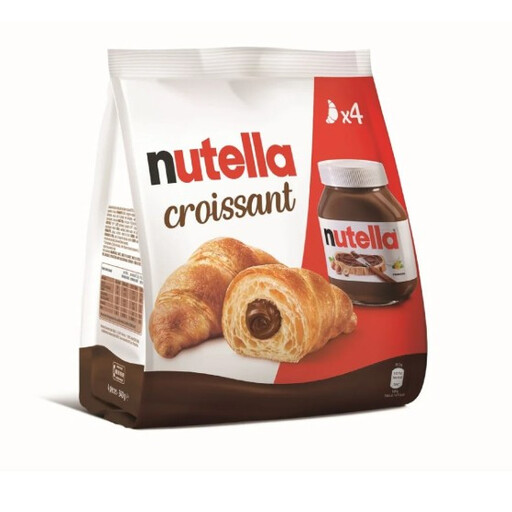 Image unavailable
Worth considering if you want to bake four filled croissants and have access to an oven and freezer.
Pack of four, 340 g. Check the ingredients, allergens and baking instructions on the packaging before you start.
 Image unavailable
A six-pack to consider if you can bake several croissants and store the rest as instructed.
360 g pack. Check the packaging for ingredients, allergens and baking instructions; don’t assume this product contains sourdough.
 Image unavailable
This six-pack is suitable for baking several portions if you have access to an oven and freezer.
Net weight: 420 g. Follow the storage and baking instructions on the packaging, and check the ingredients if you’re looking for sourdough.
Look for “sourdough” in the ingredients list for the exact product. The La Boulangère croissants featured by Carrefour list wheat and rye sourdough, as well as yeast. This doesn’t prove that they’re fermented exclusively with sourdough or artisan-made.
Read the highlighted ingredients and any “may contain” warnings on the pack you buy. France’s Directorate-General for Competition Policy, Consumer Affairs and Fraud Control reminds shoppers that allergenic ingredients must be highlighted. Ingredients vary from one recipe to another.
They are if you have the freezer and oven specified in the instructions. For the Auchan product reviewed, the instructions recommend defrosting for 15 minutes, then baking for 15 to 20 minutes at 180 °C. They also say not to refreeze the product once defrosted.
No. A declared sourdough ingredient tells you about the recipe, but not every step in how the croissants are made. If this method matters to you, ask the baker or manufacturer for more information about the croissant in question.