People living alone who are watching their budget
If you eat one croissant at a time, check the number of pieces, the pack’s weight and how much you’ll realistically get through. A larger pack is only useful if its contents suit your meals.


For a budget-friendly solo meal, start by considering how many croissants you’ll eat and the pack’s weight, rather than assuming all pack sizes are equivalent. A croissant that’s already baked is ready to eat straight away; frozen croissants that are ready to bake need an oven, time and freezer space. In either case, check the ingredients and allergens for the specific product you choose.
If you eat one croissant at a time, check the number of pieces, the pack’s weight and how much you’ll realistically get through. A larger pack is only useful if its contents suit your meals.
A croissant that’s already baked means you don’t need to plan for an oven or baking time. Choose a size that suits when you plan to eat it, then check the date and allergens for the specific product.
Frozen croissants that are ready to bake could fit into your routine if you have room to store them and can follow the preparation instructions. Check the ingredients too: a frozen croissant isn’t necessarily made with butter alone.
For a solo meal, start with how much you’ll use, then check whether the croissant needs baking. Ingredients and storage requirements will help you narrow down the options to suit your needs.
| What to consider | What to check | Who it matters to |
|---|---|---|
| Amount per meal | Number of pieces, net weight and how much you expect to eat. | If I eat one croissant at a time, I want to avoid leaving part of the pack unused. Around 36% of consumers put choosing an amount that suits their meal first. |
| Ready to eat straight away | Look for “ready to eat” or “ready to bake” on the specific product. | For a no-preparation snack, I need a croissant that’s already baked. Around 29% of consumers prioritise not having to bake theirs. |
| Ingredients | Ingredients, allergens, possible traces and nutritional information per 100 g. | If I need to check the recipe before eating, the product range name isn’t enough. Ingredients and dietary suitability come first for around 21% of consumers. |
| Storage and baking | Storage and preparation instructions, as well as the date shown on the packaging. | If I want to keep croissants in the freezer and bake them later, I need to be able to follow the storage instructions. Around 14% of consumers prioritise this flexibility when planning their meals. |
The number of croissants and their weight vary between products. So two packs won’t necessarily cover the same number of solo meals.
Check the net weight and number of pieces, then compare them with how much you’ll eat.
A ready-to-bake product needs preparing at home. A product that’s ready to prove may also need a proving stage, as is the case with the professional croissant from Bridor.
Check the instructions for the specific product before choosing a frozen option.
Remember to allow time for preparation and make sure you have enough room in the freezer.
The croissant recipes listed by Auchan and Carrefour include wheat, milk and eggs, among other ingredients. “All-butter” doesn’t tell you everything that’s in the product.
Check the ingredients, allergens and possible traces for the specific product you plan to eat.
The products reviewed include croissants in small bags, as well as larger packs from Carrefour Catering.
The products featured include Epi d’Or all-butter croissants, sold in packs of six weighing 360 g, as well as ECO+ frozen croissants that are ready to bake.
The product featured is a 360 g pack of six frozen all-butter croissants.
The retailer offers an all-butter croissant sold individually in its bakery section, among other options.
The MANNAPAIN product featured is a 360 g pack of six frozen all-butter croissants that are ready to bake.
Bridor offers a 70 g all-butter croissant that’s ready to prove, aimed in particular at the hospitality sector.
These products are frozen croissants to prepare at home, including a filled option. They’re suited to people with an oven and room in the freezer, rather than anyone who wants to eat a croissant straight away.
 Image unavailable
Worth considering if you can store frozen croissants and bake them before your meal. The pack contains six pieces and weighs 360 g. Allow time for preparation and check the allergens for the specific product.
 Image unavailable
This pack could suit you if storing croissants in the freezer and baking them at home fits into your routine. It contains six croissants and weighs 420 g. Follow the preparation instructions and don’t refreeze the product once it has thawed.
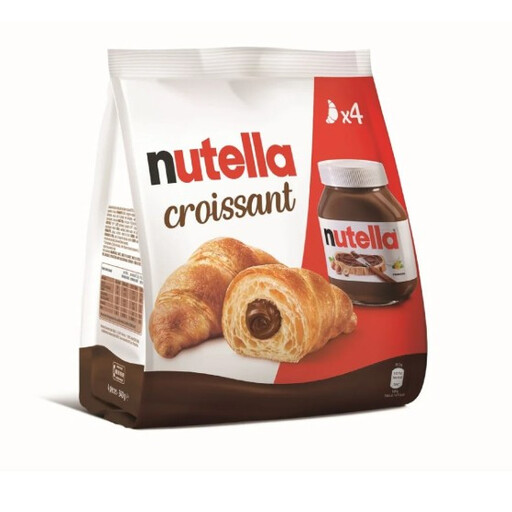 Image unavailable
Consider this option if you’re looking for filled croissants and can store them in the freezer before baking. The pack contains four croissants and weighs 340 g, so it’s not a substitute for a plain version if that’s what you’re after.
Check the number of pieces and the pack’s weight, then choose based on how much you’ll actually eat. Buying a croissant individually means you don’t have to open a pack; with a multi-pack, you’ll need to use or store the rest according to the product instructions.
No. The ECO+ product featured by E.Leclerc contains vegetable oils and fats as well as concentrated butter, while the frozen MANNAPAIN product featured by Aldi is labelled “all-butter”. Check the ingredients list for the specific product.
In France, the Directorate-General for Competition Policy, Consumer Affairs and Fraud Control says that the labelling on pre-packed foods includes information such as ingredients, allergens, net quantity, a date and a nutrition declaration. Nutritional values per 100 g make it easier to compare products. Also check the storage and preparation instructions for the pack you choose.
It depends on the recipe. The products featured by Auchan and Carrefour include wheat, milk and eggs, among other ingredients. Check the allergens and any possible traces listed on the packaging of the croissant you’re going to eat.