People specifically looking for sourdough
You want to tell the difference between natural sourdough starter highlighted by the baker and a recipe that includes a sourdough ingredient as well as yeast.


For a meal for one, start by thinking about when you plan to eat your croissant: a handmade piece made with natural sourdough starter and intended for quick consumption, a pack containing sourdough that you can portion out, or frozen croissants to bake when you need them. The last option is mainly about flexibility: the product reviewed here is not described as a sourdough croissant. In every case, the presence of sourdough alone does not prove that the dough was fermented exclusively with sourdough; check the recipe, allergens and storage instructions.
You want to tell the difference between natural sourdough starter highlighted by the baker and a recipe that includes a sourdough ingredient as well as yeast.
You need to choose between a piece to eat soon, several wrapped croissants to spread across different meals, and a product you can bake when you need it.
You compare the ingredients and allergens in the exact product, including wheat, milk, eggs or nuts, depending on the recipe.
If you’re buying for one, first consider the role sourdough plays in the recipe and what you’ll do with any croissants left over.
Worth considering: if an explicit description of the natural sourdough starter matters more to you than being able to keep the product for several days.
Bear in mind: Maison Kayser says its croissant keeps for 8 hours at room temperature. It is available for delivery or collection in Île-de-France.
Worth considering: if you’d rather spread the contents of a pack across several meals.
Check: the Brioche Pasquier recipe lists sourdough, but also yeast, so it cannot be described as fermented exclusively with sourdough.
Worth considering: if your priority is baking only the pieces you need.
Bear in mind: the Carrefour Classic’ product reviewed does not mention sourdough and needs to be kept in the freezer and baked before serving.
| What to consider | What to check | Who is this for? |
|---|---|---|
| The role of sourdough in the recipe | Look for how the sourdough is described, then read the full ingredients list, paying particular attention to whether yeast is also included. | If I’m looking for a croissant specifically described as made with sourdough, I don’t want to mistake the presence of this ingredient for fermentation exclusively with sourdough. Around 29% of consumers would put this distinction at the top of their list. |
| Pack size and storage | Compare the number of pieces and the net weight. Check the storage instructions and, for a multipack, what to do after opening. | When I’m eating alone, I want a portion that suits me without having to use up a whole pack quickly. Getting the pack size right would be the main concern for around 24% of consumers. |
| Baking when you need it | Check the baking instructions and make sure you have enough freezer space before choosing a frozen product. | If my meals vary from one day to the next, I’d rather bake only the croissants I need, as long as I can store and prepare them properly. Around 18% of consumers would prioritise this flexibility. |
| Ingredients and allergens | Read the ingredients and allergen information for the exact product, including any statements about possible traces. | When certain ingredients or allergens affect what I can buy, the word ‘croissant’ alone doesn’t tell me enough about the recipe. For around 29% of consumers, ingredients would be the most important factor. |
The Brioche Pasquier and Auchan recipes reviewed also list yeast. So the presence of sourdough alone does not establish the fermentation method or mean that a product is artisan-made.
Read the full ingredients list and look for a precise description of the process if it matters to your choice.
The pack of eight Brioche Pasquier croissants sold by Houra weighs 320 g, or 40 g per piece. The pack of six frozen Carrefour Classic’ croissants weighs 360 g, or 60 g per piece.
Divide the net weight by the number of croissants, then choose a portion that suits the role this pastry will play in your meal.
A croissant ready to bake needs freezer space and time to follow the baking instructions.
Before you buy, check the storage and preparation instructions on the pack.
The recipes reviewed differ, particularly in whether they contain eggs and other ingredients. France’s Directorate-General for Competition, Consumer Affairs and Fraud Control reminds shoppers that allergens in pre-packed foods must be highlighted in the ingredients list.
Check the label on the product you choose, including any statements about possible traces.
An artisan option intended for quick consumption, made with natural sourdough starter that the brand says it prepares in-house.
Packaged croissants containing sourdough. The pack of eight pieces sold by Houra weighs 320 g.
A butter croissant sold in a pack of four, with dried spelt wheat sourdough listed in the ingredients.
A frozen, ready-to-bake option when baking only what you need matters more than the presence of sourdough.
A range of croissants aimed in particular at foodservice and hospitality businesses.
This selection features a pack of filled croissants that you can split across individual meals. The hazelnut and cocoa filling sets them apart from the plain croissants mentioned above.
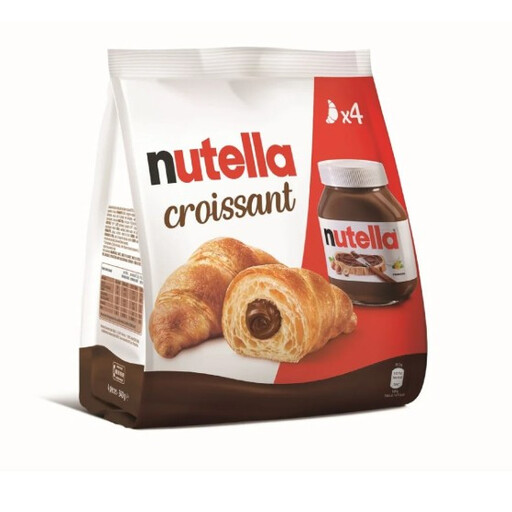 Image unavailable
This pack of four may suit you if you’d like to spread filled croissants across several meals. It weighs 340 g and has a hazelnut and cocoa filling. If sourdough is important to your choice, check whether it is listed and read the ingredients on the packaging. Also check the allergens, storage instructions and preparation guidance.
Not necessarily. The Brioche Pasquier and Auchan recipes reviewed list sourdough as well as yeast. If the process matters to you, read the ingredients and look for an explicit description from the manufacturer.
Compare the weight per piece and think about what you’ll do with the rest of the pack. The Brioche Pasquier pack sold by Houra weighs 320 g for eight pieces, or 40 g per croissant. The frozen Carrefour Classic’ pack weighs 360 g for six pieces, or 60 g per croissant, and needs to be baked.
Maison Kayser says its croissant keeps for 8 hours at room temperature, in its paper packaging and in a dry place. This guidance applies to this particular product, so follow the instructions for the one you buy.
Check the information for the exact product. The croissants reviewed include wheat and milk, among other ingredients, and some recipes also contain eggs. As France’s Directorate-General for Competition, Consumer Affairs and Fraud Control points out, allergens in pre-packed foods must be highlighted in the ingredients list.
Don’t refreeze a thawed product if the packaging says not to, as is the case with the Carrefour Classic’ product reviewed. Check the pack instructions before splitting the croissants across several meals.