For those who want to make the dough
You’d like to make sourdough croissants, choose the ingredients and set aside time to prepare them before your guests arrive.


Make sourdough croissants from scratch if working with the dough is part of the occasion and you can allow time for it to rest: GialloZafferano France’s recipe calls for 10 hours of resting time. To serve them warm without making the dough, choose frozen croissants that are ready to bake, provided you have space to store them and can plan when to bake them. Ready-baked croissants save you that step, but the words “sourdough” alone don’t prove they’re handmade.
You’d like to make sourdough croissants, choose the ingredients and set aside time to prepare them before your guests arrive.
You’d rather bake ready-to-use croissants than laminate and prove the dough yourself. You’ll need to consider freezer space and the baking instructions.
You’re looking for ready-baked croissants, perhaps labelled “sourdough”, and want to distinguish their ingredients from how they’re made.
First decide whether you want to make the dough, bake the croissants or serve them as they are. Then choose a pack size to suit your guest list and the space you have available.
| What matters | What to check | Who it suits |
|---|---|---|
| Sourdough preparation | The resting time, feeding the sourdough starter and the steps in your chosen recipe. | If making the dough is part of the occasion, you’ll need to plan ahead for the resting time and starter. Around 36% of consumers would prioritise making them at home. |
| An easier way to serve them warm | The “ready to bake” label, baking instructions and storage requirements. | If you want to serve warm croissants without working the dough, baking ready-to-bake products meets your main need. Around 29% of consumers would favour this option. |
| Pack size and storage | The number of croissants, pack weight and the space needed to store them. | If you need to plan quantities for your guests, an oversized pack can make storage tricky. Around 21% of consumers would prioritise pack size and storage. |
| Ready to serve | The ingredients list, allergens and storage requirements for a ready-baked product. | If there’s no time to bake, having croissants ready to serve and being able to check what’s in them becomes essential. Around 14% of consumers would make convenience their top priority. |
Auchan’s listing for Pasquier croissants states that they contain 7% sourdough starter, but this percentage alone tells you nothing about where or how they were made.
Read the full ingredients list. If an artisan process matters to you, ask the retailer how the dough is made and fermented.
Auchan lists PANAVI frozen croissants in packs of 40, while the EPI D’OR option listed by E.Leclerc contains 6. These pack sizes need different amounts of freezer space.
Work out how many croissants you’ll need before buying, and check that you can store your chosen pack as directed.
A large pack can take up unnecessary freezer space if you’re not planning to serve croissants on several occasions.
Ingredients and precautionary statements about traces can vary by product. The words “pure butter” don’t replace this information.
For any guests with allergies, check the packaging or the information displayed in store before you buy.
E.Leclerc’s listing for EPI D’OR croissants advises shoppers to check availability with their local store. Finding a product online isn’t enough to plan your get-together.
Confirm what’s available at the shop where you plan to buy the croissants, especially if you’re looking for a sourdough version.
Bridor features several ranges of croissants in its trade catalogue.
Carrefour lists frozen Classic’ pure-butter croissants, ready to bake, in a pack of 6 weighing 360 g.
E.Leclerc lists frozen EPI D’OR croissants, ready to bake, in a pack of 6 weighing 360 g.
Auchan lists Pasquier croissants made with sourdough, individually wrapped in a pack of 16, and frozen PANAVI croissants ready to bake in a pack of 40.
Lidl describes a pure-butter croissant that’s already baked and ready to eat.
ALDI says it bakes pastries, including croissants, in store every day.
These options include a filled croissant for a small gathering and two pack sizes of croissants to bake at home. If sourdough is your main priority, check that it’s stated on the product you choose rather than assuming it applies to the whole selection.
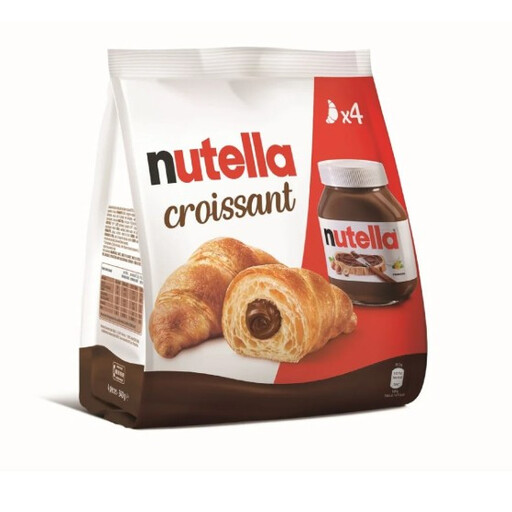 Image unavailable
Consider these if you’d like to serve a filled option to a small group. The pack contains 4 croissants and weighs 340 g. Before planning your get-together, check the packaging for sourdough starter, allergen information and baking instructions.
 Image unavailable
This pack of 6 croissants weighs 420 g and is for those who’d rather bake than make the dough. Check the product’s storage and baking instructions, as well as its ingredients if you’re specifically looking for sourdough.
 Image unavailable
This pack of 6 croissants weighs 360 g and is a good choice if you want to bake them at home without making the dough. Check the pack’s baking and storage instructions; if sourdough matters to you, check the ingredients list too.
No. The Auchan listing for Pasquier croissants states that the ingredients include 7% sourdough starter. This tells you about the ingredients, not whether they were made using an artisan process. If that matters to you, read the full ingredients list and ask the retailer how the dough is made.
Allow plenty of time: GialloZafferano France’s recipe gives a preparation time of 60 minutes, 10 hours of resting time and 20 minutes of baking. It also calls for the sourdough starter to be fed before use, so check the steps before deciding when to serve them.
Follow the instructions for the product you’ve bought. Auchan’s PANAVI and Carrefour’s Classic’ listings state that they should be stored at −18 °C; Carrefour also advises against refreezing the product once thawed. Make sure you can keep them under these conditions until you bake them.
Check the packaging or the information available at the point of sale for the croissant in question. Service-Public.fr explains that allergen information also applies to non-prepacked processed foods; for prepacked foods, the DGCCRF reminds shoppers that allergens must be highlighted in the ingredients list. Don’t assume an allergen is present or absent based on the product name alone.