For individual filled croissants on New Year’s Eve, choose a ready-baked or bake-at-home product, depending on how much time and oven space you have. If you’re mainly after neat slices for open sandwiches or more substantial sandwiches, compare sliced brioche or a flaky bun designed for fillings instead. These are different formats, not croissants sold in “thick slices”.
Which format is right for you?
The filling and how you plan to serve it matter more than the phrase “thick cut”: a croissant split in half, a slice of brioche and a flaky bun will all look different on a buffet.
Hosts making generously filled sandwiches
If the filling needs to fit into a portion that’s easy to pick up, start by choosing the right base. Clearly labelled sliced brioche is ideal for neat open sandwiches, while Bridor describes its Bun’n’Roll as a croissant-dough base designed for savoury recipes, among other uses.
Hosts who want to serve warm croissants
Bake-at-home croissants let you time the baking to coincide with serving, as long as you allow for oven space and baking time before adding the filling. ALDI, for example, offers a pack of six ready-to-bake all-butter croissants, while Lidl describes a croissant that’s already baked and ready to eat.
People checking ingredients
Check the label on each product before planning your fillings and portion sizes. The ingredient lists for products featured by Lidl and Brioche Pasquier include ingredients derived from wheat and milk; ingredients vary by product.
What should you look for when planning your buffet?
First decide whether your priority is generous fillings, serving warm food or sticking to the traditional croissant format. Then check how the product is presented and follow its instructions.
| What to consider |
What to check |
Who is this for? |
| How well the filling stays in place |
Check whether the base is already sliced and whether its shape suits your planned filling. For example, Auchan lists an 18-slice, 485 g Harry’s brioche; Bridor describes its 85 g Bun’n’Roll as a base for savoury recipes. |
For a generously filled sandwich, I want a portion that’s easy to assemble and pick up. Around 36% of consumers rank keeping the filling in place as their top priority. |
| Serving warm |
Check whether the product is ready to eat or needs baking, and read the preparation instructions on the packaging. |
If the croissants need to come out of the oven close to mealtime, I’ll need to set aside time to bake them before adding the filling. Serving warm is the main priority for around 29% of consumers. |
| Croissant format |
Choose between a flaky croissant to split open and a slice of brioche to fill. Changing the base also changes the shape of the portion. |
I’d rather serve something that looks like a proper croissant, even if that means giving up neat, even slices. This is the priority for around 21% of consumers. |
| How much to buy |
Compare the number of pieces or slices per pack and confirm the range with your chosen shop. Carrefour lists packs in several sizes, depending on the product. |
To make sure there are enough portions for the buffet, I need to know how many pieces I’m buying. Around 14% of consumers prioritise quantity. |
Mistakes to avoid
-
Assuming “thick cut” means a sliced croissant
The phrase alone tells you neither the product’s shape nor the thickness of any slices. Individual croissants and sliced brioche won’t work equally well for open sandwiches.
Decide whether you want to split open croissants, make open sandwiches or assemble filled sandwiches, then check whether the product you choose is sold sliced.
-
Adding fillings that need chilling too far in advance
If you’re preparing a buffet ahead of time, make sure you follow the storage instructions for each filling. Anses recommends keeping relevant foods between 0 and +4 °C and not leaving prepared foods out for more than two hours before refrigerating them.
Keep ingredients chilled as instructed and assemble portions shortly before serving, or return prepared food to the fridge promptly.
-
Relying on “all-butter” to check for allergens
This description doesn’t tell you everything that’s in the recipe. The croissant featured by Lidl, for example, lists wheat, milk and eggs among its ingredients.
If any guests have allergies, read the label on the product you buy, including highlighted allergens and any warnings about possible traces.
-
Planning your buffet based on a general product range
Availability depends on the shop. Lidl notes, for example, that its bakery counter range is only available in stores with the appropriate facilities and applies to products in its range.
Check that your chosen shop or click-and-collect service has the format you want before working out how many portions to prepare.
Brands and retailers to explore
These examples show a range of formats to compare for New Year’s Eve. Each detail below relates to the specified product or range, not the entire brand.
Bridor
An option to consider if you’re looking for a flaky base for savoury recipes, from a range aimed at professionals.
- Bridor describes the 85 g Bun’n’Roll as a croissant-dough bun that can be used as a base for burgers or desserts.
- It isn’t a sliced croissant. Check the defrosting and baking instructions, as well as the purchasing terms, before adding it to your menu.
Carrefour
A retailer where you can compare croissant packs by the number of pieces you need.
- Depending on the products shown, Carrefour France lists packs of 4, 8, 10, 16 or 20.
- Check the product and range at your chosen shop; the pack size doesn’t tell you whether the croissants are sliced.
Lidl
An option to look at if you want croissants that are already baked, so there’s less to prepare at serving time.
- Lidl describes its all-butter croissant as ready to eat.
- For a bakery-counter pastry, check that your shop has the right facilities and stocks the product you want. Read the label to check the ingredients.
ALDI
An option to compare if you have an oven and can bake the croissants before the buffet.
- ALDI lists a pack of six ready-to-bake all-butter croissants.
- Read the baking instructions and ingredients on the pack you choose before planning how to serve them.
Brioche Pasquier
A packaged croissant to consider if you want to check the ingredients before buying.
- Brioche Pasquier’s product page lists gluten, butter, wheat and milk among the ingredients.
- This information doesn’t tell you how thickly the croissant is cut or whether it can hold a generous filling.
An option available on Joybuy
If you’re putting together buffet sandwiches rather than serving flaky croissants, this brioche is another base worth considering. Check exactly how it’s sold if you want to make thick slices for open sandwiches.
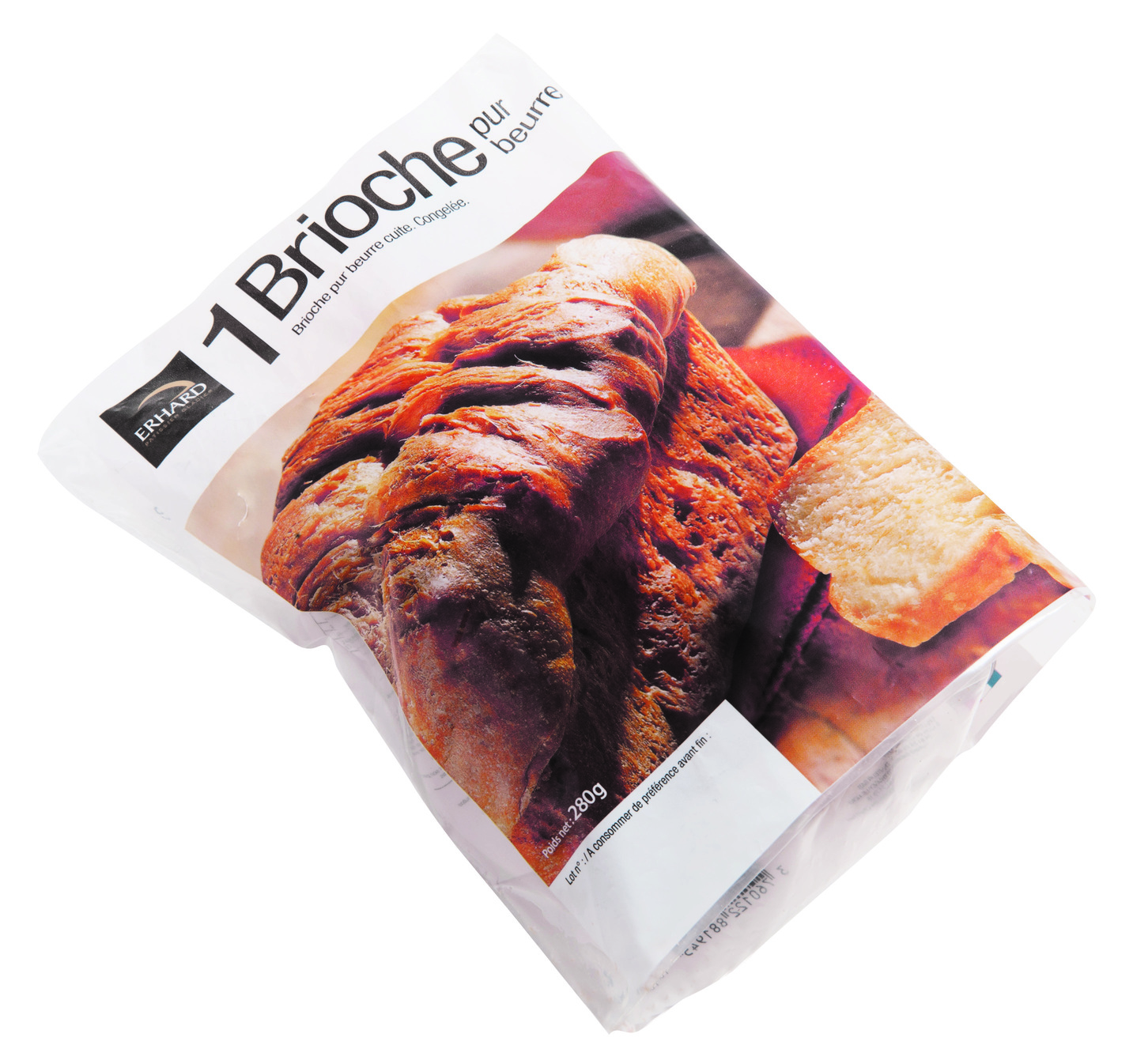 Image unavailable
ERHARD All-Butter Brioche 280 g
Worth considering as a base for buffet sandwiches rather than as a flaky croissant. This brioche weighs 280 g. Before planning thick slices for open sandwiches, check whether it’s sold sliced and whether its shape suits your filling. See the packaging for ingredients and allergens.
View on Joybuy
Frequently asked questions
How can I check the allergens in a packaged croissant?
Read the ingredients list on the pack you buy. The DGCCRF states that allergenic ingredients in prepacked foods must be highlighted in the list. Also check for any warnings about possible traces, and don’t rely on the phrase “all-butter” alone to tell you what’s in the product.
Can I make filled croissants well ahead of the buffet?
If the filling needs to be kept chilled, follow its storage instructions and don’t leave it out of the fridge for too long. Anses recommends keeping relevant foods between 0 and +4 °C and refrigerating prepared foods within two hours. Assembling the croissants shortly before serving makes this easier to manage.
What’s the difference between a use-by date and a best-before date for New Year’s Eve products?
A use-by date applies to highly perishable products and must be followed alongside the storage instructions. A best-before date indicates how long a product retains its properties when stored as directed. The French Ministry of the Economy distinguishes between these two dates. Also check the instructions for storing the product after opening.
Is an all-butter croissant automatically suitable for someone with an allergy?
No. “All-butter” is no substitute for the full ingredients list. Lidl’s croissant, for example, lists wheat, milk and eggs, while Brioche Pasquier lists gluten, butter, wheat and milk for its product. Always check the packaging of the product you’re actually serving.


