Hosts on a tight budget
If you’re serving several people, first work out how many croissants you’ll need. The number of pastries and the net weight make it easier to compare packs of different sizes without confusing the quantity with the pack size.


For an international food evening on a budget, start by working out how many croissants you’ll be serving. A ready-to-eat pack is convenient if you’re serving them straight away, while a frozen, ready-to-bake pack requires an oven and time to prepare. If you’re planning a selection, count the croissants separately from the other pastries. Check the allergens and storage instructions for each product before deciding how many to buy.
If you’re serving several people, first work out how many croissants you’ll need. The number of pastries and the net weight make it easier to compare packs of different sizes without confusing the quantity with the pack size.
Frozen, ready-to-bake croissants can be prepared shortly before serving, provided you have enough oven space and follow the instructions for the product you’ve chosen. Baking time needs to fit around the rest of your evening menu.
If a guest needs to avoid an ingredient, check the ingredients and allergens for the product you’ll actually be serving, including any ‘may contain’ warnings. Don’t assume that ‘made with pure butter’ tells you everything about a croissant’s ingredients.
Decide how many people you’re catering for and what role the croissants will play in the menu, then choose between serving them straight away or baking them in the oven. A selection can add variety, but not every item in it will be a croissant.
| What matters | What to check | Who it matters to |
|---|---|---|
| Group budget | Number of pastries per pack and net weight, so you can work out how many packs you’ll need. | When money is tight, I want to buy the amount I need without buying unnecessary extra packs. Around 39% of consumers would put keeping to a budget first. |
| Quantity and selection | Number of guests and how the pastries are divided up if the pack includes croissants and other pastries. | For a shared buffet, I want everyone to be able to choose the pastry planned for the menu; around 23% of consumers would prioritise quantity and serving arrangements. |
| Serving method | Whether the product is ready to eat or ready to bake; for the latter, check the preparation steps and oven capacity. | If the oven is already being used for other dishes, I need to choose between serving the croissants as they are or setting aside time to bake them. Around 23% of consumers would prioritise how the croissants are served. |
| Ingredients and storage | Ingredients, declared allergens, date marking and storage instructions for the product you buy. | If a guest has a dietary requirement, I need to be able to check what I’m serving them and store the product as instructed. Around 15% of consumers would prioritise these checks. |
A pack of six and a pack of ten won’t serve the same number of people. The weight can also vary: E.Leclerc lists a six-croissant, 360 g Epi d’Or pack, while Carrefour Traiteur lists ten croissants weighing 450 g.
Estimate how many pastries you want for the evening, then check how many packs of each size you’d need.
According to its product details, Auchan’s ready-to-bake croissants need to be prepared before serving, including baking for 15 to 20 minutes at 180 °C. This instruction applies to this product, not to all frozen croissants.
Check the instructions on the pack you choose, and plan to transport and store it at the stated temperature.
Preparation will also take up oven space during the evening.
This claim doesn’t replace the ingredients list. Product information from Lidl and Bridor, for example, lists cereals containing gluten, milk and eggs, depending on the recipe.
Ask guests about their dietary requirements, then check the allergens and any ‘may contain’ warnings for the product you’ll actually be serving.
The date marking and storage conditions can affect your shopping plans. For frozen products, you’ll also need to follow the defrosting instructions.
Before planning your purchase, check the date, storage temperature and instructions on the packaging.
These examples show different pack sizes and ways of preparing croissants. Their features won’t necessarily apply to other croissants from the same retailer or brand.
A range of pastries available to order for a group, including a 450 g pack of ten pure-butter croissants listed as serving eight people.
The Epi d’Or product listed is a 360 g pack of six pure-butter croissants.
The product reviewed is a 360 g pack of six frozen, ready-to-bake pure-butter croissants.
Lidl’s product information describes a ready-baked pure-butter croissant, a handy option when you want to keep serving simple.
ALDI lists a pack of six pure-butter croissants that are ready to bake.
Bridor describes its 70 g Croissant Éclat du Terroir as a professional, ready-to-bake product made with Charentes-Poitou AOP butter.
These are frozen croissants to bake for an evening when you have access to an oven. The two packs of six are different from the pack of four filled croissants, which isn’t a substitute for plain croissants on the menu.
 Image unavailable
This frozen, ready-to-bake pack is a good choice if you can set aside time to prepare six croissants before serving. Check the packaging for baking instructions, allergens and storage conditions; do not refreeze after defrosting.
 Image unavailable
This frozen pack is a good choice if you’re planning to serve six croissants that need baking. Check the packaging for preparation instructions, allergens and storage conditions; do not refreeze after defrosting.
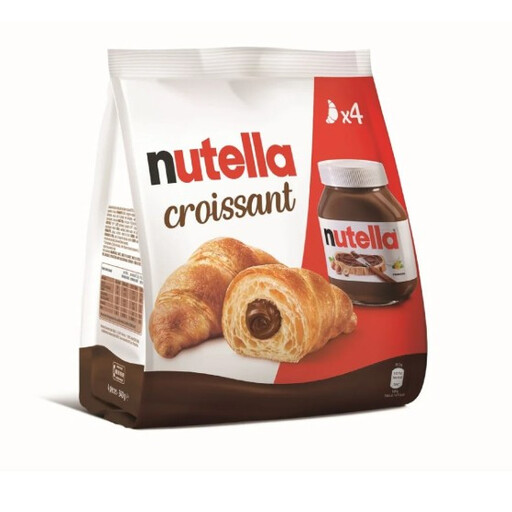 Image unavailable
This frozen, ready-to-bake option is a good choice if you’d like to serve four filled croissants instead of plain ones. The ingredients list includes hazelnuts, milk, soya, eggs and gluten, among other ingredients. Check the label on the product you buy, along with its baking and storage instructions.
Start by comparing the number of pastries and the net weight, then work out how each pack fits the number of croissants you want to serve. For example, the products listed by Carrefour Traiteur and E.Leclerc contain ten croissants weighing 450 g and six croissants weighing 360 g, respectively.
Choose a ready-to-eat product if you need to serve the croissants straight away. Frozen, ready-to-bake croissants need an oven, time and careful attention to the pack instructions. For its pack of six, Auchan recommends baking for 15 to 20 minutes at 180 °C, after defrosting for 15 minutes.
Read the ingredients for the exact product and check for any ‘may contain’ warnings. Product information from Lidl and Bridor, for example, lists cereals containing gluten, milk and eggs. Other recipes, such as hazelnut-filled croissants, need additional checks.
Yes, as long as the date marking and storage conditions suit your plans. Check the information on the packaging and, for frozen croissants, maintain the required storage conditions and follow the instructions after defrosting.