Households keeping track of portions
The number of croissants and the pack weight can help you choose the right amount for the breakfasts you have planned, rather than relying on how big the packaging looks.


For a no-cook breakfast, choose croissants that are already baked. Frozen croissants ready to bake are a better choice if you can plan ahead and store them as directed. A large pack is only worthwhile if you’ll use all the portions. In every case, check the recipe and allergen information for the product you choose.
The number of croissants and the pack weight can help you choose the right amount for the breakfasts you have planned, rather than relying on how big the packaging looks.
Frozen croissants ready to bake could be a good option if you have a freezer and can plan their preparation before serving.
You may want to compare the ingredients in different products or check the allergens on the pack you’re buying.
First, decide whether you need croissants that are ready to serve or whether you can bake them. Then compare the packaging, storage requirements and ingredients of the specific product.
| Criterion | What to check | Who is this for? |
|---|---|---|
| Quantity per pack | Number of croissants and net weight, based on the breakfasts you have planned. | If several people will be sharing the pack, you’ll want to know how many croissants it contains before choosing a size. Around 33% of consumers put getting the portion size right at the top of their list. |
| How quickly they can be served | Whether the pack says ‘already baked’ or ‘ready to bake’, and any preparation instructions. | On a busy morning, you may want croissants you can serve without having to plan any baking. This is the top priority for around 27% of consumers. |
| Storage and how often you’ll use them | Available space and the storage temperature specified for the frozen product. | If you serve croissants regularly, a large pack may work for you as long as there’s room in your freezer. Suitable storage is the top priority for around 20% of consumers. |
| Ingredients and allergens | Ingredient list and allergens highlighted on the packaging. | If the ingredients affect your choice, check the label for that particular product rather than assuming all croissants are the same. Around 20% of consumers prioritise this check. |
Packs of croissants can contain different numbers of pieces and have different weights. So, the right amount for one household might not be right for another.
Check the number of croissants and the net weight before choosing a pack for the breakfasts you have planned.
An already-baked croissant can be served without cooking, while a frozen croissant that’s ready to bake needs to be prepared first.
Check the product’s status and instructions before deciding when to serve it.
Baking takes time and requires suitable equipment. Frozen products also need to be stored according to the instructions on the packaging.
Ingredients and allergens vary between products. The Carrefour Classic’ product information mentions possible traces of soya and nuts, while an E.Leclerc ECO+ product lists vegetable fats and concentrated butter.
Read the ingredients list and allergen information on the pack you choose. The DGCCRF reminds shoppers that allergens must be highlighted in the ingredients list on prepacked foods.
The Panavi pack sold by Auchan contains 40 croissants, weighs 2.4 kg and specifies storage at −18 °C or below.
Check that you have room in your freezer and consider how often you’ll serve these croissants.
Carrefour offers a box of ready-to-eat all-butter croissants, as well as frozen Carrefour Classic’ croissants that are ready to bake.
Epi d’Or is one of the bakery ranges featured by E.Leclerc.
Auchan offers a six-pack of all-butter croissants, as well as a Panavi pack designed for regular use.
Lidl’s product information describes an already-baked all-butter croissant, which is worth considering when you need breakfast without any baking.
MannaPain is a range of frozen all-butter croissants featured by ALDI.
Bridor offers bakery products for professionals, including a 75 g croissant that’s ready to prove.
These products are croissants for breakfasts where you can plan the baking in advance. Compare the number of pieces and the weight, then check the instructions on the pack before choosing.
 Image unavailable
For a breakfast where you can plan the baking in advance. The pack contains six croissants and has a net weight of 360 g. Check the preparation instructions and allergen information on the packaging.
 Image unavailable
For a breakfast you can prepare in advance, rather than serving straight away. This pack of six croissants weighs 420 g. Check the baking, storage and ingredient information on the packaging.
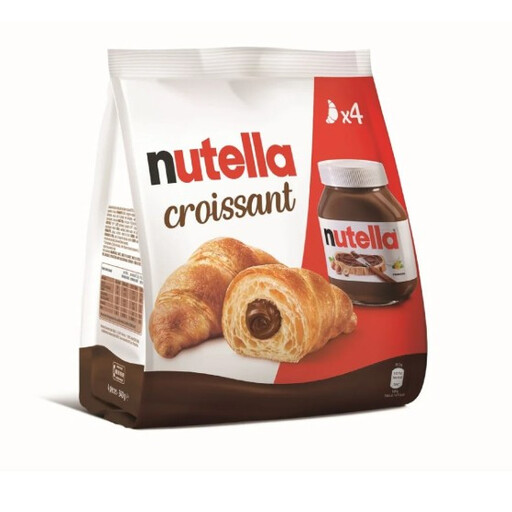 Image unavailable
For a sweeter breakfast, with a filled option instead of a plain croissant. The pack contains four pieces and weighs 340 g. Check the ingredients, allergen information and preparation instructions for the product you buy.
Compare the number of pieces and the net weight with the breakfasts you have planned. A six-pack and a large pack need different amounts of storage space and are suited to different rates of use.
Check the product details and instructions on the product page and then on the packaging. Lidl describes its featured croissant as already baked, while ALDI’s MannaPain croissants are described as frozen and ready to bake.
Check the allergen information for the specific pack. The products featured include wheat, milk and eggs, and some may contain traces of soya or nuts. For prepacked foods in France, the DGCCRF says allergens must be highlighted in the ingredients list.
A large pack is a good option if you plan to serve the croissants regularly and can store them as directed. The Panavi pack featured by Auchan contains 40 pieces and weighs 2.4 kg. It specifies storage at −18 °C or below, so check that there’s room in your freezer.