
Livraison le jour même ou le lendemain

Qualité garantie

Débloquez vos offres de bienvenue: Livraison GRATUITE | Jusqu'à -80 % | 30 jours d'essai gratuits à JoyPlus
Téléchargez l'application
A craving for crisps and savoury snacks can quickly turn into disappointment: a half-empty bag, soggy texture, too much salt, or a flavour that bears no resemblance to what the packaging promised. Whether you’re planning a shared aperitif, a night with friends, or a quick bite on the go, a few simple criteria make it easier to compare French crisps, imported brands and salty snacks.
A large packet doesn’t necessarily contain more product. Crisps are usually protected by a cushion of air to prevent breakage during transport. So always rely on the net weight, shown in grams, rather than the apparent size of the bag.
For a group aperitif, a 120 to 156 g bag should do the trick. Bags of 55 to 80 g are better suited to a single serving or a small snack.
A label like “barbecue”, “cheese” or “chicken” gives you a general idea of the taste, but it doesn’t always spell out the recipe. Take a moment to check the ingredients list: cheese powder, flavourings, spices, flavour enhancers or animal-derived ingredients could be hiding in there.
Anyone with allergies should also look out for the highlighted allergens. Depending on the recipe, crisps may contain milk, wheat, soya, mustard, celery, peanuts or, in some imported products, molluscs.
Even a perfectly packed potato crisp loses its crunch once the bag is opened. Seal it carefully and store it in a dry place at room temperature, away from heat and direct sunlight. To enjoy the best texture, eat the contents within a few days of opening.
Ripple-cut crisps have a thicker, uneven surface. They hold dips and seasonings particularly well – a great choice for a sharing platter with houmous, salsa or guacamole. Thin crisps are generally lighter in the mouth, but also more fragile.
Texture also depends on the base ingredient. Traditional potato crisps are made from sliced or dehydrated potatoes. Some stackable products, on the other hand, are made from potato flakes and flours.
The ingredients list lets you tell a short recipe from a more complex seasoning. Brets Paysanne crisps, for example, highlight French potatoes, sunflower oil and Guérande salt. A cheese or spice recipe, by contrast, may contain whey, milk powder, soya or wheat.
Also check the nutritional information per 100 g. The products featured here typically range from 497 to 544 kcal per 100 g, depending on their composition. This comparison basis is more reliable than the value given per serving, as serving sizes vary from brand to brand.
For a classic aperitif, plain, lightly salted, barbecue or cheese flavours fit easily on any buffet table. Spiced crisps – curry, chicken or chilli blends – are more for those who love bold, lingering tastes.
Planning several flavours? A crisp assortment lets you mix things up with a plain option, a indulgent cheese choice, and a spicy or internationally inspired variety.
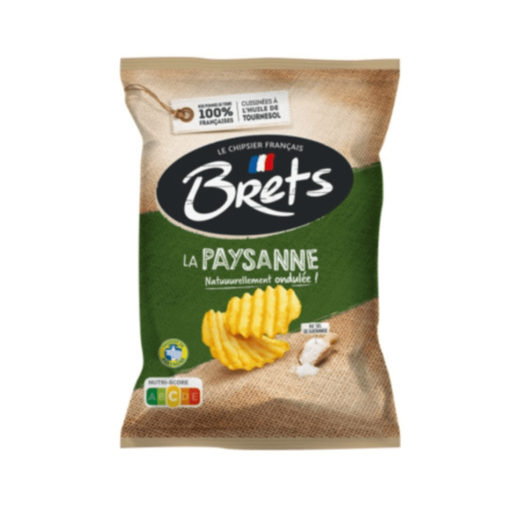
Why this choice suits this profile: A simple recipe for discovering French crisps without a load of seasonings. The 125 g bag is ideal for a treat or a small aperitif.
The net weight is clearly stated. According to the information provided, the recipe contains no palm oil, colourings or preservatives. The ingredients list is short.
French potatoes, sunflower oil, Guérande salt and a ripple cut. No allergens are declared on the product sheet provided.
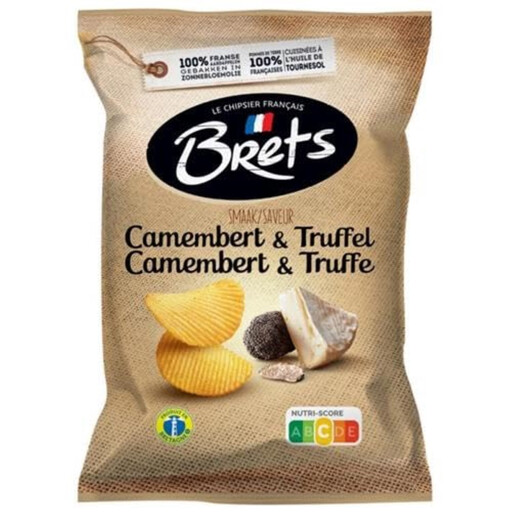
Why this choice suits this profile: The combination of camembert and truffle fits naturally into a sophisticated aperitif, alongside a cheese board or low-sugar drinks.
The 125 g bag and nutritional information let you check the quantity before buying. The presence of milk is clearly flagged, reducing the risk of mistakes for anyone with allergies.
French potatoes, sunflower oil, camembert powder and summer truffle powder. The ripple cut adds extra crunch.
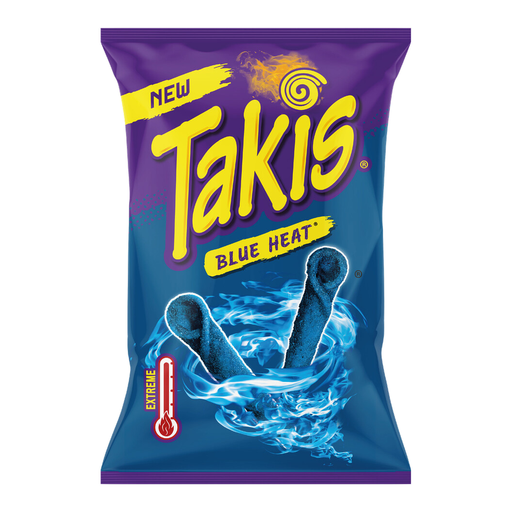
Why this choice suits this profile: Fans of bold flavours and international snacks will love this blend of corn, chilli and lime in a handy 100 g bag.
The stated intensity encourages you to check the ingredients before serving. The product sheet notes the presence of soya and a salt content of 1.7 g per 100 g.
A practical size, a rolled texture and a chilli and lime seasoning. Store in a dry place and eat soon after opening.
We’ve selected a full range, updated in real time, of products that meet these exacting criteria as well as European food safety regulations.
Go for a 120 to 156 g bag and mix up the flavours: plain or lightly salted, cheese, barbecue and a spicy option. Thanks to their uneven surface, ripple-cut crisps are especially good with dips and spreads.
Seal it tightly and keep it in a cool, dry place. Avoid the fridge – its humidity can ruin the texture. Once the bag is open, eat the contents quickly to keep them crunchy.
Work out the price per 100 g, then check the net weight, ingredients and allergens. That way you can compare French crisps, international snacks and smaller bags more fairly, without being misled by the packet size.