Parents keeping an eye on the energy in their snacks
You want a convenient savoury snack and prefer to compare the kcal per 100 g and the portion served, rather than relying on the fact that crisps are oven-baked.


To choose crisps that are relatively lower in energy, compare the kcal per 100 g for different products, then consider how much you plan to serve. Being oven-baked or lower in fat isn’t enough to draw a conclusion. If salt is your priority, check it separately, and remember to look at the ingredients and allergens for the exact recipe.
You want a convenient savoury snack and prefer to compare the kcal per 100 g and the portion served, rather than relying on the fact that crisps are oven-baked.
You’re looking for a less salty recipe or one with no added salt, while recognising that this tells you nothing about its energy content.
You want to be able to quickly check the ingredients and allergens in your chosen recipe for an occasional family snack.
When choosing crisps or another crunchy savoury snack, new parents might prioritise energy, salt, ingredients or how easy it is to serve a portion. The Directorate-General for Competition Policy, Consumer Affairs and Fraud Control says that nutrition information per 100 g makes it easier to compare pre-packed products.
| What matters to you | What to check | Who this is for |
|---|---|---|
| Energy in your portion | Compare the kcal per 100 g, then consider how much you plan to serve. | If I want a snack that’s lower in energy, I need to consider both the recipe and the amount served; around 30% of consumers prioritise reducing energy. |
| Salt | Check the ‘salt’ line per 100 g for the exact recipe; ‘no added salt’ doesn’t tell you how many calories it contains. | If my main aim is to reduce salt, a less salty recipe meets my needs even if it’s not lower in energy; around 30% of consumers prioritise this. |
| Ingredients and allergens | Check the ingredients list and allergens shown on the pack for your chosen flavour. | When choosing a recipe to share at home, I want to know what it contains and spot any allergens; around 20% of consumers prioritise this check. |
| Pack size and serving | Check the pack weight and, if shown on the packaging, the amount that counts as one portion. | Between tasks, I want to serve a pre-decided amount rather than snack straight from the pack; around 20% of consumers prioritise how easy it is to serve. |
Lay’s France says its Oven-Baked Original crisps contain 50% less fat than the average crisps on the market. This comparison alone doesn’t tell you how much energy is in the pack you buy.
To assess energy content, compare the kcal per 100 g on the packaging, then consider the portion you plan to have.
E.Leclerc’s product listing for POM'LISSE no-added-salt crisps shows 0.0 g of salt, but 543 kcal per 100 g. Salt and energy relate to two different priorities.
Start with the factor that matters most to you, then check the relevant lines in the nutrition information.
The CHICHE! Parmesan & Pesto recipe featured by Auchan contains milk; Pringles France warns that Original may contain milk and soya. These statements apply to the products mentioned, not every flavour.
Check the ingredients and allergens on the exact pack before sharing it.
The Directorate-General for Competition Policy, Consumer Affairs and Fraud Control reminds consumers that nutrition claims are regulated. A statement on the front of the pack is no substitute for the nutrition information.
To compare two products, use the same unit, such as kcal per 100 g, then consider the portion you plan to serve.
The Oven-Baked Original product gives you a chance to look at a claim about the fat content of potato crisps.
The Parmesan & Pesto recipe is a puffed broad bean snack, so it’s different from plain potato crisps.
This brand includes plain crisps with no added salt.
Original is a reconstituted crisp recipe sold in a tube and available in several pack sizes.
L’Extra Craquante is a plain potato crisp recipe.
This selection features a bruschette-style snack to consider for a savoury break. It isn’t a plain potato crisp product, so compare its label with the crisps you’re interested in before choosing.
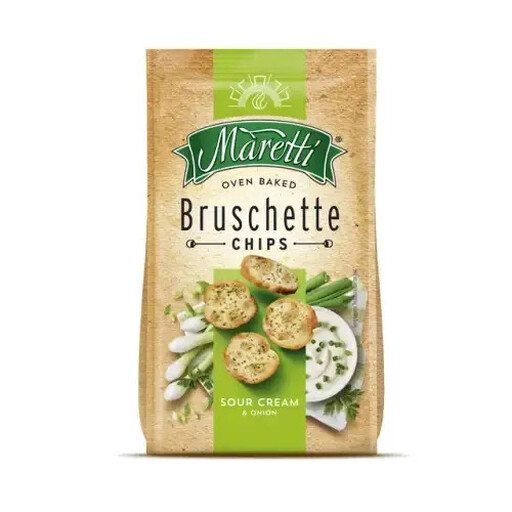 Image unavailable
This bag could be a good choice if you’re looking for a crunchy snack to enjoy during a break. To compare it with potato crisps, check the packaging for kcal and salt per 100 g, the portion you plan to serve and any allergens. Its name doesn’t prove that it’s lower in calories.
No. Lay’s France claims that its Oven-Baked Original crisps contain 50% less fat than the average crisps on the market, but this doesn’t tell you the product’s energy content. Compare the kcal per 100 g on the packs you’re considering.
No. E.Leclerc lists 0.0 g of salt and 543 kcal per 100 g for POM'LISSE no-added-salt crisps. This recipe may suit you if salt is your priority; to compare energy, check the kcal per 100 g and portion sizes separately.
No. Manger Bouger recommends using Nutri-Score when buying processed foods, but it doesn’t replace checking the nutrition information, ingredients and allergens. To compare the energy content of two packs, use the kcal per 100 g.
Read the ingredients list and allergen information on the packaging for your chosen flavour. The Directorate-General for Competition Policy, Consumer Affairs and Fraud Control says that allergenic ingredients must be highlighted in information provided to consumers.