For a breakfast you can top your way
You’re looking for a crunchy base rather than a ready-to-eat biscuit. If you’re comparing sugar across your whole breakfast, your choice of topping matters too.


For your weekly shop, choose a no-added-sugar crispbread if you want a base to top, or a reduced-sugar biscuit if you’re after a ready-to-eat snack. Compare the ‘of which sugars’ figure per 100 g across products intended for the same use, then check the serving size, ingredients and allergens. Remember that what you add to a crispbread matters too.
You’re looking for a crunchy base rather than a ready-to-eat biscuit. If you’re comparing sugar across your whole breakfast, your choice of topping matters too.
You’d rather have something ready to take with you and want to compare the sugar per 100 g and the serving size, instead of relying on the claim on the front of the pack alone.
Organic ingredients, cereals, fibre, sweeteners or certain ingredients may all influence your choice. Check these features and the allergens for each recipe rather than assuming them from the brand name.
For your weekly shop, first decide whether you need a crispbread to top or a ready-to-eat biscuit. Then compare the nutritional information for products intended for the same use.
| What matters | What to check | Who it matters to |
|---|---|---|
| Sugar intake | The ‘of which sugars’ figure per 100 g across comparable products, followed by the serving weight. | If I’m choosing biscuits for several snack breaks, I want to know what’s in the pack I’ll eat, not just read a claim on the packaging. Around 36% of consumers would make comparing sugar content their top priority. |
| How you’ll eat it | A base to top or a ready-to-eat biscuit; for crispbread, take the planned topping into account. | For breakfast, I prefer to put my own toppings on my crispbread; for a snack on the go, I might look for a ready-made biscuit. The format would be the top criterion for around 29% of consumers. |
| Ingredients | The ingredients list and allergen information for the exact recipe. | If I need to avoid an ingredient or am looking for specific recipe features, the product range name isn’t enough. Around 21% of consumers would put ingredients first. |
| Planning for the week | The number of servings and the storage instructions on the pack. | When I’m planning the week’s snacks, I want packaging that suits my routine and to be able to store the pack as instructed. This would be the priority for around 14% of consumers. |
These claims don’t describe the same thing. A no-added-sugar crispbread may still contain naturally occurring sugars, as the French Agency for Food, Environmental and Occupational Health & Safety (Anses) points out.
Read the claim on the pack alongside the ingredients list and the ‘of which sugars’ figure in the nutritional information.
Crispbread is a base to top, while a biscuit is a ready-to-eat recipe. Comparing only the sugar per 100 g doesn’t take into account what you’ll add to your crispbread.
First decide how you’ll eat the product, then compare options intended for that use.
These features don’t replace checking the nutritional information and allergens. For example, the Auchan France listing for Bjorg oat and hazelnut biscuits gives a sugar content of 15 g per 100 g.
Check the exact recipe before treating these features as additional criteria.
Individually wrapped packs can be handy for snack breaks, but they don’t tell you how many servings you’ll have during the week.
Check the pack contents, how often you’ll eat them and the storage instructions.
Auchan France describes this range of biscuits and bars as reduced in sugar and free from sweeteners.
Bjorg’s organic oat biscuits, including recipes with seeds or hazelnuts, are described as reduced in sugar in Auchan France listings.
The organic vanilla and chia shortbread biscuits are described as reduced in sugar in their Auchan France listing.
Carrefour France lists a wholemeal toasted crispbread with no added sugar, in a category separate from biscuits.
These two products suit different needs during the week: crispbreads to top and ready-to-eat biscuits. For the Panpan biscuits, don’t rely on the ‘Sugar-Free’ claim without checking the label.
 Image unavailable
Worth considering if you’re looking for a base to top at breakfast. The pack contains 425 g of wholemeal crispbreads described as having no added sugar. This claim doesn’t rule out naturally occurring sugars, and your topping matters too.
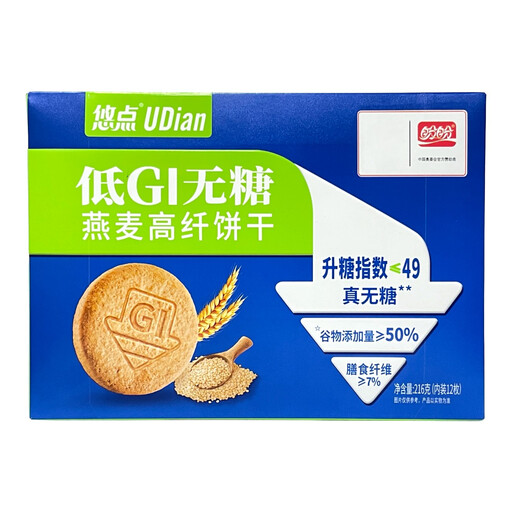 Image unavailable
Worth a look if you’re after a ready-to-eat biscuit for your snack breaks. The pack contains 216 g. The listing pairs the ‘Sugar-Free’ claim with contradictory information about the sugar content, so check the ‘of which sugars’ figure and ingredients on the label before choosing this recipe.
No. As the French Agency for Food, Environmental and Occupational Health & Safety (Anses) points out, a product with no added sugar may still contain naturally occurring sugars. Check the ‘of which sugars’ figure in its nutritional information too.
First compare the sugar per 100 g in biscuits intended for the same use, then check the weight of the serving you plan to eat. Look at the ingredients and other nutritional values too: the reduced-sugar claim doesn’t tell you everything about the recipe.
No. Nutri-Score doesn’t replace checking the sugar content, ingredients, allergens and serving sizes. Manger Bouger advises against judging a food by just one nutritional feature.
Read the ingredients list and any allergen or ‘may contain’ information on the packaging for the exact recipe. Ingredients vary between different crispbreads and biscuits, so the range name alone isn’t enough to make a decision.