People putting together lunch at work
You’re looking for a dry base that’s easy to carry and top when you get there. Manger Bouger recommends including a variety of foods in your lunch rather than relying on just one cereal-based product.


For a lunch you can assemble at work, choose crispbreads or bread to top rather than Digestive biscuits: these are better suited to a sweet snack. Plan your toppings and, depending on your needs, compare the ingredients, fibre, salt and allergens. Manger Bouger recommends including a variety of foods in your lunch, such as vegetables, starchy foods and sources of protein.
You’re looking for a dry base that’s easy to carry and top when you get there. Manger Bouger recommends including a variety of foods in your lunch rather than relying on just one cereal-based product.
You want to check the proportion of wholemeal flour and the fibre listed on the pack. Check this information for each product: the word ‘crispbreads’ alone doesn’t tell you what it’s made from.
You’re mainly after a sweet, dry biscuit that’s ready to eat. The McVitie’s Digestive product described by Carrefour France is intended for this kind of occasion, rather than as a crispbread to top for lunch.
Start with how you’ll use it: choosing a base to top for lunch is different from choosing a biscuit to enjoy with a break.
Worth considering: if you want a sweet biscuit that’s ready to eat during a break.
Bear in mind: Carrefour France describes McVitie’s Digestive as a crunchy biscuit, not a crispbread to top or a product promising digestive benefits.
Worth considering: if you can carry the topping separately and put your lunch together at work.
Bear in mind: crispbreads provide a dry base; you’ll need to prepare the toppings and accompaniments separately.
Worth considering: if you can prepare your topped bread before you leave or buy bread for lunch.
Bear in mind: check how to transport and store your chosen topping.
| What to consider | What to check | Who is this for? |
|---|---|---|
| Putting lunch together | Do you have a suitable topping and something to serve with it for your lunch break? | If I want crispbreads to make up my lunch, I need to be able to bring more than just the cereal-based base. Around 46 % of consumers put the make-up of their lunch first. |
| Wholegrains and fibre | Compare the flours in the ingredients list and the fibre listed per 100 g. | When choosing a wholegrain base, I look at its ingredients rather than relying on the name alone. This is a priority for around 27 % of consumers. |
| A quick snack | Choose between a biscuit that’s ready to eat and a crispbread that needs a topping; check the packaging too. | When my break is short, I’m mainly looking for a dry product that’s easy to carry and eat. Convenience is the main priority for around 18 % of consumers. |
| Ingredients and allergens | Read the ingredients list, any allergens highlighted and any ‘may contain’ statements. | If I need to avoid certain ingredients, the exact contents of each pack determine my choice. Around 9 % of consumers prioritise checking this information. |
The name of the McVitie’s biscuit described by Carrefour France doesn’t demonstrate any effect on digestion, nor does it mean it’s a crispbread to top.
First, choose the format that suits how you’ll use it: a biscuit for a sweet snack, or crispbreads or bread to make a topped lunch.
The wholegrain crispbreads described by Carrefour France and Auchan contain wheat and rye. The Carrefour Extra product information also warns that the product may contain traces of milk.
Check the ingredients and allergen information on the product you buy, including any ‘may contain’ statements if they matter to you.
A crispbread gives you a base to top, but it doesn’t make up a balanced meal on its own. Manger Bouger encourages people to combine different foods at lunchtime.
Plan your toppings and accompaniments before you leave, taking into account how you’ll transport and store them.
A range of Digestive biscuits, distinct from crispbreads to top.
A wholegrain crispbread to top.
A wholemeal wheat crispbread that works as a base for lunch.
An example of a topping made with bread, rather than a pre-packaged dry crispbread product.
These Joybuy products are dry cereal-based options to top for a break at work. They aren’t a substitute for Digestive biscuits if you specifically want a sweet biscuit.
 Image unavailable
Worth considering if you want to carry a dry base and top it at work. The pack contains 425 g; check the allergen information and packaging if you need individually portioned servings.
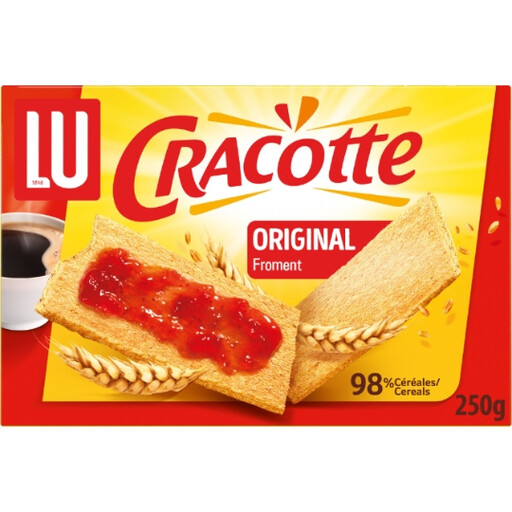 Image unavailable
Worth considering for making topped crispbreads quickly at work. The pack contains 250 g; if wholemeal flour or fibre is important to you, compare the information on the packaging before you buy.
Not if you’re looking for a base to top. Carrefour France describes McVitie’s Digestive Original as a crunchy biscuit. For topped crispbreads at lunchtime, choose crispbreads or bread instead, and plan your toppings.
Start with the ingredients and the proportion of wholemeal flour, then compare the nutritional information per 100 g, particularly fibre and salt where listed. The French Directorate-General for Competition Policy, Consumer Affairs and Fraud Control explains that information per 100 g makes it easier to compare products.
Read the ingredients and any ‘may contain’ statements on the packaging for each product. The Carrefour Extra and Auchan crispbreads featured here contain wheat and rye; Carrefour France warns that its product may contain traces of milk. The French Directorate-General for Competition Policy, Consumer Affairs and Fraud Control says that allergenic ingredients must be highlighted on the label.
Follow the instructions on the pack and reseal it after opening. Auchan says its crispbreads should be kept away from heat and moisture; check the storage instructions for the product you’re taking with you.