What should you check first?
First, work out how much you need and whether anyone in your group has dietary requirements. Then compare the texture and nutritional information to narrow down your options.
| What to consider |
What to check |
Who it matters to |
| How much to share |
Compare the net weight with how many crispbreads you plan to serve alongside the other nibbles. |
If crispbreads will carry most of the toppings, I want to make sure there’s enough for everyone to help themselves. Around 33% of consumers put having enough to share first. |
| Texture and toppings |
Check the storage instructions and plan to add wet toppings just before serving. |
For drinks where everyone can choose their own topping, I’m looking for a crunchy base that will last throughout the get-together. This is the priority for around 27% of consumers. |
| Ingredients and salt |
Check the grains, fibre and salt per 100 g, bearing in mind the toppings you’ll be serving. |
If I’m also serving cheese or cured meats, I want to compare the salt in the crispbreads before putting together the platter. Around 20% of consumers prioritise checking the nutritional information. |
| Gluten and allergens |
Look for a “gluten-free” label if needed, then check the allergens and any may-contain warnings on the pack. |
If a guest needs to avoid gluten or another ingredient, I need to choose a crispbread that meets their requirements and serve it separately. For around 20% of consumers, this comes before the other criteria. |
A Joybuy option for a varied drinks spread
This 250 g pack can be used as a base for toppings when crispbreads are served alongside other food. If they’re the main feature of your menu, work out how much you’ll need before ordering.
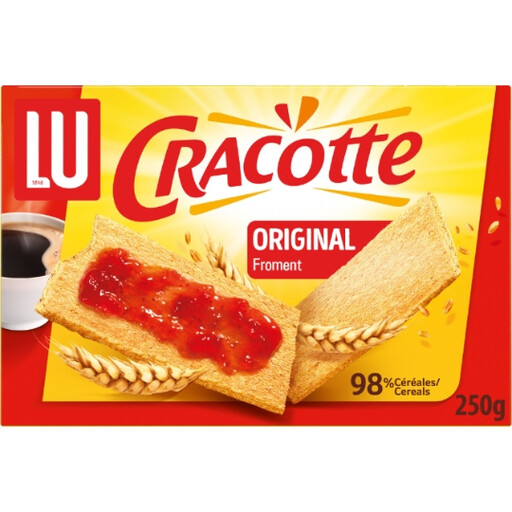 Image unavailable
LU CRACOTTE Original wheat crispbreads, 250 g
Worth considering if crispbreads are one of several nibbles you’re serving. This pack contains 250 g of crunchy wheat crispbreads, so check that it’s enough for your guests rather than assuming it’s the same as the 500 g family-size box. The product listing says to store it in a cool, dry place. Check the label for allergen and other nutritional information.
View on Joybuy
Frequently asked questions
Is a 500 g pack right for every Friday drinks get-together?
No. It’s best suited to a get-together where crispbreads are the main base for your toppings. If you’re already planning to serve bread, vegetables and other nibbles, 150 to 250 g packs may be closer to the amount you need. Auchan describes its 500 g CRACOTTE Original box as “family size”, but this doesn’t define a serving per person.
When should you add toppings to keep crispbreads crunchy?
Add toppings at the last minute, especially if they’re wet, or let your guests add their own as they help themselves. Store the crispbreads according to the pack instructions. The CRACOTTE and Auchan product listings we checked recommend, for example, keeping them in a cool, dry place or protecting them from heat and moisture.
Does “gluten-free” mean a product is free from other allergens too?
No. The label relates to gluten and doesn’t replace checking the other information on the pack. For example, the Carrefour Bio chestnut option warns that it may contain traces of nuts, soya, milk, mustard and lupin.
Should you check the salt if you’re also serving cheese or cured meats?
Yes. The salt per 100 g helps you compare the crispbreads you’re considering while taking the toppings into account. Anses lists bread and rusks among the sources of salt in the diet. E.Leclerc’s listing for this particular EPI D’OR wholemeal crispbread states that it contains 1.0 g of salt per 100 g.
How should you interpret the date printed on the box?
Read the exact wording on the packaging, along with the instructions for after opening. In France, the DGCCRF distinguishes between a use-by date (DLC), which is a strict deadline, and a best-before date (DDM). Don’t assume which type of date it is just because the crispbreads look dry.


