Households that buy crispbreads regularly
Whether you have them for breakfast or with a cup of tea, the pack weight and how long it will last matter more than how big the pack looks. Check that the size suits how often you eat them.


For crispbreads to enjoy regularly with tea and biscuits, first choose a pack size that suits how much you eat, then compare the ingredients and nutritional values per 100 g. If you’re looking for a wholegrain recipe, check the fibre and salt in particular. If you need to avoid gluten, choose crispbreads explicitly labelled gluten-free and check the allergen information on the pack.
Whether you have them for breakfast or with a cup of tea, the pack weight and how long it will last matter more than how big the pack looks. Check that the size suits how often you eat them.
If you’re looking for a wholemeal wheat recipe, read the ingredients and compare the fibre and salt per 100 g. This helps you tell recipes apart without relying on the range name alone to work out what they contain.
Wheat or wholemeal wheat crispbreads aren’t suitable for this. Look for an explicit ‘gluten-free’ label, then check the ingredients and any other allergens listed on the pack.
If you’ll be enjoying them regularly with tea, start with what matters most to you: how much you’ll use, a wholemeal recipe, dietary requirements or flavour.
| Criteria | What to check | Who is it for? |
|---|---|---|
| Pack size for frequent use | Net weight and number of crispbreads, if stated. | If I serve them with tea often, I want a pack size that suits how much my household gets through. Around 36% of consumers put regular use first. |
| Wholemeal recipe | Ingredients, fibre and salt per 100 g. | I’m looking for wholemeal wheat crispbreads and want to distinguish their ingredients from those of a wheat recipe. This is a priority for around 29% of consumers. |
| Gluten and allergens | ‘Gluten-free’ label, ingredients and allergens listed on the pack. | If I need to avoid gluten or take an allergen into account, whether the recipe is suitable comes before other criteria. Around 21% of consumers prioritise this check. |
| Recipe and convenience | Type of grain, pack size and storage instructions. | For crispbreads to enjoy on their own with a cup of tea, I look for a recipe I like and a pack that’s easy to store. This is the top priority for around 14% of consumers. |
A larger pack is only useful if you can store the crispbreads properly and eat them in good time. A smaller pack may also be a better choice if you want to try a recipe.
Check the net weight, then choose a quantity that suits how often you take a tea break.
E.Leclerc’s product listings give 3.0 g of fibre per 100 g for Chaque Jour sans Gluten crispbreads, compared with 9.8 g for EPI D’OR wholemeal wheat crispbreads. This difference applies to these two products, not to every recipe in either category.
If you need to avoid gluten, check for that label first. Then compare the nutritional information per 100 g separately.
The ingredients, allergens, best-before date and storage instructions apply to the product you actually receive. They deserve particular attention if you avoid an ingredient.
Check this information on the pack before eating the crispbreads.
These examples show different recipes and pack sizes. The details apply to the specific products mentioned, not to each brand’s entire range.
E.Leclerc’s EPI D’OR wholemeal wheat crispbreads come in a 250 g pack.
The Auchan wheat crispbreads featured here are available in a 250 g pack.
This E.Leclerc product is a gluten-free crispbread made with maize and rice flours, sold in a 250 g pack.
Carrefour’s organic gluten-free chestnut crispbreads come in a 150 g bag.
The Original wheat variety featured on Joybuy is a 250 g pack of crispbreads.
For a tea break or breakfast, this selection features wheat crispbreads in a 250 g pack. Check the ingredients if you’re looking for a wholemeal recipe or need to avoid certain ingredients.
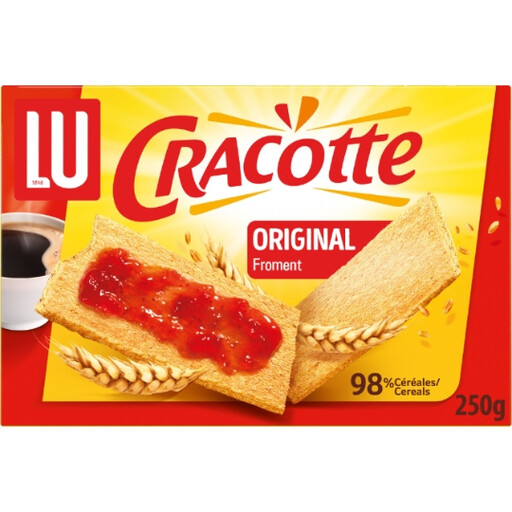 Image unavailable
A handy pack for serving crispbreads at breakfast or as a snack. The product listing states that it contains 97.7% wheat flour and also lists rye and milk powder. This recipe isn’t suitable if you need to avoid gluten. Check the allergen information on the pack you receive.
Start by checking the net weight and choose a pack size that suits how often you eat them. To compare their nutritional content, use the values per 100 g: the DGCCRF says this format makes it easier to compare food products.
No. A wholemeal recipe may suit you if you’re looking for wholemeal flour, but if it contains wheat, it isn’t suitable if you need to avoid gluten. Compare the fibre, salt, sugars and ingredients in each product rather than relying on the word ‘wholemeal’ alone.
Look for the information you need on the pack, then read the ingredients and allergen details for the product you’re buying. In France, the Ministry of the Economy says that allergenic ingredients must be listed and highlighted. Gluten-free crispbreads may also carry information about other allergens.
Follow the instructions on the pack and seal it carefully after use. The Joybuy listing for LU Cracotte Original recommends storing it in a cool, dry place. Check the instructions for the product you’ve bought, along with its best-before date.