For a no-cook work-from-home lunch, choose crispbreads that are ready to top, comparing fibre, salt, sugars and allergens between products in the same category. Part-baked bread needs more preparation. If you’re increasing your fibre intake, do so gradually: Manger Bouger advises that too much fibre can cause digestive discomfort.
Who are these options for?
People fitting lunch in between meetings
Crispbreads that are ready to top save you a cooking step. The amount you eat and the toppings you choose matter too: crispbreads can make a good base for lunch, but they won’t necessarily make up the whole meal.
People looking for wholegrains
To compare crispbreads in the same category, check their fibre content per 100 g in the nutritional information. Manger Bouger recommends wholegrain starchy foods as one way to increase the fibre in your diet.
People mindful of digestive tolerance or allergens
A high fibre content won’t suit everyone. If you need to avoid an allergen, check the ingredients and any ‘may contain’ warnings on the packaging of the product you buy.
Which criteria should you prioritise?
Start with what matters most for your lunch: adjusting your fibre intake, getting your crispbreads ready quickly or checking what they contain.
| Criterion |
What to check |
Who is it for? |
| Fibre and digestive tolerance |
Compare the fibre per 100 g in similar crispbreads, then adjust how much you eat to suit your tolerance. |
If wholegrain foods sometimes upset me, I want to be able to adjust my portion rather than choose the highest-fibre option. Around 40% of consumers put fibre tolerance first. |
| Preparation time |
Tell the difference between crispbreads that are ready to top and part-baked bread, which needs preparing before you can eat it. |
Between meetings, I want to put lunch together without switching on the oven or relying on crispbreads alone. Around 30% of consumers prioritise ease of preparation. |
| Ingredients |
Check the ingredients and allergens; also compare the salt and sugars per 100 g. |
If I need to avoid an ingredient or keep an eye on what I add to my crispbreads, I want to read the label before choosing. Around 30% of consumers put ingredients first. |
Mistakes to avoid
-
Assuming ‘high in fibre’ means ‘easy to digest’
Manger Bouger says that too much fibre can cause bloating or intestinal pain. So the amount shown on the label isn’t enough on its own to predict how well you’ll tolerate a product.
If you want to eat more wholegrain products, increase the amount gradually to suit your tolerance.
-
Forgetting about the salt in the crispbread and its toppings
Anses lists bread and crispbreads among the sources of salt in the diet. The salt shown per 100 g of crispbreads doesn’t include any toppings you add.
Compare products in the same category, and take your portion size and chosen toppings into account.
-
Confusing ‘no added sugars’ with ‘sugar-free’
Auchan’s listing for Pasquier wholewheat crispbreads labelled ‘no added sugars’ states that they contain 2.7 g of sugars per 100 g.
Check the ‘of which sugars’ line in the nutritional information and the ingredients list, as well as the claim on the packaging.
-
Guessing allergens from the product name alone
Depending on the recipe, the products listed by Auchan contain rye, wheat or sesame; their product information also mentions possible traces of other allergens.
If you have an allergy or need to avoid an ingredient, check the ingredients and any ‘may contain’ warnings on the packaging you buy.
Brands to consider
These examples cover crispbreads that are ready to top and bread that needs preparing. The details given apply to the specific products mentioned, not every product in these brands’ ranges.
Wasa
Two rye crispbread options make it easy to compare fibre content within the same category.
- Auchan states that Wasa Complet contains 20 g of fibre per 100 g, while Wasa Fibres contains 26 g per 100 g.
- Ingredients vary between products. Check for rye, other cereals, sesame and any allergen warnings that are relevant to you.
Brioche Pasquier
The wholewheat crispbreads listed by Auchan carry the claim ‘no added sugars’.
- The product information states that per 100 g they contain 9.9 g of fibre, 2.7 g of sugars and 1.1 g of salt.
- ‘No added sugars’ doesn’t mean ‘sugar-free’. Also check for wheat, gluten and other allergen warnings.
Bridor
Part-baked breads from the professional range can be used as a base for toppings if you can access and prepare these products.
- Bridor says Le Complet 330 g is made with wholemeal flour.
- This isn’t a ready-to-eat crispbread: follow the preparation instructions and check the allergens for the product you choose.
A crispbread option on Joybuy
For a no-cook lunch, these rye crispbreads can make a handy base for toppings. Choose the amount and toppings to suit the meal you want to put together.
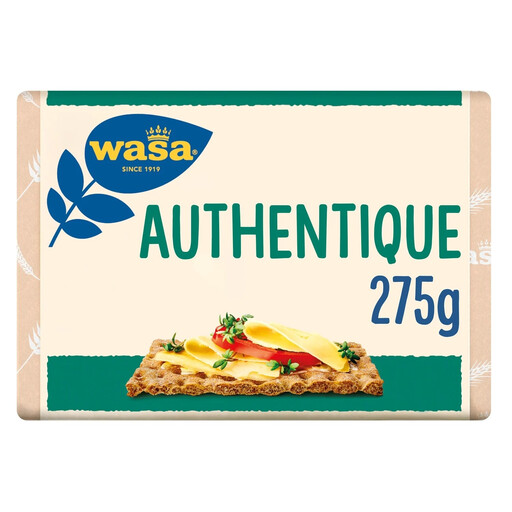 Image unavailable
WASA Authentic crispbreads, 275 g
These rye crispbreads make a no-cook base for toppings at lunchtime. Joybuy states that they contain 19 g of fibre per 100 g, but this figure can’t predict how well you’ll tolerate them. If you need to avoid an allergen, check the warnings on the packaging you buy.
View on Joybuy
Frequently asked questions
Are wholegrain crispbreads always easier to tolerate?
No. Manger Bouger explains that eating too much fibre can cause digestive discomfort. If you increase your intake of wholegrain products, do so gradually and adjust the amount to suit your tolerance.
How can I compare crispbreads beyond the Nutri-Score?
Compare products in the same category, then check their ingredients, allergens and nutritional values per 100 g, particularly fibre, sugars and salt. Manger Bouger describes Nutri-Score as a tool for comparing products in the same aisle, but it doesn’t replace the detailed label.
Where can I check the allergens in wholegrain crispbreads?
Read the ingredients list and any ‘may contain’ warnings on the packaging of the product you buy: potential allergens vary between products. The Directorate-General for Competition Policy, Consumer Affairs and Fraud Control states that allergens in ingredients must be highlighted on the labels of prepacked foods.
Do Bridor breads need to be prepared like crispbreads?
No. The part-baked Bridor breads mentioned here need preparing before you can use them as a base for toppings. Follow the defrosting, baking and storage instructions for the product you choose. The product information for the Wasa and Pasquier crispbreads mentioned here says to store them in a cool, dry place.


