Anyone keeping an eye on declared sugar content
You want to compare the ‘of which sugars’ value per 100 g, without assuming that one figure means two recipes are alike in every other respect.


When choosing crispbreads to serve at a Christmas market, start by comparing the ‘of which sugars’ value per 100 g. ‘No added sugars’ does not mean ‘sugar-free’ or ‘reduced in sugars’. If no added sugars is your top priority, look for wholemeal crispbreads carrying that claim. If the declared sugar content matters most, compare rye crispbreads too. Then check the fibre, salt, allergens and pack size for serving.
You want to compare the ‘of which sugars’ value per 100 g, without assuming that one figure means two recipes are alike in every other respect.
You prefer a crispbread carrying this claim and also check its fibre content, whether you serve it plain or with toppings.
If you’re serving several people, plan how many crispbreads you’ll need and check the storage instructions and allergens listed on each pack.
For crispbreads to enjoy during a Christmas market break, start with your top priority, then check the other information on the pack before choosing a size for serving.
| Criterion | What to check | Who is it for? |
|---|---|---|
| Declared sugars | The exact wording on the pack and the ‘of which sugars’ value per 100 g. | I want to know the declared sugar content rather than relying only on the claim on the front of the pack. Around 42% of consumers rank sugar content as their top concern. |
| Fibre and other values | Fibre, salt, energy and fat per 100 g. | If I choose a wholemeal or rye crispbread for its fibre, I also want to see how the recipe affects the other nutritional values. This balance is the top priority for around 33% of consumers. |
| Serving and allergens | Pack quantity, storage instructions and declared allergens. | For a break with others, I need to plan how many crispbreads to serve without overlooking anyone with an allergy. Convenience and dietary suitability come first for around 25% of consumers. |
These criteria don’t point to one recipe as the best choice in every situation. Auchan’s product information for Pasquier Grilletine wholemeal crispbreads states that a 255 g pack contains 18 crispbreads, with 2.2 g of sugars and 13 g of fibre per 100 g. Joybuy’s product information for Wasa rye crispbreads lists 1 g of sugars and 19 g of fibre per 100 g. These are differences to consider alongside the pack size and allergens for each product.
A crispbread with no added sugars can still contain naturally occurring sugars. This claim alone doesn’t tell you the product’s total sugar content.
Read the wording on the pack, then compare the ‘of which sugars’ value per 100 g across the recipes you’re considering.
Other values vary from one recipe to another too. According to information provided by Auchan, Pasquier Grilletine wholemeal crispbreads contain 13 g of fibre, 11 g of fat and 0.78 g of salt per 100 g.
When comparing products for the same occasion, check the fibre, salt, energy and fat per 100 g before making your choice.
The Pasquier wholemeal crispbreads and Wasa rye crispbreads featured in the product information reviewed contain gluten-containing cereals. Other allergens may also be listed, depending on the product.
Keep the pack for the batch you’re serving to hand, and check its ingredients, allergens and ‘may contain’ warnings before serving.
Brioche Pasquier offers products including wholemeal crispbreads and Grilletine wholemeal crispbreads labelled ‘no added sugars’.
According to its Joybuy product information, the rye crispbreads reviewed contain 1 g of sugars per 100 g.
In France, Carrefour stocks Pasquier Wholemeal Toasted Crispbreads with No Added Sugars; the retailer isn’t presented as the maker of this recipe.
In France, Auchan stocks Pasquier Grilletine Wholemeal Crispbreads with No Added Sugars; the retailer isn’t presented as the maker of this recipe.
This rye crispbread may suit anyone who starts by comparing declared sugars per 100 g. If you’re serving it to a group, remember to check the allergens and the instructions on the pack.
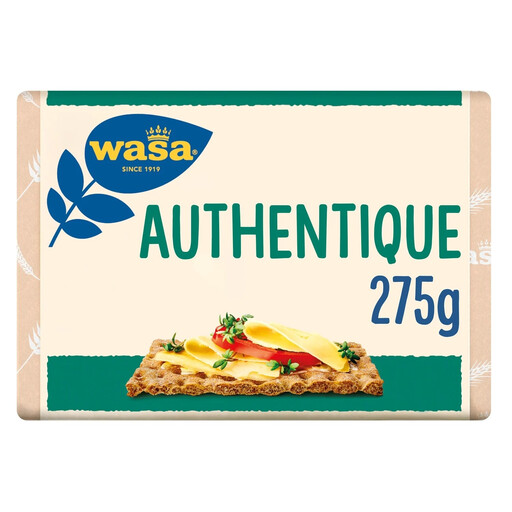 Image unavailable
These rye crispbreads are worth considering if you’re comparing declared sugar content: the product information lists 1 g of sugars, 19 g of fibre and 1 g of salt per 100 g. They contain rye gluten and may contain traces of lupin, milk, mustard, sesame and soya. If you’re serving them to a group, check the allergens on the pack from the batch you’ve bought and seal it tightly after opening.
No, these claims aren’t interchangeable. ‘No added sugars’ doesn’t rule out sugars that occur naturally in the product, as Carrefour points out in its Pasquier product information. To compare the crispbreads you’re considering, also check their ‘of which sugars’ value per 100 g.
No. Santé publique France explains that displaying Nutri-Score is voluntary. If it appears on a pack, also check the ‘of which sugars’ value per 100 g and any other nutritional information that matters to you.
Check each pack for gluten-containing cereals and any ‘may contain’ warnings. The product information reviewed for Pasquier products lists wheat in particular, while the information for Grilletine wholemeal crispbreads also lists rye. Joybuy’s product information for WASA Authentic lists rye gluten and possible traces of other allergens. Always check the pack for the batch you’re actually serving.
Follow the instructions on the pack you choose. Auchan’s product information for Pasquier Grilletine wholemeal crispbreads recommends storing them in a cool, dry place. Joybuy’s information for Wasa crispbreads says to seal the product tightly after opening to keep it crisp.
No. A claim about a product’s sugar content shouldn’t be turned into a health promise. In France, Regulation (EC) No 1924/2006 governs nutrition and health claims in commercial communications; the DGCCRF reminds businesses that health claims must be authorised before they can be used. Describe the claim actually shown on the product without suggesting an effect it doesn’t establish.