Households that eat crispbread regularly
If several people often have crispbread for breakfast or as a snack, a larger pack could mean fewer repeat purchases. Just make sure you can finish it and store it somewhere dry once opened.


A large pack of crispbread is best suited to a household that eats it regularly and can store it somewhere dry after opening. If you eat it less often, a 250 to 300 g pack or individually wrapped portions can help you avoid opening too much at once. Either way, check the ingredients and allergens for the exact variant before choosing a pack size.
If several people often have crispbread for breakfast or as a snack, a larger pack could mean fewer repeat purchases. Just make sure you can finish it and store it somewhere dry once opened.
If the crispbread tends to sit in the biscuit tin for a long time, choose a pack size that suits how quickly you get through it rather than simply going by the size of the pack.
If you prefer wholegrain rye or need to check certain ingredients, that can affect which pack you choose. Check the label on the exact variant before considering a larger pack.
Start by thinking about how much your household actually eats, then check how the pack opens and how to store it. The ingredients are a separate consideration: a suitable pack size is no substitute for reading the label.
| Factor | What to check | Who is it for? |
|---|---|---|
| Quantity per purchase | The net weight, particularly when comparing 250 to 300 g packs with those weighing around 500 g. | If several people eat crispbread regularly, I want to avoid having to buy the same product too often. Around 42% of consumers would put reducing repeat purchases first. |
| Storage after opening | Whether the pack contains individual bags and whether the crispbread can be kept somewhere dry in a sealed container. | When I eat it irregularly, I’d rather not open a large quantity all at once. For around 33% of consumers, the priority would be to limit the amount of crispbread left open or unused. |
| Recipe and allergens | The ingredients list and allergens shown for the exact variant, particularly for recipes containing grains or seeds. | If I’m looking for a particular recipe or need to avoid an ingredient, the pack size comes second to the label. The recipe would be the main consideration for around 25% of consumers. |
A 500 g pack contains more crispbread than a 250 g pack, but it could stay open for a long time in a household that only eats it occasionally.
Before you buy, think about how many people will eat it and how often.
If you’ll be eating it over time, how the crispbread is packed and stored matters just as much as the total pack weight.
Check whether the pack contains individual bags. If not, have a well-sealed container and a dry place ready.
Depending on the variant, recipes listed by Wasa and E.Leclerc include ingredients such as wheat, rye, oats or sesame. The word “wholegrain” alone doesn’t tell you everything that’s in the product.
Read the ingredients list and allergens on the specific pack you plan to buy.
E.Leclerc says some of its crispbread products aren’t sold on its website and advises customers to contact the relevant store to check availability.
If you’re looking for a particular recipe, check that it’s available at your local shop before you make the trip.
Recipes worth exploring if ingredients matter more to you than pack size.
Plain and wholegrain rye crispbread to consider if you’re shopping at Carrefour.
Wholegrain wheat, wheat and grains-and-seeds recipes listed by E.Leclerc.
Worth considering if a gluten-free label is one of your selection criteria.
This 275 g pack is for households that would rather buy an intermediate quantity of crispbread than a large pack of around 500 g.
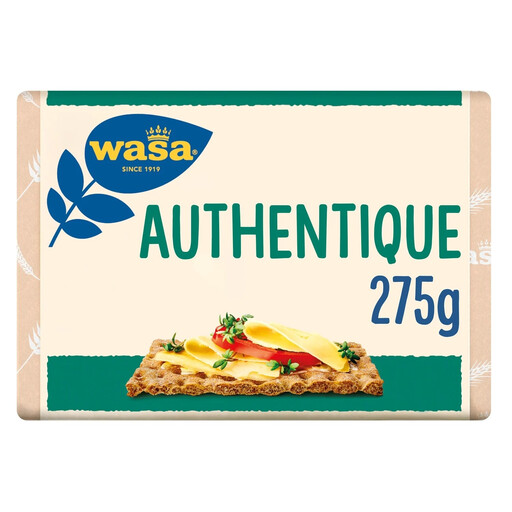 Image unavailable
This pack could suit you if you’d rather open 275 g of crispbread than buy a larger size. If you plan to eat it over time, check the packaging to see whether it’s divided into individual bags, and store it somewhere dry once opened.
No. It’s best suited to a household that eats crispbread regularly and can store it somewhere dry after opening. If you only eat it occasionally, also consider smaller packs or individually wrapped portions.
Check the date on the specific pack and follow the storage instructions given by the manufacturer. The French Ministry of the Economy distinguishes between a use-by date, which is a firm deadline, and a best-before date, labelled “best before”.
Check for the label you’re looking for, and read the ingredients list and allergens for the exact variant. The seed-based recipes listed by Wasa and E.Leclerc contain different ingredients depending on the product, while Auchan describes some Jardin BiO étic products as gluten-free.