When serving oysters, choose between classic crispbread, wholemeal toast and crunchy crispbread according to the recipe, allergens and nutritional values that matter to your guests, rather than relying on a claim that it is “easy to digest”. The two wholemeal toasts reviewed by Auchan contain 6.8 and 7.6 g of fibre per 100 g, but also 1.6 and 1.4 g of salt per 100 g. So your choice depends on what you want to prioritise, without assuming it will aid digestion or that there is one universally perfect flavour pairing.
Who is this choice for?
Hosts looking for a subtle base
You want to serve something dry and crunchy with your oysters. The product name and ingredients list can help you choose a recipe, without assuming that a claim such as “wholemeal” or “digestive” determines the flavour.
Guests who prioritise fibre
You compare the fibre declared per 100 g in wholemeal toasts, while also checking the salt and ingredients for the same product.
Shoppers mindful of salt or allergens
You need to check the label on the pack you’ll serve: wheat, milk, sesame or “may contain” warnings can vary by recipe, as can the salt content.
Which criteria should you compare?
For this dinner, start with the recipe and your guests’ dietary requirements, then compare the nutritional values and product formats that suit you.
| Criteria |
What to check |
Who is it for? |
| Recipe and texture |
The product name and ingredients, particularly sugars, fats, milk or seeds. |
If I mainly want a dry base to serve with oysters, I choose the recipe with that in mind rather than relying on a claim about digestion. Around 31% of consumers prioritise this type of accompaniment. |
| Fibre and wholemeal flour |
Fibre and salt per 100 g, as well as the flours listed in the ingredients. |
When comparing two wholemeal options, I look at the declared fibre content without assuming how it will affect my digestion. Fibre content is said to be the top criterion for around 31% of consumers. |
| Salt and allergens |
Salt per 100 g, allergens listed in the ingredients and any “may contain” warnings. |
If a guest needs to avoid an ingredient, or I’m keeping an eye on the salt in the meal, checking the label on the product being served becomes a priority. Around 23% of consumers would put this check first. |
| Quantity and storage |
Net weight, the number of slices if stated, and storage instructions. |
When I’m serving several guests, I look for a suitable pack size and a way to keep the product crunchy until it’s time to eat. Around 15% of consumers would put quantity and pack size at the heart of their choice. |
Mistakes to avoid
-
Taking “digestive” as a promise of a particular effect
The presence of wholemeal flour or a stated amount of fibre on the pack does not prove that a toast will aid digestion.
Choose the recipe and nutritional values according to your priorities, without treating the product name as a digestive benefit.
-
Overlooking allergens in a dry product
The Heudebert, Cracotte and Auchan products reviewed have different ingredients or “may contain” warnings, particularly for wheat, milk and sesame, depending on the product.
If a guest has an allergy, check the exact pack before serving it and provide an alternative they can enjoy.
-
Comparing wholemeal toast on fibre alone
Two Auchan wholemeal toasts contain 6.8 and 7.6 g of fibre per 100 g, but also 1.6 and 1.4 g of salt per 100 g, respectively.
Read both lines in the nutritional information, comparing values per 100 g, then consider the rest of the meal.
-
Leaving the pack exposed to damp
The product listings for the Auchan toasts reviewed recommend keeping them away from heat and moisture, which is worth bearing in mind if you’re laying the table in advance.
Keep the product somewhere dry and reseal the pack after opening.
Brands and ranges to compare
Heudebert
The 96% cereal Heudebert crispbread featured by Carrefour France is made mainly from wheat flour.
- The ingredients list identifies palm oil, sugar and salt, among other ingredients.
- It contains wheat and may contain sesame; its name does not prove a digestive effect.
Cracotte
The Fibres Blé et Seigle product featured by Carrefour France contains, among other ingredients, wholemeal wheat, wholemeal rye and wheat bran.
- Its ingredients make it easy to distinguish from a crispbread made mainly with wheat.
- This recipe also contains whey from milk, palm oil and salt, so check that these ingredients are suitable for your guests.
Auchan
The two wholemeal toasts reviewed in Auchan’s product listings differ in pack size and nutritional values.
- The organic version contains 7.6 g of fibre and 1.4 g of salt per 100 g; the other version contains 6.8 g of fibre and 1.6 g of salt per 100 g.
- Recipes and “may contain” warnings vary, so check the label on your chosen product for allergens.
Carrefour
The range featured by Carrefour France includes plain and wholemeal toasts, as well as crispbreads with no added salt.
- These product names make it easy to identify different options to compare for your planned meal.
- Carrefour is a retailer here, not a single recipe: check the ingredients and nutritional values of each product individually.
Crunchy crispbread and toast on Joybuy
These crispbreads and toasts can be compared as dry bases to serve with oysters. Their names are no guarantee of a digestive effect or a particular flavour pairing.
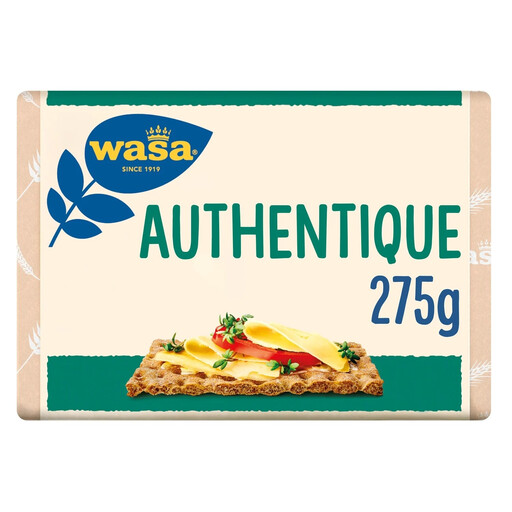 Image unavailable
WASA Authentic Crispbread, 275 g
A crispbread to consider if you’re looking for a dry base to serve with oysters. The pack is listed as 275 g; check the ingredients and allergens on the pack you plan to serve.
View on Joybuy
 Image unavailable
KRISPROLLS Swedish Rusk Complete Nature Unsweetened, 240 g
This wholemeal Swedish rusk is one crunchy option to compare for your meal. The pack is listed as 240 g; check the nutritional information and allergens for this variety before choosing.
View on Joybuy
 Image unavailable
KRISPROLLS Swedish-Style Wholegrain Toasted Buns, 425 g
This wholegrain toast is an option if you’re looking for something crunchy to serve with oysters. The pack is listed as 425 g; compare the salt, fibre and allergens on the label for this variety.
View on Joybuy
Frequently asked questions
Is wholemeal toast always “easy to digest”?
No: a declared fibre content cannot predict how a food will affect digestion. The two wholemeal toasts featured by Auchan contain 7.6 and 6.8 g of fibre per 100 g; use these figures to compare products, rather than treating them as a promise of digestive comfort.
Which allergens should you check before serving toast?
Check the label on the exact product, including any “may contain” warnings. The Heudebert, Cracotte and Auchan products reviewed include wheat, barley or milk, depending on the recipe, and may also carry warnings about traces of other allergens. The DGCCRF reminds shoppers that allergenic ingredients must be clearly highlighted on the label.
How can you compare the salt in two accompaniments?
Check the amount of salt per 100 g on each pack, then compare products whose recipes also suit your needs. Anses says that bread and crispbreads contribute to salt intake in France, so the word “wholemeal” is no substitute for checking the nutritional information.
Does your choice of toast change the precautions for raw oysters?
No: precautions for raw shellfish are separate from your choice of accompaniment. The Ministry of Agriculture advises people who are most vulnerable, including pregnant women, young children, older people and those who are immunocompromised, to avoid raw shellfish.


