Mornings with no prep
You want a ready-to-eat crêpe that you can take with you, with no filling to add. St Michel describes its x7 filled crêpes as individually wrapped; don’t assume every pack comes in this format.


If you need to head out without any prep, choose a ready-to-eat crêpe; check whether it’s individually wrapped if you want to take it with you. A plain or regional crêpe is a better choice if you have time to choose a filling. The word “luxury” doesn’t tell you what’s in it, so check the recipe, pack size, allergens and nutritional information.
You want a ready-to-eat crêpe that you can take with you, with no filling to add. St Michel describes its x7 filled crêpes as individually wrapped; don’t assume every pack comes in this format.
You’d rather choose your own filling and check what’s in the crêpe itself. The product pages for Nos Régions ont du Talent at E.Leclerc and St Michel plain Breton crêpes at Carrefour let you check these details.
You compare ingredients, allergens and nutritional values before choosing, particularly for chocolate and hazelnut crêpes. Information varies by product, so check the packaging of the one you buy.
First decide whether you want a crêpe that’s ready to eat or one you can fill yourself. Then check the ingredients of the specific product you’ve chosen, rather than relying on its range name alone.
| What to consider | What to check | Who it suits |
|---|---|---|
| Ready to eat and easy to take with you | Check whether the crêpes are ready to eat and whether each one is individually wrapped. | If I’m heading out straight away, I want to be able to grab a crêpe without preparing a filling or finding a container. Around 33% of consumers prioritise this kind of convenience. |
| Ingredients and allergens | Check the allergens on the packaging; compare sugar per 100 g and the Nutri-Score, if shown. | If I need to avoid specific ingredients, easy portability isn’t enough to make the decision for me: I want to check the recipe before buying. Around 42% of consumers put this check first. |
| Plain crêpe to fill yourself | Compare the ingredients lists and number of crêpes, then allow time to add a filling. | If I have a few moments to put my breakfast together, I’d rather choose what to add to a plain or regional crêpe. Around 25% of consumers would make customisation their main priority. |
The word doesn’t tell you what ingredients are used or what format the crêpe comes in. Two products with premium-looking packaging may need to be prepared in different ways.
Decide what you’re looking for: a regional recipe, a crêpe to fill yourself or a portion that’s ready to take with you. Then compare the information on each pack.
A convenient format doesn’t tell you what’s in it. The E.Leclerc product page for its P'TIT DELI chocolate and hazelnut crêpe lists 35.0 g of sugars per 100 g and a Nutri-Score E.
Compare the nutritional values per 100 g and check the allergens on the pack you’re buying. Don’t assume that other filled crêpes have the same ingredients as this product.
A frozen flaky crêpe needs freezer space and must be reheated. It won’t suit the same needs as a crêpe you can eat straight away.
If every minute counts in the morning, check the preparation instructions before buying. For a frozen product, follow the storage and reheating instructions on its packaging.
Allow for the need to store it in the freezer and reheat it.
The brand offers both plain Breton crêpes and x7 chocolate and hazelnut filled crêpes: two formats to choose between depending on whether you want to add a filling or take an individual portion with you.
The pack of four Brittany wheat crêpes listed by E.Leclerc offers a regional base to fill yourself, with a detailed ingredients list on its product page.
The chocolate and hazelnut product listed by E.Leclerc is a ready-to-eat filled crêpe, unlike a plain crêpe that you add a filling to yourself.
Carrefour’s product page describes a pack of eight chocolate crêpes, for anyone looking for several ready-to-eat portions.
These two products suit different kinds of morning: a crispy crêpe to enjoy without cooking, and a frozen flaky Méloui for when you have time to heat it up. Neither should be confused with a soft Breton crêpe that’s already filled.
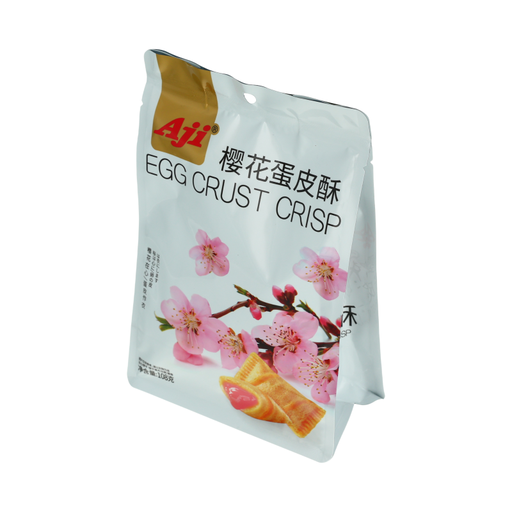 Image unavailable
Worth considering if you’re looking for a crispy crêpe you can eat without cooking, rather than a soft crêpe to fill yourself. The pack contains 108 g; check the portion size and whether there are individual sachets if you plan to take it with you.
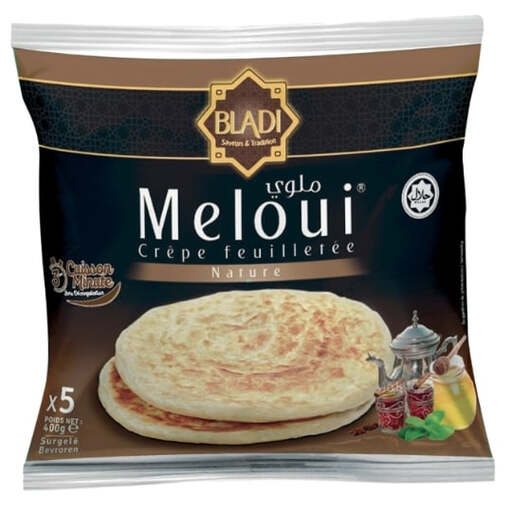 Image unavailable
Consider this if you have freezer space and are happy to heat a plain flaky crêpe before serving. The pack contains five pieces weighing 400 g in total; check the reheating instructions on the packaging before adding it to a busy morning routine.
Check the ingredients list on the pack you’ve bought: the French Directorate-General for Competition, Consumer Affairs and Fraud Control says that allergenic ingredients must be highlighted. Depending on the product, the chocolate crêpes reviewed list wheat, milk, eggs, hazelnuts or soya among their allergens.
They can be convenient when you don’t want to prepare anything, but you should check the ingredients of each product individually. Manger Bouger recommends limiting products with a Nutri-Score of D or E; the E.Leclerc product page for the P'TIT DELI chocolate and hazelnut crêpe shows a score of E and 35.0 g of sugars per 100 g.
Follow the use-by date and storage instructions on the pack. The French Ministry of the Economy explains that a use-by date is a strict deadline; also check the manufacturer’s instructions for after opening.
The Joybuy product page for BLADI Elmsamen says not to refreeze it after thawing and to store it at −18 °C. For another product, follow the instructions on its own packaging.