If wholemeal flour is your priority, T150 is a sensible choice, but try the recipe before the fête: Francine says higher-number flours produce a more rustic texture. For thin crêpes to suit a varied audience, you can adjust the batter by using T110 or a fine flour base with a little T110 or T150. In all cases, check the allergens in every ingredient and in the recipe you serve.
Who are these options for?
Organisers who prioritise wholemeal flour
If using wholemeal flour matters more to you than making delicate crêpes, T150 meets that priority. However, test the texture first, and don’t assume the flour’s nutritional values apply to the crêpes you serve.
Volunteers serving a varied audience
If you’re looking for a batter that makes thin crêpes, Francine recommends using a fine flour for crêpe batter, with the option of adding a small amount of T110 or T150. You could also try T110 as your main flour before settling on a recipe.
Those responsible for allergen information
Wholemeal wheat flour contains gluten. Check the ingredients list and any ‘may contain’ warnings on every product you use, then keep the information up to date for the recipe you actually serve.
What should you check before buying?
First decide how much wholemeal flour you want in the recipe, then test the batter on the crêpe maker you’ll be using. T80 is another option to consider; the 25 kg product listed at Carrefour is only suitable for your plans if that pack size matches the quantity you’ll be making.
| Criteria |
What to check |
Who it matters to |
| Wholemeal flour and fibre |
The flour type and the amount of fibre per 100 g stated on the pack. |
If I want wholemeal flour to be central to the recipe, I need to know its fibre content without confusing it with that of the finished crêpes. This is a priority for around 46% of consumers. |
| Texture and serving |
The flour type you choose and the result of a test on the stand’s crêpe maker. |
When I’m making a large batch, my main concern is serving thin crêpes without discovering too late that the batter is too rustic. Around 36% of consumers prioritise this texture and ease of serving. |
| Labelling and allergens |
The ingredients, any ‘may contain’ warnings and the product claims on the pack you choose. |
If I need to give information to guests, I first need precise details about the flour and the recipe used. Clear labelling and allergen information come first for around 18% of consumers. |
Mistakes to avoid
-
Assuming T150 is right for every crêpe texture
According to Francine, higher-number flours make batters that are more rustic and denser than those made with white flour. So, if you’re making a large batch, it’s worth testing the recipe first.
Try it on the crêpe maker you’ll be using. If thin crêpes are your priority, try T110 or add a small amount of T110 or T150 to a fine flour base.
-
Applying the flour’s nutritional values to the crêpes
The fibre content per 100 g shown for the flour doesn’t describe the finished recipe. EU rules on nutrition claims set specific conditions for using the claim ‘high in fibre’.
Don’t use this claim for the crêpes you serve based only on the flour bag’s label.
-
Forgetting that wholemeal wheat contains gluten
Whether wholemeal or semi-wholemeal, wheat flour contains gluten. Some products may also carry warnings that they could contain traces of other allergens.
Check every pack and the other recipe ingredients before preparing allergen information for your guests.
-
Choosing a large bag before you’ve settled on a recipe
The 25 kg T80 product listed at Carrefour is sold by a third-party seller. Make sure the pack size matches the amount of batter you actually expect to make.
Estimate how much you need based on a tested recipe, and check the seller, pack size and storage instructions.
If you overestimate the amount you need, you could be left with excess flour to store from a 25 kg bag.
Brands to consider
Francine
The range includes T150 wholemeal wheat flour, and Francine also offers advice on adding higher-number flours to crêpe batter.
- Francine’s T150 flour contains 9,5 g of fibre per 100 g of flour.
- Francine says higher-number flours produce a more rustic texture, so check the result with your recipe.
Carrefour Bio
A 1 kg bag of organic semi-wholemeal T110 wheat flour is available.
- Carrefour lists organic T110 wheat flour as the ingredient.
- This product carries warnings that it may contain traces of soya and milk; check the pack you use for serving.
Mon Fournil
The range listed at Carrefour includes organic T150 and T110 wheat flours.
- Carrefour’s product details for the T150 list crêpes among the flour’s suggested uses.
- That suggested use doesn’t guarantee the texture of your recipe, so try it before the fête.
Naturaline
A 1 kg bag of organic wholemeal wheat flour is listed at Auchan.
- Auchan’s product details show 12 g of fibre per 100 g of flour and suggest mixing it with a finer flour to make the batter lighter.
- The product listing calls it T150 in the title but T110 in the legal product name, so check the type shown on the pack.
T150 flour available on Joybuy
This T150 wholemeal wheat flour suits a recipe where wholemeal flour plays a major role. Its 1 kg pack lets you test the recipe before deciding how much you’ll need for the fête.
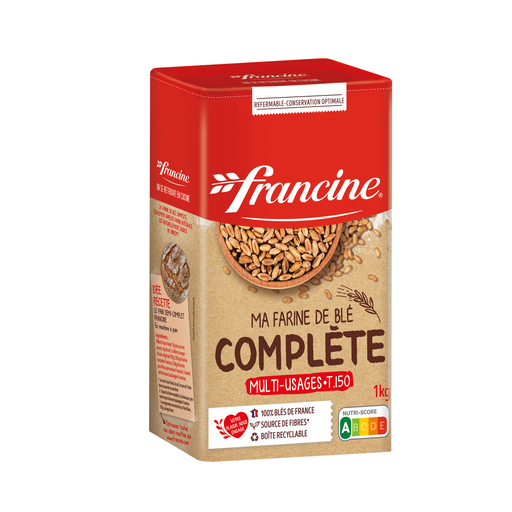 Image unavailable
Francine T150 wholemeal wheat flour, 1 kg
Worth considering if you’d like to try crêpe batter made with a significant amount of wholemeal flour. This is T150 wheat flour in a 1 kg pack. Test the texture on the crêpe maker you’ll be using, and check the nutritional information and allergen warnings on the bag you use.
View on Joybuy
Frequently asked questions
Can you make crêpes with T150 flour?
Yes. Carrefour lists crêpes among the suggested uses for Mon Fournil organic T150 flour. If you’re making a large batch, though, try your recipe on the crêpe maker you’ll be using, as the texture may be more rustic than with white flour.
Does using wholemeal flour mean you can describe the crêpes as ‘high in fibre’?
Not on its own. In the European Union, nutrition claim rules allow the claim ‘high in fibre’ only for products containing at least 6 g of fibre per 100 g or 3 g per 100 kcal. You need to assess the crêpes you serve, rather than relying on the value for dry flour.
Is wholemeal wheat flour gluten-free?
No. As the DGCCRF points out, wheat contains gluten. Crêpes made with T80, T110 or T150 wheat flour must not be described as gluten-free.
How should you prepare allergen information at your stall?
Prepare a record based on the recipe you’re actually serving and the labels of all its ingredients, then update it if the recipe changes. The DGCCRF stresses that allergen information is legally required for non-prepacked food; check with the organiser what arrangements apply at your stall.


