
Livraison le jour même ou le lendemain

Qualité garantie

Débloquez vos offres de bienvenue: Livraison GRATUITE | Jusqu'à -80 % | 30 jours d'essai gratuits à JoyPlus
Téléchargez l'application
A crêpe maker lets you prepare thin crêpes, pancakes, galettes or even eggs every day. But some purchases can quickly lead to disappointment: batter sticking, an appliance that is too small for the whole family, an uncomfortable handle or cleaning that takes forever.
Before comparing models, start by distinguishing between a crêpe pan, designed for use on a hob, and an electric crêpe maker, intended to be used directly at the table. Here are the most common pitfalls to avoid and the criteria to consider when choosing an appliance suited to your kitchen.
A 24 or 26 cm pan will not always let you make a crêpe of that diameter: sloping sides and the cooking area can reduce the surface that is actually available. If you enjoy large Breton crêpes, check the internal diameter as well as the shape of the base.
Electric crêpe makers sometimes state the total diameter of the plate. A 35 cm model may therefore have four 14 cm moulds, which completely changes the cooking experience.
The term non-stick pan describes a feature, but on its own says nothing about how long the coating will last. Check the care instructions: some models are dishwasher-safe, while others must be washed by hand with a soft sponge.
The claim PFOA-free cooking should also be checked for each individual product. It appears on the product page for the COOKER KING crêpe pan shown below, but cannot automatically be applied to an entire range.
A pan that is compatible with gas or a ceramic hob will not necessarily work on induction. Look for a clear indication such as induction-compatible pan or “all hobs”. With an electric crêpe maker, hob compatibility is not an issue, but you will need an easily accessible socket and a stable, heat-resistant surface.
A family crêpe maker is therefore not necessarily the largest one. The right size also depends on the space available, storage requirements and the recipes you plan to prepare.
A non-stick coating makes it easier to release the batter and generally allows you to cook with very little oil. To protect it, use a wooden or silicone spatula, leave knives to one side and avoid heating an empty pan over a high heat.
Coatings described as “stone” or “maifan stone” should be treated as descriptive terms. Pay particular attention to the material specified, the maximum recommended temperature and the cleaning instructions.
With an electric crêpe maker, power alone does not determine how easy it is to use. An adjustable thermostat lets you adapt the temperature to a thin batter, a thick pancake or a galette. A heating indicator is also a useful guide.
For reference, the models in this selection have a power rating of between 1 000 and 1 500 W. Higher power can reduce the time needed to reach temperature, but may also increase consumption during prolonged use. For a pan, performance depends more on the hob, the thickness of the base and how evenly heat is distributed.
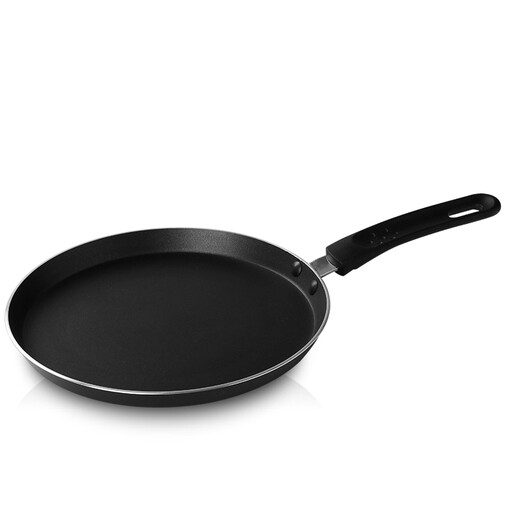
Why this choice suits this profile : At 24 cm, this pan is a straightforward first option for cooking on an induction, gas or electric hob, without adding a dedicated appliance to your storage cupboard.
The product page states that it is induction-compatible and PFOA-free. The stated diameter also makes it easy to assess how much space it will take up before buying.
A 24 cm size, a non-stick surface and compatibility with several types of hob.
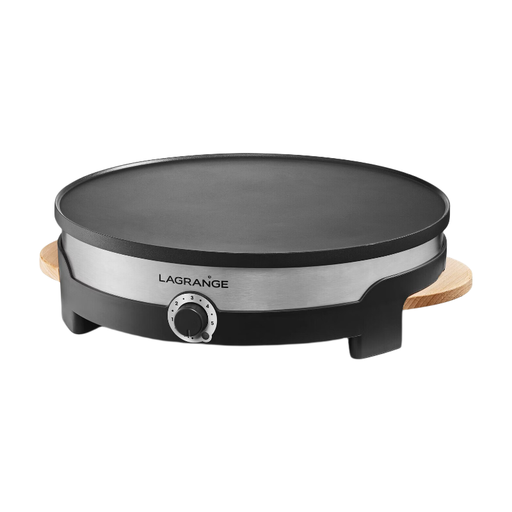
Why this choice suits this profile : Its large 35 cm plate, five-position thermostat and accessories make it well suited to regular preparation and meals enjoyed around the table.
The adjustable thermostat means you are not limited to a single temperature. The removable plate is stated to be dishwasher-safe.
1 500 W of power, a 35 cm plate, a keep-warm function and included accessories.
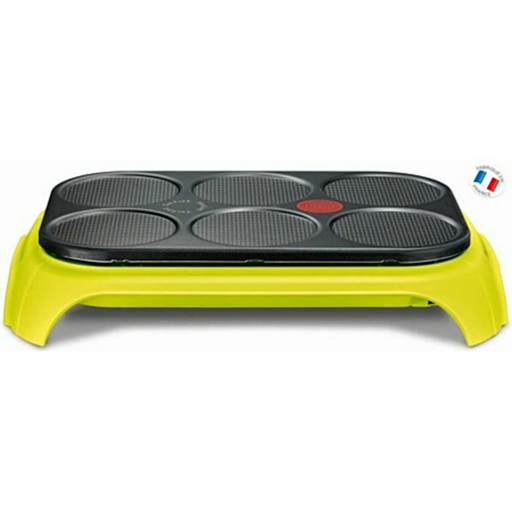
Why this choice suits this profile : This six-person crêpe maker lets you cook six 12 cm mini crêpes at the same time, with integrated storage for the accessories.
The six moulds clearly indicate the appliance’s actual capacity. The product page also mentions a detachable cable, dishwasher-safe accessories and a Thermo-Spot heat indicator.
Six 12 cm mini crêpes, 1 000 W of power and a stated non-stick cooking surface.
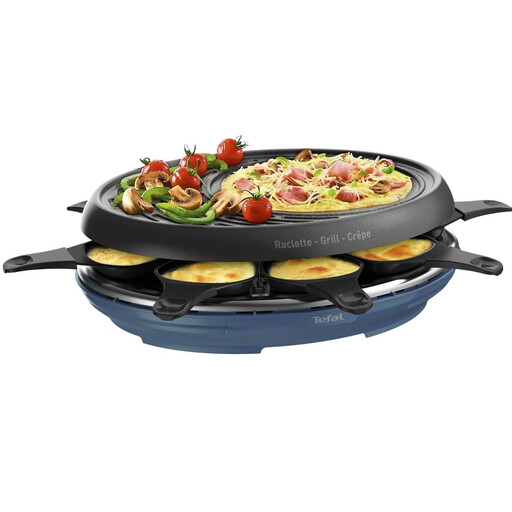
Why this choice suits this profile : This raclette and crêpe appliance combines mini crêpes, a grill and raclette for family evenings or get-togethers with friends.
The eight mini pans give you a clear idea of the appliance’s capacity. The removable plate and pans are stated to be dishwasher-safe, while the base can be cleaned with a damp cloth.
A 3-in-1 function, 1 050 W of power and eight mini pans included.
We have put together a complete, real-time updated selection of products that meet these strict criteria and European safety regulations.
To keep your easy-to-clean crêpe maker in good condition, allow the appliance or pan to cool before washing it. Use a non-abrasive sponge and mild detergent. Even when the manufacturer states that certain parts are dishwasher-safe, the electrical base, cable and plug must never be immersed in water.
With a non-stick pan:
For an electric appliance, place it on a stable, heat-resistant surface. Unplug it before cleaning and keep children away from the hot plate.
A pan is used on an induction, gas or ceramic hob and can also be used to prepare other recipes. An electric crêpe maker has its own heating element and is better suited to shared meals, particularly for cooking several mini crêpes directly at the table.
For two to four people, a diameter of 24 to 26 cm is generally suitable for classic crêpes and everyday dishes. For group use, choose a six-person crêpe maker, a 35 cm plate or a model for eight people, depending on the number of guests and the type of meal planned.
Consumption depends on the appliance’s power rating and how long it is heated. For comparison, a 1 000 W model used for one hour consumes approximately 1 kWh, while a 1 500 W appliance uses approximately 1.5 kWh over the same period. The actual cost depends on your electricity supplier’s tariff and the amount of time the appliance is actively running.