
Livraison le jour même ou le lendemain

Qualité garantie

Débloquez vos offres de bienvenue: Livraison GRATUITE | Jusqu'à -80 % | 30 jours d'essai gratuits à JoyPlus
Téléchargez l'application
A creative toy keeps children entertained without screens, stimulates their imagination and gives the whole family a chance to spend time together. The key is choosing the right set. Some purchases quickly lose their appeal: pieces go missing, instructions are too complicated, the toy takes up too much space or the contents are unsuitable for the child’s age.
Before choosing a children’s construction set, a children’s arts and crafts kit or a toy workbench, it is worth keeping three common pitfalls in mind.
A set full of components is not necessarily more engaging. To offer plenty of possibilities, the pieces need to be varied and suited to the child’s abilities. Simple bricks, wheels, windows and different accessories encourage open-ended creations. By contrast, a set with only one prescribed model may end up at the back of a cupboard once it has been completed.
A toy marked ‘from 4 years’ is not automatically suitable for a younger child. Read the warnings about choking hazards carefully, particularly when the set contains beads, screws, nuts or small construction parts. Adult supervision is strongly recommended whenever a set contains small pieces or an electronic tool.
Once assembled, a children’s toy workbench can be more than a metre high. A large construction set also needs a proper storage solution to prevent pieces from getting lost. In a flat, a shared bedroom or when travelling, a compact set with a storage box will often be more practical than a bulky collection.
For children aged 3 to 4, choose pieces that are easy to pick up and simple play scenarios. Large bricks and a limited number of accessories are generally better suited to first constructions. From the age of 4 or 5, children can follow more detailed models, sort colours and combine several types of pieces.
Remember to check the dimensions of the product and its packaging, as well as the space needed for play. A workshop designed to stay set up cannot be chosen in the same way as an off-screen craft activity that can be packed into the car.
The product information should state the materials used, the minimum age and any relevant warnings. Several products featured here mention compliance with the EN 71 standard, which covers toy safety in Europe. This does not replace the manufacturer’s instructions: domestic use, cleaning with a damp cloth, dry storage and appropriate supervision should all be observed.
For a water-bead or foil art kit, check particularly carefully for small parts. If the toy uses an electronic screwdriver, check the required battery type and remove the batteries during long periods of non-use when recommended in the instructions.
These different approaches can support the development of fine motor skills, spatial awareness and the ability to follow a sequence. They are forms of play and do not constitute a medical or educational promise under any circumstances.
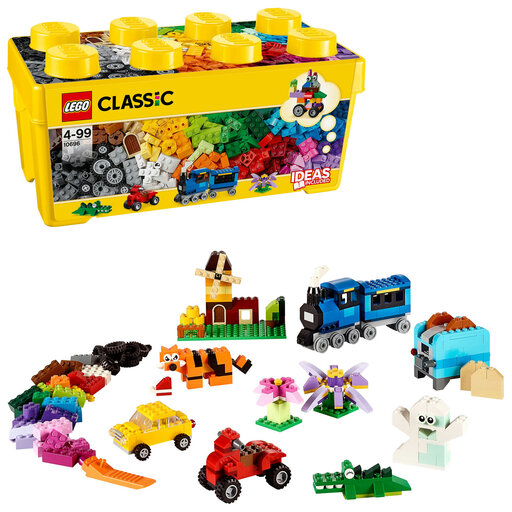
Why this is a good choice for this profile : With 484 pieces, 35 colours, wheels, eyes, windows and a storage box, this set provides a versatile foundation for getting started with open-ended construction from the age of 4.
The variety of pieces prevents play from being limited to a single model, while the integrated box makes everyday tidying easier.
Open-ended construction, 484 pieces, storage included and no batteries required.
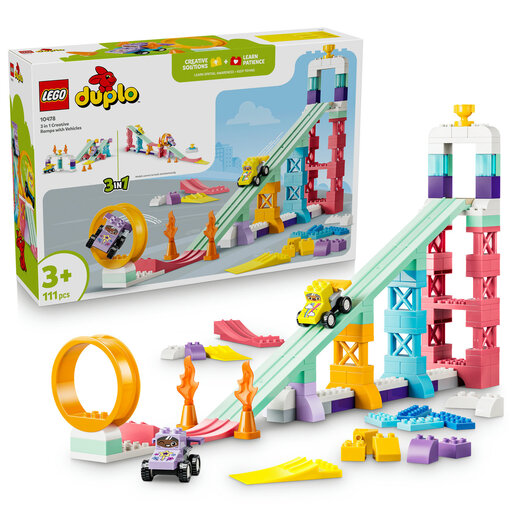
Why this is a good choice for this profile : From the age of 3, children can create three ramp configurations and use two cars, cones, flames and a trophy to invent their own races.
The three builds provide a clear starting point, while still allowing children to organise races on their own or with the family.
111 pieces, three ramp configurations and manual operation, with no batteries required.
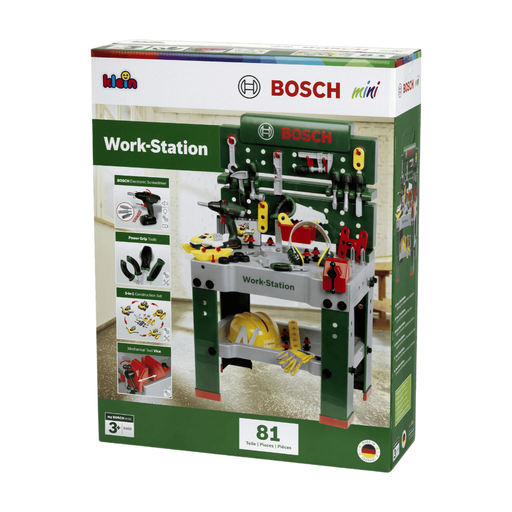
Why this is a good choice for this profile : This workbench is designed for children who regularly return to DIY play and have a permanent space for it at home.
The work surface, hooks and storage spaces help prevent accessories from being scattered around after playtime.
Six hooks, a range of tools, accessories for budding DIY enthusiasts and a workbench measuring 61 × 44.5 × 101 cm when assembled.
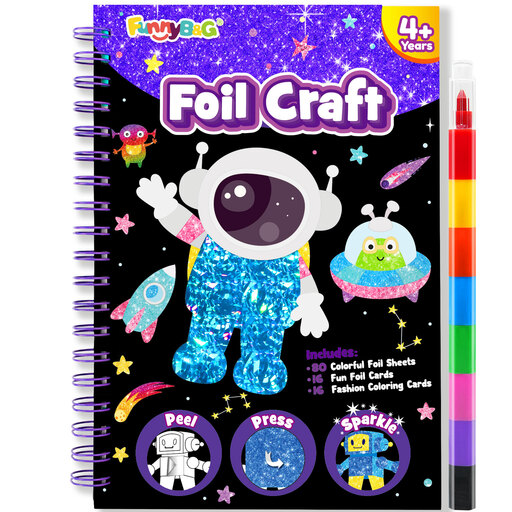
Why this is a good choice for this profile : This kit is designed for children aged 4 to 10 who enjoy calm, space-themed activities, both at home and while travelling.
The ‘peel, press, reveal’ principle requires neither glue nor scissors, keeping preparation and clean-up to a minimum.
112 advertised elements, compact format, an off-screen activity and no mains power required.
We’ve brought together a comprehensive, real-time updated selection of products that meet these demanding criteria and European safety standards.
At 3, choose large pieces that are easy to handle and a clearly stated age recommendation. A children’s construction set with large bricks will generally be more accessible than a set full of beads or small screws. Depending on the manufacturer’s warnings, adult supervision may still be required.
Choose a lightweight, quiet kit that creates little mess. Foil art sets are easy to slip into a bag and require no glue, scissors or batteries. For a longer journey, alternate a children’s creative activity with a book and an observation game to vary the periods of concentration.
It depends entirely on the variety of activities offered and the child’s interest. A box of bricks designed for open-ended construction can remain engaging for several years: the models simply become more complex as the child develops. To protect the pieces, store them in a closed box, clean surfaces with a slightly damp cloth and keep creative components dry.