
Livraison le jour même ou le lendemain

Qualité garantie

Débloquez vos offres de bienvenue: Livraison GRATUITE | Jusqu'à -80 % | 30 jours d'essai gratuits à JoyPlus
Téléchargez l'application
With ultra-complete sets, on-trend colours and promises of comfort, choosing your creative stationery and school supplies can quickly become a headache. A pack of 40 pens isn’t necessarily right for a student, while a set of 72 pencils may be far more than a child just starting to draw needs.
Here are the criteria to consider when choosing gel pens, coloured pencils, pastel highlighters or drawing materials that are right for you.
A large number of pieces is bound to catch your eye, but it’s worth taking a closer look at what’s included. Some sets contain lots of very similar shades or add accessories you’ll hardly ever use. For school and the office, start by checking that the essentials are included: black, blue, red and green, especially for marking work and organising documents.
For colouring and journalling, a wider palette can be useful, as long as the pencil case or box makes it easy to keep everything organised.
A 0.38 mm gel pen is ideal for small annotations and fine writing. A 0.7 mm nib generally creates a more visible line and is better suited to everyday note-taking. Ballpoint pens often use oil-based ink, which is handy for forms and everyday documents, while gel pens offer a different feel and are often smoother to write with.
For highlighters, a chisel tip lets you switch between a broad line and a finer underline. Whiteboard markers need erasable ink, so ordinary colouring felt tips won’t do the job.
Nib tips dry out more quickly if caps are left off or products are exposed to high temperatures. Keep pencils in a pencil case, metal tin or roll to help prevent the leads from breaking.
Before placing your order, check the age recommendations too. Some sets contain small parts or nibs that aren’t suitable for children under 3. Younger children should always be supervised by an adult.
The shape of a pen or pencil barrel directly affects how it feels to hold. Triangular pencils are less likely to roll off the table and can help you hold them more steadily. On a pen, a non-slip grip can make a real difference during long writing sessions.
For coloured pencils, a claim that the lead is break-resistant doesn’t necessarily mean the product is indestructible. How you sharpen the pencil, how much pressure you apply and the type of paper you use can also affect how long it lasts.
Thin paper can show some inks through on the reverse. If possible, test a pen on a less visible page of your school notebook first. Metallic or highly pigmented inks can also stain textiles and porous surfaces.
With watercolour pencils, the result depends on the paper’s weight and texture. Paper designed for wet techniques will give you a more even finish than a standard notebook page.
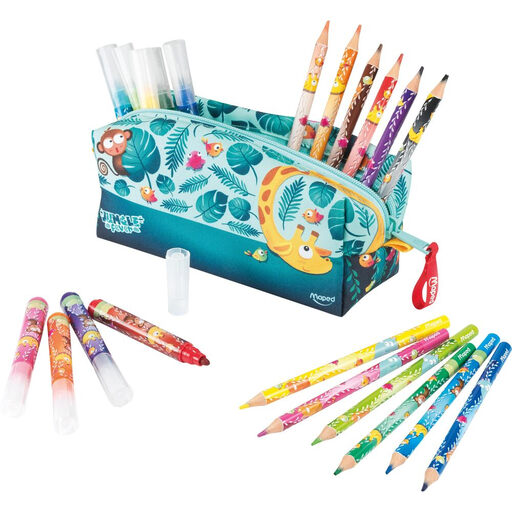
Why it’s a good fit: This set brings together 12 felt tips and 12 coloured pencils in a compartmented pencil case. It’s a practical way to gather the first colouring essentials without buying them separately.
The contents are clearly listed, and the pencil case helps prevent pencils from getting lost or felt tips being left without their caps.
24 pieces, storage compartments and colours suited to both schoolwork and creative activities.
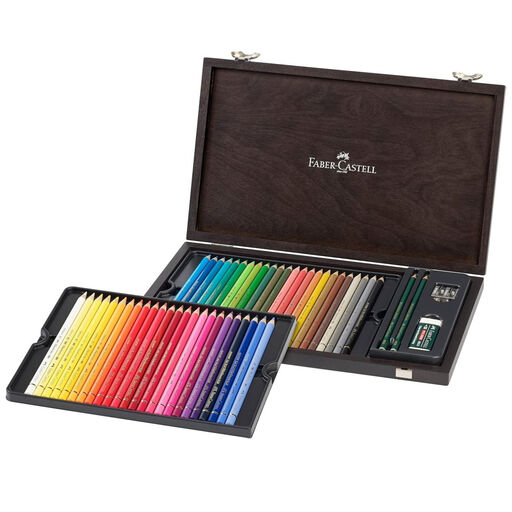
Why it’s a good fit: With its wooden case and 48 pencils, this set is ideal if you’re looking to create a dedicated space for drawing.
The fitted storage keeps the pencils separate and protects the leads during transport or storage.
48 shades, oil-based leads described as break-resistant and a wooden case.
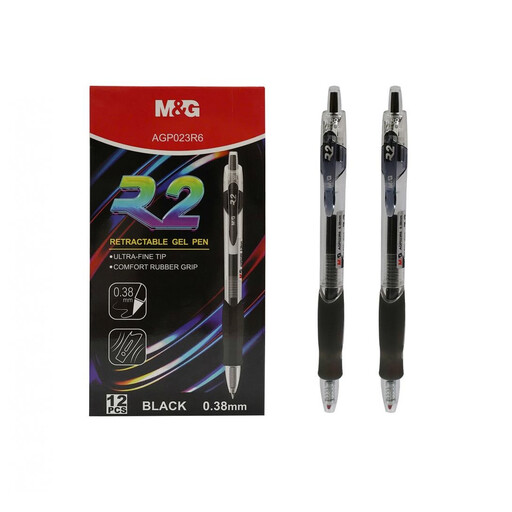
Why it’s a good fit: The ultra-fine nib is ideal for dense notes and precise annotations, and for anyone who writes a lot every day.
The 0.38 mm nib size is clearly stated, so you’re less likely to end up with a pen that’s thicker than expected for writing in small spaces.
Pack of 12 pens, black gel ink described as quick-drying and a retractable mechanism.
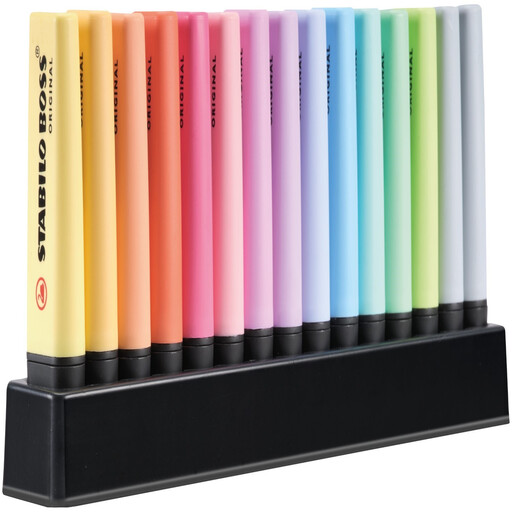
Why it’s a good fit: The pastel shades and two line widths work just as well for colour-coding class notes as they do for planners and journalling.
The chisel tip is listed as 2 and 5 mm, so you can switch from a fine underline to a broader highlight.
15 highlighters, 14 advertised pastel shades, water-based ink and manufacturer-stated anti-dry-out technology.
We’ve put together a comprehensive, regularly updated selection of products that meet these high standards while complying with European safety regulations.
It depends on the pupil’s year group, the school’s instructions and their habits. A small selection of ballpoint pens, a few gel pens, coloured pencils, an eraser, a pencil sharpener and some highlighters will generally cover the essentials. To avoid buying things you don’t need, start with the list provided by the school.
There’s no single shelf life for all products. A pen may last for several months, depending on how often you use it, while a felt tip or highlighter will mostly depend on how well you replace its cap. Store them away from heat and remember to recap them after each use.
A set of 12 to 24 coloured pencils, a few drawing pencils in different grades, an eraser and suitable paper make a perfectly sensible starter kit. Amateur artists can then add colouring felt tips, watercolour pencils or a colouring pencil case, depending on the techniques they’d like to explore.