Families who often cook with cream
If you make sauces, gratins or mashed potatoes regularly, a large carton could suit your mealtimes, as long as you follow the storage instructions after opening.


If you’re making several dinners with cream over a few days, a 1 L carton could be a good fit. For occasional use, a pack of 3 × 20 cl lets you open one small carton at a time. Then choose between full-fat cream and a lower-fat option according to the recipe, without assuming they have the same ingredients or uses. If a child needs to avoid milk, check the label of the specific product: neither a smaller pack nor the word ‘light’ meets this need.
The right size depends mainly on how many recipes you plan to make after opening the carton. The ingredients deserve particular attention if a child needs to avoid milk.
If you make sauces, gratins or mashed potatoes regularly, a large carton could suit your mealtimes, as long as you follow the storage instructions after opening.
A pack of 3 × 20 cl lets you open a small carton for one recipe and keep the others sealed. Auchan and ALDI offer products in this format.
If a child’s meal needs to be milk-free, check the product name, ingredients list and labelling of your chosen product before using it.
First, match the pack size to the meals you plan to prepare. Then compare the product name, fat content and ingredients to make sure they suit the way you intend to use it.
| Criteria | What to check | Who this matters to |
|---|---|---|
| Pack size and leftovers | Compare 1 L and 3 × 20 cl according to the recipes you have planned; check how long the cream keeps after opening. | If I only use cream for one dinner, I’d rather open a small carton than leave a large one partly used; around 31% of consumers prioritise pack size and leftovers. |
| Cooking uses | Check the product name, fat content and stated uses of your chosen product, especially if you want to whip it. | For my sauces or gratins, I first look for a cream suited to the dish I’m making; around 31% of consumers prioritise versatility in the kitchen. |
| Fat content | Compare the product name and ingredients of the 12% or 4% options with those of a 30% full-fat cream. | When I want a lower-fat option for a dish, I also want to know whether I’m buying light cream or a dairy speciality; around 23% of consumers prioritise this choice. |
| Milk content | Check the ingredients and allergen information on each specific product; don’t make assumptions based on pack size or fat content alone. | If a child needs to avoid milk, I choose based first on the label and the guidance relevant to them; around 15% of consumers prioritise avoiding milk. |
For its 1 L full-fat pouring cream, Auchan recommends storing it between 0 °C and +6 °C and using it within five days of opening.
Before choosing this carton, plan which recipes you’ll use the cream in during that time. If you only use it occasionally, compare it with 20 cl cartons.
Any cream left over may go to waste if you don’t use it within the stated time.
Elle & Vire’s 4% pouring dairy speciality contains skimmed milk and cream, among other ingredients. A lower fat content doesn’t mean it’s milk-free.
If a child needs to avoid milk, read the label of the exact product and follow any individual guidance that applies to their meals.
Elle & Vire describes its full-fat pouring cream from Condé-sur-Vire as suitable for savoury and sweet recipes, but says this product is not suitable for making whipped cream.
If your recipe calls for whipped cream, check that the product is suitable rather than relying on its fat content alone.
A 20 cl carton and a 1 L carton give you different amounts to use after opening. The DGCCRF specifies that nutrition information is given per 100 g or 100 ml, providing a common basis for comparing products.
Consider how much you need, as well as the ingredients and nutritional values given on the same basis.
These products offer useful points of comparison for pack size, product name and ingredients. Their features may not apply to other products from the same brand.
The brand offers, among other products, a 30% full-fat pouring cream and a 4% pouring dairy speciality.
Carrefour offers a 30% Classic full-fat pouring cream in a 1 L carton.
The range includes a 12% UHT light pouring cream in a 1 L carton.
Auchan offers 30% UHT full-fat pouring cream in 1 L cartons and packs of 3 × 20 cl.
ALDI offers 30% and 12% Milsani UHT products, each in a pack of 3 × 20 cl.
This 1 L coconut cream is an option for recipes where you’d like to use coconut instead of dairy pouring cream. It won’t give the same taste or result. If a child needs to avoid milk, check the label of the specific product before serving it.
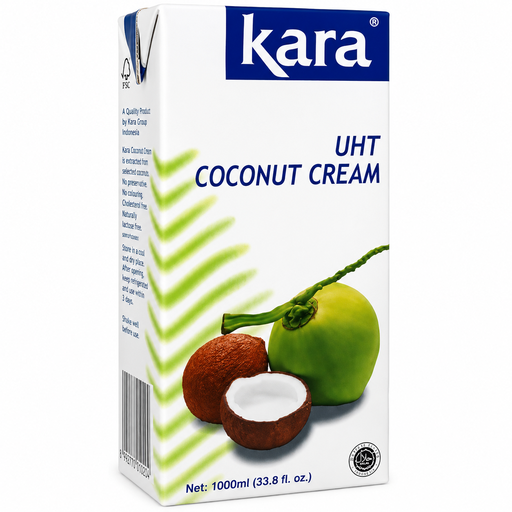 Image unavailable
Worth considering for a sauce, soup or curry recipe that works with coconut cream instead of dairy cream.
UHT coconut cream; 24% fat; 1 L carton. The taste and result may differ from those you’d get with dairy cream. If avoiding milk, check the label of the specific product: being lactose-free doesn’t confirm that it’s free from milk proteins or cross-contamination.
No. It’s best suited to households with several recipes that will use the cream within the stated time after opening. For its 1 L full-fat pouring cream, Auchan recommends storing it between 0 °C and +6 °C and using it within five days of opening. If you use cream less often, compare it with packs of smaller cartons.
Not necessarily in every recipe. Delisse offers a 12% light pouring cream, while Elle & Vire’s 4% product is a dairy speciality containing ingredients such as skimmed milk, cream and modified starch. Check the product name and intended use before replacing the full-fat cream specified in a recipe.
For prepacked foods, check the ingredients list: the DGCCRF says that allergenic ingredients must be highlighted. If a child needs to avoid milk, check the label of each specific product, including light or plant-based options, and follow any individual guidance that applies.
Compare the values on the same basis, per 100 g or per 100 ml, rather than comparing figures given per carton. The DGCCRF says this format helps you compare fat, sugars, protein and salt, among other things. Separately, consider how much you’ll actually use.