For lunch at uni, a complete frozen meal works if you have access to a freezer and can make use of the pack size. A ready meal is better suited to a short break, as long as you follow the product instructions. Couscous gives you more choice over the toppings, but requires extra ingredients and preparation.
Which format is right for you?
Busy students with access to a microwave
If you’re eating between lectures, look for a meal with a portion size and reheating instructions that suit the time and equipment you have. Also check whether the packaging can be used for the preparation method given.
Students preparing several lunches
Access to a kitchen or freezer means you could buy a larger meal to divide up, or put together several meals with couscous and toppings. Choose a format that fits the space you have and the amount you’ll be able to use.
Students who pay attention to ingredients
If particular ingredients, meats or allergens matter to you, check the label on the exact product you’re buying. When comparing two ready meals, also look at the nutritional information per 100 g and the portion you plan to eat.
What should you check before choosing?
A complete frozen meal, a ready meal to heat up and dried couscous all call for different equipment and effort at lunchtime. Start by choosing a format you can store and prepare, then check the quantity and ingredients of the specific product.
Complete frozen meal
Choose this if: you have a freezer and plan to share the meal or divide it between several lunches.
Bear in mind: transport and storage must follow the packaging instructions, particularly after defrosting.
Ready meal to heat up
Choose this if: you want a prepared meal for a short break and have the equipment specified to heat it up.
Check: the Auchan ready meal mentioned in this guide is chilled, not frozen; its instructions don’t apply to other products.
Couscous to serve with toppings
Choose this if: you want to decide for yourself what to serve with it and how much to prepare.
Bear in mind: couscous on its own isn’t a complete, ready-to-eat meal. You’ll need the ingredients and equipment to prepare the rest.
| What to consider |
What to check |
Who it matters to |
| Quantity per lunch |
Net weight, stated number of portions and how much you’ll actually be able to use. |
I want a pack size that I can divide between my lunches without ending up with leftovers; around 34% of consumers put quantity top of their list. |
| Time and equipment |
Preparation method, stated cooking time and whether the packaging is suitable for the equipment available. |
Between lectures, I want to be able to prepare lunch with the equipment I have access to; speed is the priority for around 33% of consumers. |
| Ingredients |
Ingredients, allergens and nutritional information per 100 g, considered alongside the portion you’ll eat. |
If the recipe doesn’t suit me, easy preparation isn’t enough: around 20% of consumers put ingredients ahead of other considerations. |
| Frozen storage |
Storage temperature and instructions, freezer space and guidance for after defrosting. |
I want to keep several lunches in the freezer without choosing a pack that takes up too much space; this is the main consideration for around 13% of consumers. |
Common mix-ups to avoid
-
Mistaking couscous or a chilled meal for frozen couscous
Couscous products can be dried couscous, a chilled meal, a complete frozen meal or just frozen vegetables. They all have different storage and preparation requirements.
Before choosing, read the product name, ingredients list and storage instructions. If you’re starting with couscous, remember to buy the toppings you need for a full meal separately.
-
Judging the ingredients by the dish name alone
Two prepared couscous dishes may have different recipes and portion sizes. The word “couscous” alone won’t tell you which allergens the meal contains or how much salt is in the portion you’ll eat.
Check the ingredients and allergens on the exact pack. To compare nutritional information, start with the figures per 100 g, then take into account the portion you’ll eat.
-
Choosing a large frozen meal without being able to store it
A meal intended to serve several portions is only practical if you can transport it, make space for it in the freezer and use the prepared quantity in line with its instructions.
Check the storage temperature and defrosting instructions on the pack. The Carrefour and Joybuy listings for the frozen meals mentioned here state that they should be stored at −18 °C; the Joybuy listing says not to refreeze after defrosting.
A pack that’s too large may also leave you with portions that are difficult to use if you can’t store them as instructed.
Retailers and brands to know
These pointers relate to the specific products and ranges mentioned here, not everything each retailer sells. Always distinguish between a complete meal, frozen toppings and couscous before comparing pack sizes.
Carrefour
Carrefour offers, among other products, a frozen Carrefour Sensation chicken and merguez couscous, as well as dried Carrefour couscous: two different ways to prepare lunch.
- The Carrefour Sensation meal is listed as frozen and weighs 840 g.
- Couscous sold separately needs toppings; it isn’t a substitute for a complete meal.
Auchan
Auchan sells frozen vegetables for couscous to add to a dish, as well as a prepared chicken and merguez couscous.
- The 1 kg bag of vegetables is said to make five portions; its instructions say to cook from frozen.
- The prepared chicken and merguez couscous mentioned here is listed as chilled, not as a complete frozen meal.
Lidl
Toque du Chef chicken and merguez couscous is an example of a prepared meal to consider if its pack size suits your lunch.
- The listing describes a 980 g meal that’s ready to eat.
- Check the storage instructions on the packaging before treating it as a frozen product.
Aldi
The 1 kg Daylicious couscous listed by Aldi is an example of a chilled prepared meal.
- The listing clearly identifies the product as chilled.
- It therefore isn’t suitable if you need a complete meal to keep in the freezer.
E.Leclerc
The 1 kg Eco+ medium couscous is dried couscous for students who want to choose their own toppings.
- The pack lets you prepare the amount of couscous you want.
- It’s neither a complete meal nor a frozen product, so you’ll need to provide the other ingredients.
Tipiak
The 1 kg Tipiak medium couscous is a base to serve with toppings to suit the meal you have in mind.
- Tipiak’s instructions say to prepare it with boiling water or stock, then leave it to stand for five minutes.
- Couscous on its own doesn’t include the toppings you’d get in a prepared couscous dish.
Frozen couscous on Joybuy
This product suits you if you’re looking for a complete frozen meal to share or divide into portions, and have a freezer where you can store it as instructed.
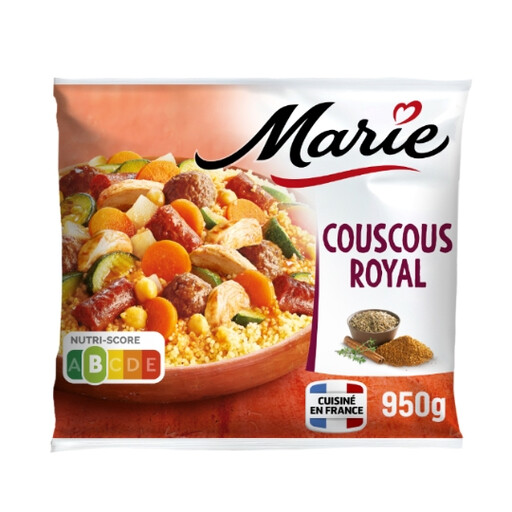 Image unavailable
Marie Merguez and Chicken Couscous, 950 g
Consider this if you can store the frozen meal and make use of its 950 g pack size. The Joybuy listing says to store it at −18 °C and not to refreeze it after defrosting. Check the reheating instructions and how much to prepare for your lunch.
View on Joybuy
Frequently asked questions
Is prepared couscous suitable if I need to avoid certain allergens?
Check the ingredients and allergens on the specific product before choosing it: the dish name alone isn’t enough. The DGCCRF says allergenic ingredients must be highlighted on the label; depending on the recipe, the couscous dishes mentioned may contain wheat or celery, for example.
Can I heat any couscous tray in the microwave at uni?
No. Follow the preparation instructions for the tray you’ve bought and check that it’s suitable for the equipment available. As an example specific to this product, Auchan says its 1 kg chicken and merguez couscous takes around 7 minutes at 850 W, and that the tray isn’t suitable for a conventional oven.
How do I compare nutritional information for two different portion sizes?
Start with the figures per 100 g, then work out how they relate to the amount you plan to eat. The DGCCRF says nutritional information is given per 100 g or 100 ml; the portion you actually eat may vary from one meal to another.
What should I check before buying a large frozen couscous meal?
Make sure you can transport and store the product as directed on the packaging, then choose a quantity you’ll be able to use. The listings for the Carrefour and Marie frozen meals mentioned here say to store them at −18 °C; the Joybuy listing for the Marie meal says not to refreeze it after defrosting.


