Hosts looking for a cupboard staple
You’re preparing a raclette meal but would like to have an optional side dish for the occasion, or something to use up later. Couscous is separate from the cheese, potatoes and other items you’ve planned.


For a raclette night, only plan to serve couscous if you want a separate side dish or a cupboard staple to use for another meal: it isn’t a substitute for the usual raclette ingredients. Choose the pack size based on how much you plan to serve and how you’ll use any leftovers. If one of your guests needs to avoid gluten, check that the specific product is labelled “gluten-free” rather than choosing wheat semolina, even if it’s wholemeal.
You’re preparing a raclette meal but would like to have an optional side dish for the occasion, or something to use up later. Couscous is separate from the cheese, potatoes and other items you’ve planned.
If you’re not sure how many people will eat couscous, individual sachets can help you prepare just the amount you need. The Joybuy product listing for Tipiak Cooking Bags specifies five 100 g sachets.
Durum wheat couscous, even wholemeal couscous, isn’t suitable for this need. Look for a product explicitly labelled “gluten-free”, then check the ingredients and labelling on the product you buy.
First decide whether you’ll actually serve the couscous during your raclette meal or keep it for another occasion. Then it’ll be easier to compare the pack size, preparation method and ingredients.
| Criteria | What to check | Who it matters to |
|---|---|---|
| Pack size and quantity | Compare the pack weight or number of sachets with the amount you plan to prepare and how you’ll use any leftovers. | If I’m only serving couscous as an extra, I want to be able to use the rest rather than leave a large, opened pack sitting around. Nearly 45% of consumers would prioritise pack size. |
| Preparation and portioning | Check the preparation method and timings given for the product you’ve chosen. Cooking bags and couscous that needs hydrating may not be prepared in the same way. | While serving raclette, I’d rather prepare a set amount without making the meal more complicated to organise. Around 33% of consumers would prioritise ease of preparation and portioning. |
| Ingredients and gluten | Read the ingredients and allergen information. If you need to avoid gluten, look for an explicit “gluten-free” label; “wholemeal” does not mean gluten-free. | If I need to avoid gluten, the type of grain is crucial. If I’m looking for wholemeal couscous, I also want to know what’s in the pack. Some 22% of consumers would make ingredients their top priority. |
The DARI wholemeal couscous described by Joybuy is made with wholemeal durum wheat semolina, so it contains gluten.
If you need to avoid gluten, choose a product explicitly labelled “gluten-free” and check the ingredients and allergen information on the specific pack.
A 1 kg pack can also be used for other meals, as long as you plan how to store it after opening. Auchan’s listing for DARI fine couscous specifically says to keep it away from heat and moisture.
Choose a pack size that suits how you plan to use it, and follow the storage instructions on the pack.
The couscous ranges listed by Carrefour and Auchan include different types of products, with ingredients and uses that aren’t interchangeable.
If you want a neutral side dish to serve separately, check the product name and ingredients before choosing.
Tipiak offers medium-grain couscous, as well as cooking bags for preparing individual portions.
Dari features here for its wheat couscous, including fine and wholemeal varieties.
Carrefour offers wheat couscous as well as a maize couscous labelled gluten-free.
Auchan’s couscous and semolina range lets you compare 500 g and 1 kg packs, as well as cooking bags.
ALDI lists a 1 kg pack of Les Jardins de Laylah medium-grain couscous, a size to consider if you’re planning to use it more than once.
These three wheat products are suitable if you want to keep couscous in the cupboard as an optional side dish. Two are distinguished by their medium or fine grains, while the third is made with wholemeal semolina. If you need to avoid gluten, look instead for a product explicitly labelled “gluten-free”.
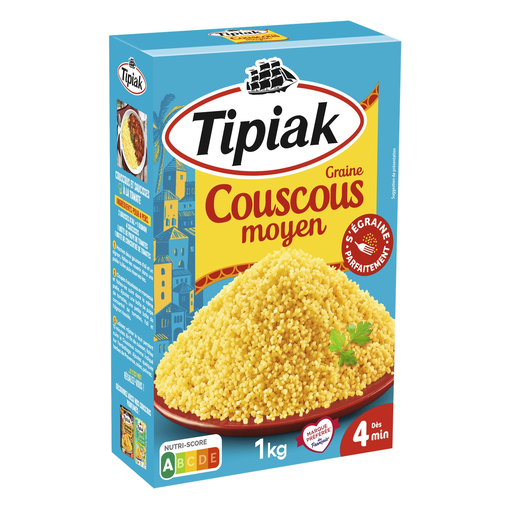 Image unavailable
Worth considering if you want to keep plain semolina in the cupboard to serve as a side dish, either with your raclette or at another meal.
1 kg pack of medium-grain couscous. The stated preparation method uses an equal volume of boiling water and allows it to stand for 5 minutes.
Contains wheat gluten. Check the label if other allergens or traces are a concern for you.
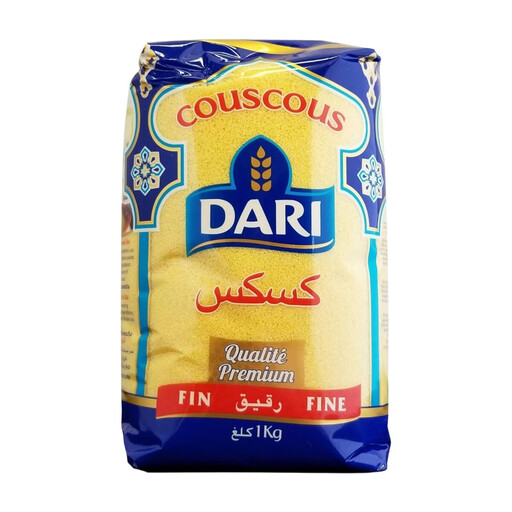 Image unavailable
Consider this if you prefer fine-grain couscous as an optional side dish and expect to use the pack beyond this occasion.
1 kg pack of durum wheat couscous. Follow the quantities and preparation time stated on the product you buy.
Contains wheat gluten. After opening, reseal the pack and follow its storage instructions.
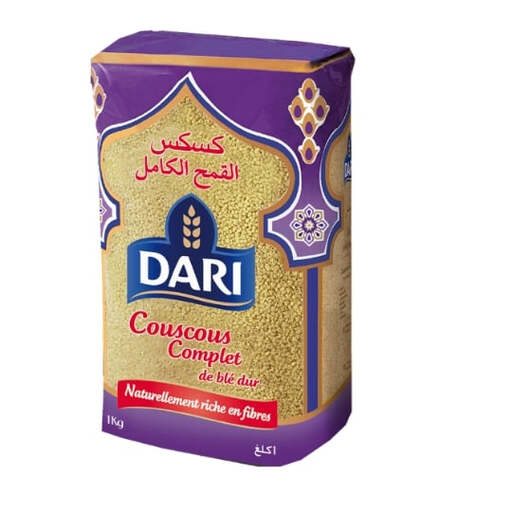 Image unavailable
Choose this if you’re specifically looking for wholemeal semolina to keep in the cupboard for several uses.
1 kg pack made with wholemeal durum wheat semolina. The Joybuy listing states 9.9 g of fibre per 100 g; check the pack for preparation instructions.
Contains wheat gluten: “wholemeal” does not mean “gluten-free”.
No. The durum wheat couscous mentioned here, including DARI wholemeal couscous, contains gluten. For this need, look for a product explicitly labelled “gluten-free”, such as Carrefour No Gluten maize couscous, then check the labelling on the product you buy.
Follow the instructions on the pack and seal it carefully. Auchan’s listing for DARI fine couscous says to store it away from heat and moisture. Check the instructions for your specific product, especially if you choose cooking bags.
The answer depends on the type of date on the packaging. According to the French Ministry of the Economy, a use-by date (DLC) is a strict deadline, while a best-before date (DDM) means something different. Check the exact wording, the condition of the packaging and the storage instructions rather than relying on the product’s appearance alone.
No. For this meal, couscous is an optional cupboard staple to serve separately or save for another occasion, not an automatic replacement. Decide whether to prepare it based on what else you’re serving, how many guests want it and any dietary requirements.