People who check sugar first
You look at the ‘of which sugars’ figure rather than relying on the look of the packaging. If you’re considering a konjac alternative, you also want to know how it differs from dry couscous.


For a household of one or two, start by choosing what you want to cook: wheat couscous, perhaps wholemeal for its fibre, or a moist konjac and oat alternative. Compare the ‘of which sugars’ figures between products of the same type, then choose a pack size that suits your meals. Sachets make portioning easier, but their format does not prove that they contain less sugar.
You look at the ‘of which sugars’ figure rather than relying on the look of the packaging. If you’re considering a konjac alternative, you also want to know how it differs from dry couscous.
You cook for one or two and want to compare the fibre in wholemeal and semi-wholemeal options, without assuming they automatically contain less sugar.
You’re looking for an amount that’s easy to plan for your meals. Pre-portioned sachets may appeal, but remember to check the ingredients and nutritional information too.
For a small household, first distinguish dry couscous from a moist alternative. Once you’ve chosen the product type, compare the labels and the amount you actually plan to use.
Choose this if: you want to stick with the usual uses of wheat couscous and compare the fibre in wholemeal and semi-wholemeal options.
Bear in mind: the word ‘wholemeal’ alone doesn’t tell you how much sugar a product contains; wheat couscous contains gluten.
Consider this if: you’re happy to choose a product that differs from dry couscous in both its ingredients and how you use it.
Bear in mind: because it consists mainly of water, you can’t directly compare its value per 100 g with that of dry couscous. The Natura Konjac product contains oats and, according to its Joybuy product information, is not suitable for people with coeliac disease or gluten intolerance.
| What to consider | What to check | Who is it for? |
|---|---|---|
| Sugars on the label | Check the ‘of which sugars’ figure per 100 g and compare products of the same type; one figure on its own isn’t enough to establish that a product is ‘reduced in sugars’. | If my main aim is to limit the sugars listed, I don’t want a moist alternative to appear comparable to dry couscous based only on the per-100 g figure. Around 45% of consumers would prioritise this check. |
| Fibre and type of couscous | Compare the fibre per 100 g and check whether the wheat couscous is wholemeal or semi-wholemeal. | If I want to stick with wheat couscous while choosing based on the fibre shown, I need to check the figures for each product. Around 36% of consumers would prioritise this. |
| Amount to prepare | Check the total quantity, the size of any sachets and the storage instructions once opened. | If I rarely make couscous, pre-portioned amounts help me plan meals without having to manage a large pack. Around 19% of consumers would put this need first. |
You might choose wholemeal couscous for its fibre, but its sugar content depends on the individual product. E.Leclerc’s product information for Bio Village and Joybuy’s for Dari show different figures for their respective products.
Compare the ‘of which sugars’ figures for similar couscous products, then look at fibre and ingredients separately.
Joybuy’s product information for Natura Konjac describes a product made mainly from water, with 3% konjac flour and 0.5% oat flour. Its figure per 100 g therefore doesn’t describe a product of the same type as dry couscous.
First decide whether you want wheat couscous or this type of alternative, then compare products within your chosen group.
The wheat couscous products featured here contain gluten. Joybuy’s product information for Tipiak also warns that they may contain traces of other allergens; Natura Konjac’s product information lists oats and states that the product is not suitable for people with coeliac disease or gluten intolerance.
Read the ingredients and allergen information on the exact pack, even if you’ve already bought a different size from the same brand.
A 1 kg pack and 100 g sachets call for different approaches if you only make couscous occasionally.
Estimate how many meals you plan to make and check the pack’s resealing and storage instructions.
The cooking-sachet option featured by Joybuy contains 5 × 100 g sachets of durum wheat couscous.
E.Leclerc describes an organic, semi-wholemeal durum wheat couscous, pre-cooked and sold in a 500 g pack.
The wholemeal couscous featured by Joybuy comes in a 1 kg pack.
Joybuy features a moist konjac and oat product in a 250 g pack, which is different from dry wheat couscous.
This selection includes wheat couscous in large packs and a konjac and oat product. First choose the type of product you want; you can then compare pack sizes and nutritional information between suitable options.
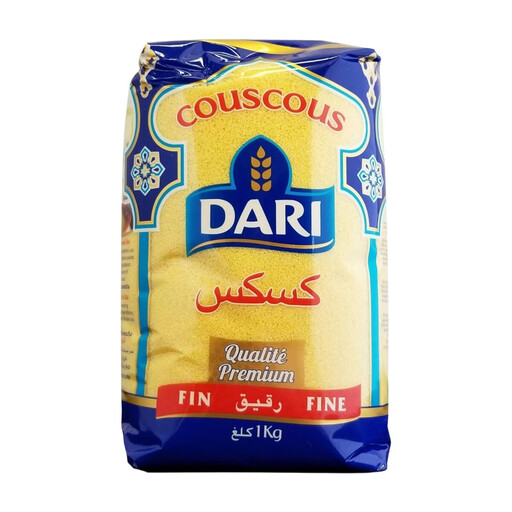 Image unavailable
For making classic wheat couscous when you can use a 1 kg pack over several meals.
Before choosing this larger size, check the nutritional information and storage instructions for this product.
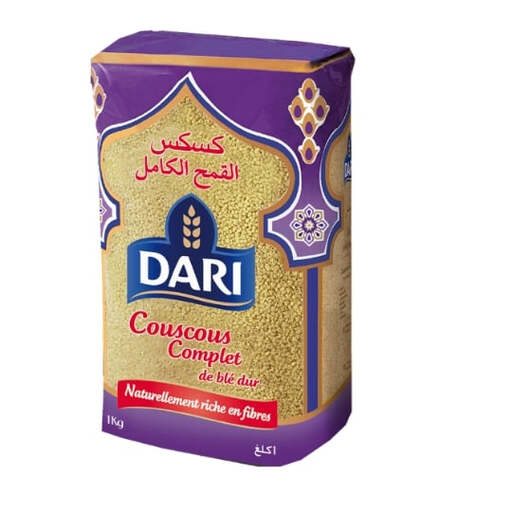 Image unavailable
For enjoying wheat couscous while choosing a wholemeal option with a stated fibre content.
According to Joybuy, it contains 100% wholemeal durum wheat couscous, with 9.9 g of fibre and 3 g of sugars per 100 g. It contains gluten, and the 1 kg pack isn’t portioned.
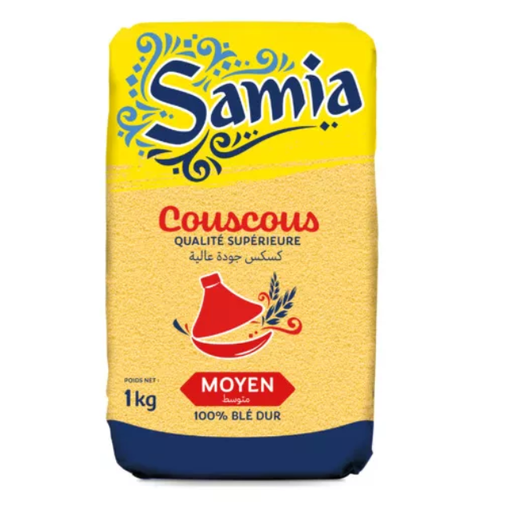 Image unavailable
For making classic wheat couscous if a 1 kg pack without pre-measured portions suits how often you cook.
Check this product’s label to compare its sugar and fibre content with other wheat couscous options.
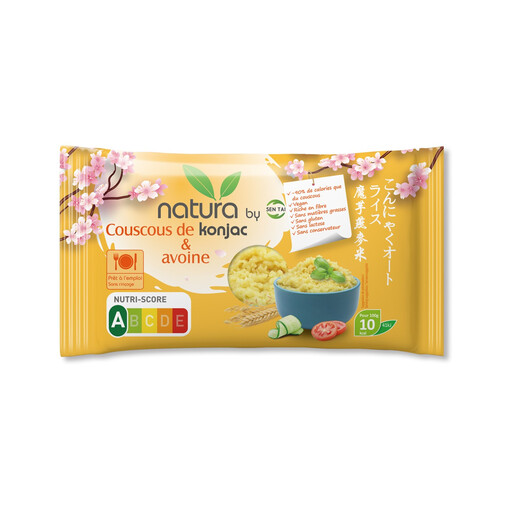 Image unavailable
For considering a moist alternative to dry wheat couscous, if you’re happy with a different composition and way of using it.
Joybuy’s product information lists water, 3% konjac flour, 0.5% oat flour and 0.5 g of sugars per 100 g. Don’t compare this figure directly with that of dry couscous; check the allergen information on the exact pack. The product information states that it isn’t suitable for people with coeliac disease or gluten intolerance.
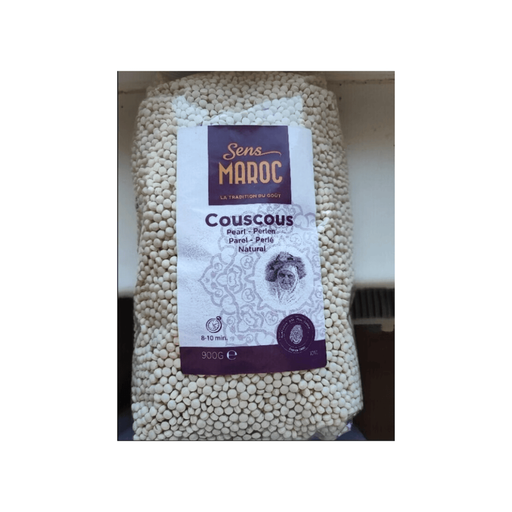 Image unavailable
For choosing pearl couscous rather than traditional couscous, if you plan to use a 900 g pack.
Before comparing its nutritional values with those of dry couscous, check which form of the product the figures refer to and read this product’s label.
No. The ‘of which sugars’ figure for couscous, taken on its own, isn’t enough to substantiate this claim. EU rules on nutrition claims require ‘reduced in sugars’ to be compared with a similar product, so read the label rather than drawing this conclusion from a single figure.
No. ‘Wholemeal’ describes the type of couscous, not a guaranteed sugar content. For example, E.Leclerc lists 1.7 g of sugars per 100 g for its Bio Village semi-wholemeal couscous, while Joybuy lists 3 g per 100 g for Dari wholemeal couscous. Compare products of the same type and check their fibre separately.
Not the Natura Konjac product featured here: its Joybuy product information lists oats and states that it isn’t suitable for people with coeliac disease or gluten intolerance. Always check the ingredients and allergen information on the exact pack, even for an alternative that doesn’t look like wheat couscous.
Choose a size based on how much you plan to prepare and whether you can store the rest as directed. The Tipiak sachets featured by Joybuy are divided into 5 × 100 g portions; with 1 kg packs of Dari couscous, you’ll need to plan how to use the contents after opening.