Country-style p?té is a cornerstone of French gastronomy, an essential for convivial apéritifs and traditional starters. Yet, when faced with well-stocked shelves, it's often difficult to tell the difference between an authentic product and a pale imitation. How can you be sure you're choosing a flavourful recipe, made with high-quality ingredients?
This guide is here to help you see things more clearly. As a curator of hidden gems for Joybuy, I'm sharing my tips for selecting a p?té that will delight your taste buds, based on simple, concrete criteria.
How to Choose a Good Country-Style P?té?
To ensure you make the right choice, here are the key points to check. These few guidelines will help you decipher labels and understand what makes a great pork p?té or a good country-style terrine.
1. Scrutinise the Ingredients
It all starts with the label: the ingredients list is your best friend. A true artisanal p?té is built on simple, recognisable ingredients.
- The Meat: Pork is, of course, the star. Favour recipes that highlight premium cuts like pork jowl (for a melt-in-the-mouth texture) and pork liver (for depth of flavour). A high meat percentage is almost always a sign of quality.
- The Seasonings: Salt, pepper, garlic, and onions form the base. Some regional recipes add specific spices, like Espelette pepper for a Basque p?té.
- Simplicity: A short ingredients list is an excellent sign. Steer clear of long lists of preservatives, artificial colours, and flavour enhancers: a truly good p?té doesn't need them to be delicious.
2. The Importance of Origin and Regional Recipes
French charcuterie is a treasure trove of regional variations. A p?té's origin says a lot about its recipe and character.
- The South-West: This region is renowned for its rich, generous recipes. Here you'll find p?tés enhanced with hazelnuts, porcini mushrooms, or sometimes a touch of Armagnac.
- Brittany: Known for its charcuterie expertise, Brittany offers p?tés with a clean, honest taste, often focusing on the quality of the pork and seasoned with a hint of Guérande sea salt.
- The Basque Country: Basque p?té is distinguished by its use of Espelette pepper, which provides a gentle, aromatic warmth without ever overpowering the taste of the meat.
3. Texture: A Matter of Taste
Texture, often visible through the glass jar, is also a matter of preference. Some prefer a coarse grind, where you can still see the pieces of meat, typical of a country-style terrine. Others enjoy a finer, more uniform texture that is easier to spread. There's no absolute rule; it all depends on your taste and how you plan to serve it (on fresh bread, as a starter, etc.).
Country-Style Pâté Recommendations
To guide you, we have selected three products that perfectly illustrate the richness and quality of these regional specialities.
South-West Country-Style P?té with Hazelnuts - LUCIEN GEORGELIN
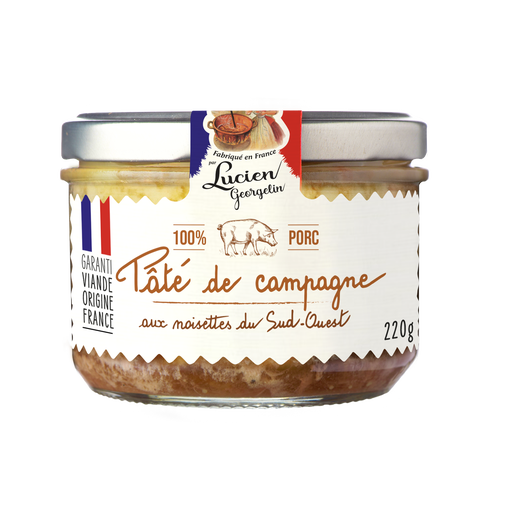
- Why it stands out: This recipe from Lucien Georgelin embodies the generosity of the South-West. The addition of South-West hazelnuts (6.9%) provides an irresistible crunch and a toasted flavour that enhances the richness of the pork.
- Key features:
- A pleasant, hearty texture with real pieces.
- A perfect balance between the richness of the meat and the roundness of the hazelnut.
- A traditional and reassuring ingredients list (pork jowl and liver, onions, garlic).
- Who is it for?: For lovers of p?tés with character who enjoy a bit of crunch. Perfect on an aperitif platter or as a rustic and gourmet starter.
Hénaff Pork P?té
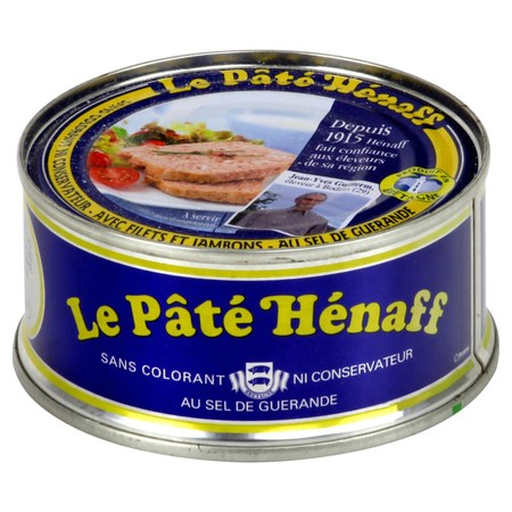
- Why it stands out: Hénaff p?té is a Breton institution. Its pure and simple recipe, made with 91% pork from Brittany, offers a clean and authentic taste where the pork is king.
- Key features:
- A minimalist ingredients list that gets straight to the point.
- The perfect touch of Guérande sea salt, a signature of the region.
- A fine, melt-in-the-mouth texture, ideal for spreading on toast.
- Who is it for?: For purists seeking the authentic, comforting taste of the pork p?té of our childhood. A reliable choice for a quick snack or an everyday sandwich.
Basque P?té with Espelette Pepper - LUCIEN GEORGELIN
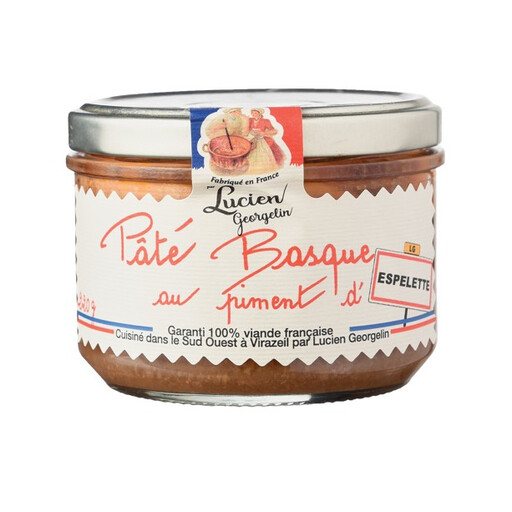
- Why it stands out: This p?té is a true invitation on a journey to the heart of the Basque Country. The Espelette pepper (0.7%) defines this characterful recipe, subtly enhancing the meat without ever taking over.
- Key features:
- Subtle spicy notes and a pleasant warmth that lingers on the palate.
- A sophisticated recipe with shallots, garlic, and a hint of rum for added complexity.
- A beautiful tribute to the charcuterie craftsmanship of the South-West.
- Who is it for?: For curious palates and lovers of delicately spiced flavours. Ideal for surprising guests at aperitif time and stepping off the beaten path.
Looking for Other Options?
Our selection is just a glimpse of the treasures held within the world of canned charcuterie. To explore other recipes, textures, or regional specialities, feel free to browse our complete range.
? Discover our entire selection of canned p?tés
Frequently Asked Questions About Country-Style P?té
What is the difference between a country-style p?té and a terrine?
The two terms are often used interchangeably, but a historical nuance exists. Originally, a terrine is the name of the earthenware cooking dish. By extension, the word refers to a preparation with an often coarser texture, where the pieces are still visible. P?té, on the other hand, can be finer. In practice, the distinction is quite blurred today and depends mainly on the habits of each artisan.
How should you store country-style p?té after opening?
Once opened, your p?té must be kept in the refrigerator. The trick to prevent it from drying out and oxidising is to cover it with plastic wrap placed directly on the surface. For the best flavour, consume it within 2 to 3 days.
What should you serve with country-style p?té?
Country-style p?té is a friend to simple things! The perfect pairing: thick slices of toasted country bread, a few crunchy cornichons, or pickled pearl onions for a touch of acidity that awakens the palate. For a drink, a light and easy-drinking red wine (a Beaujolais or a Loire Valley wine, for example) will be its best companion.
Your Joybuy Expert on Regional Specialities


