
Livraison le jour même ou le lendemain

Qualité garantie

Débloquez vos offres de bienvenue: Livraison GRATUITE | Jusqu'à -80 % | 30 jours d'essai gratuits à JoyPlus
Téléchargez l'application
Buying a cotton fitted sheet? In theory, nothing could be simpler. Yet, between fabrics that pill, pockets that are too shallow, and colours that fade, it's easy to make a mistake. As the Head of Home Linens at Joybuy, I'm here to help you navigate your options. My mission: to cut through the marketing noise and focus on what truly matters: comfort, convenience, and durability.
Here are the 3 most common mistakes when buying a fitted sheet, and more importantly, how to avoid them:
Fortunately, making an informed choice is easy once you understand a few simple technical criteria.
Before you fall for a colour or pattern, take a moment to check these three key points. They will make all the difference in the long run.
The term "cotton" actually covers several qualities of weave. Your choice will directly impact the feel, breathability, and care of your bed linen.
Measuring your mattress is the non-negotiable step. The standard sizes in France are well-known:
But the most crucial, and too often overlooked, dimension is the pocket depth. This is the "pocket" of the sheet that wraps around the corners of the mattress.
Always check the label. A fitted sheet that is washable at 60°C ensures better hygiene by more effectively eliminating dust mites and bacteria. A label like Oeko-Tex Standard 100 guarantees that the textile is free from any harmful substances. It's an essential guarantee for your skin's safety.
To illustrate these tips in practice, here are a few products that meet different needs.
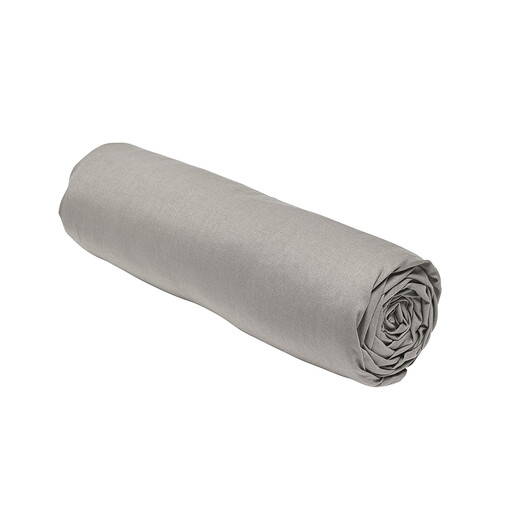
Why we chose it: This is the ultimate reliable fitted sheet. Designed for a standard double bed, it meets everyday needs with a simple, durable fabric, ideal for those looking for an effective, hassle-free solution.
It doesn't hide behind a vague "100% cotton" label. It specifies a 57 thread count weave, a proven standard of quality. Its 23 cm pocket is clearly stated, allowing you to check compatibility with your mattress.
Easy care: machine washable at 60°C for optimal hygiene, making it particularly durable and suitable for family use.
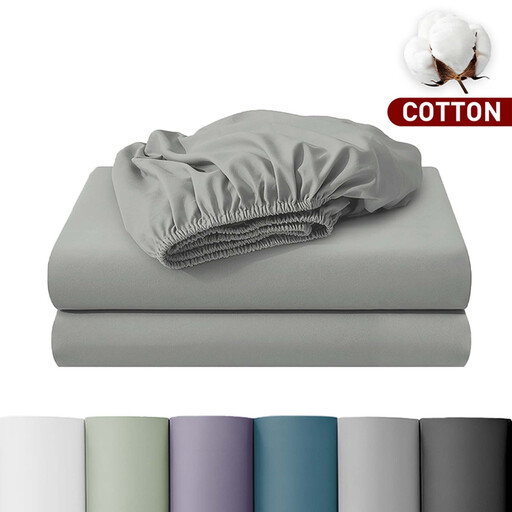
Why we chose it: Ideal for "Queen Size" beds (160x200 cm) with a thick mattress or a topper. It's specifically designed to solve the problem of a constantly slipping sheet.
It directly tackles the trap of a pocket that's too small. Its 30 cm depth is clearly highlighted, guaranteeing a perfect fit and an impeccable hold on high mattresses.
Its 100% cotton weave ensures good breathability for year-round comfort, while its deep elasticated pocket promises a perfectly made bed, effortlessly.
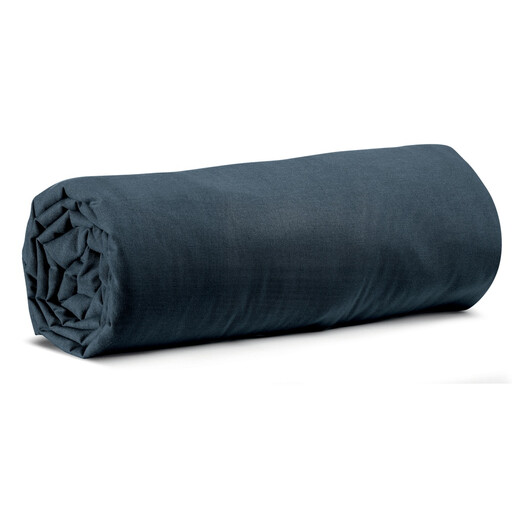
Why we chose it: For those who prioritise feel and aesthetics. The washed cotton offers immediate softness and a relaxed-chic look that fits perfectly into contemporary decor.
It goes beyond standard cotton by featuring washed cotton, a superior quality known for its suppleness. It combines this benefit with a deep 30 cm pocket, thus blending style with functionality.
Exceptional softness from the very first night, without needing multiple washes. Its deliberately crinkled appearance adds a touch of casual elegance.
Browse our complete selection of bed linen, chosen to meet our high standards for quality and comfort.
The key is to measure the height of your mattress. If it's 25 cm thick, don't buy a sheet with a 25 cm pocket. Always allow for extra room: opt for a pocket of at least 28 to 30 cm so that the elastic can wrap generously under the mattress. A deep-pocket fitted sheet is always the worry-free choice.
To put it simply: standard cotton is the versatile choice for everyday use. Percale, which is smoother and crisper, is ideal if you tend to get hot at night. Finally, jersey is stretchy, ultra-soft, and doesn't need ironing. It's the champion of convenience.
In Europe, quality is measured by the number of threads per cm?. A 57 threads/cm? weave is the standard for good quality for regular use. From 80 threads/cm? (as with percale), you're entering superior quality territory: the fabric is denser, softer, and more durable. Be wary of astronomical numbers that don't specify the type of cotton; it's sometimes a trick to mask low-quality threads.