
Livraison le jour même ou le lendemain

Qualité garantie

Débloquez vos offres de bienvenue: Livraison GRATUITE | Jusqu'à -80 % | 30 jours d'essai gratuits à JoyPlus
Téléchargez l'application
Choosing a new cotton bedding set can quickly become overwhelming. Between the promises of infinite softness, the technical jargon, and the wide price gaps, it's easy to get lost. Our mission: to help you see things more clearly. Let's forget the marketing speak and focus on the facts to make a truly informed choice. Here are the pitfalls to avoid and the criteria that really matter.
The home linen market is a jungle of marketing claims. Before you decide, beware of these two common misconceptions that often lead you astray.
To make the right choice, focus on these three key points. They will determine the comfort, durability, and look of your duvet cover and pillowcases.
The weave is what defines the fabric's drape and feel against your skin.
This is the most critical factor. Not all cotton fibres are created equal, and their length is the main indicator of quality. Long-staple cotton produces finer, stronger, and therefore much softer threads. This type of cotton pills less and retains its suppleness wash after wash, guaranteeing a soft bedding set for years to come.
A sizing mistake is all too common. For a double bed, the most common size in France is the 220x240 cm duvet cover. Always remember to check your duvet's dimensions before confirming your purchase. Don't overlook the practical details either: a button closure is often more durable than snaps, and hand slits (small openings at the top of the cover) will be a game-changer when it's time to put the duvet inside.
To help you see these criteria in action, here are a few options that meet different needs, all while upholding our standards for quality and safety.
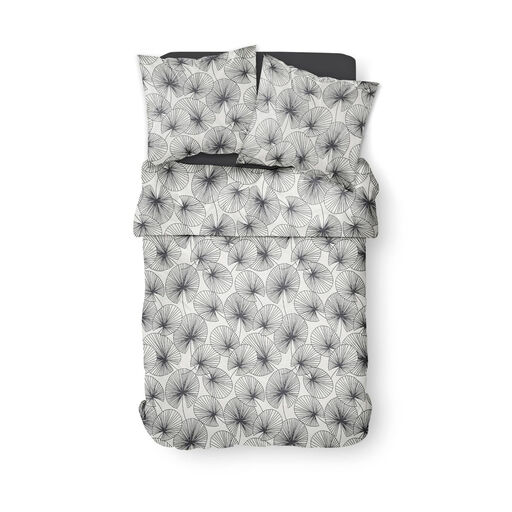
Our take: The quintessential smart choice for everyday use. This set is perfect for the master bedroom, a guest room, or a teenager's room. It checks all the boxes: comfort, durability, and safety.
It proves that 57 threads/cm? is plenty for true softness when the cotton is high-quality. Most importantly, its Oeko-Tex certification provides peace of mind, ensuring it's completely free of harmful substances.
100% quality cotton composition, Oeko-Tex label, and the details that make a difference (hand slits and a concealed button closure).
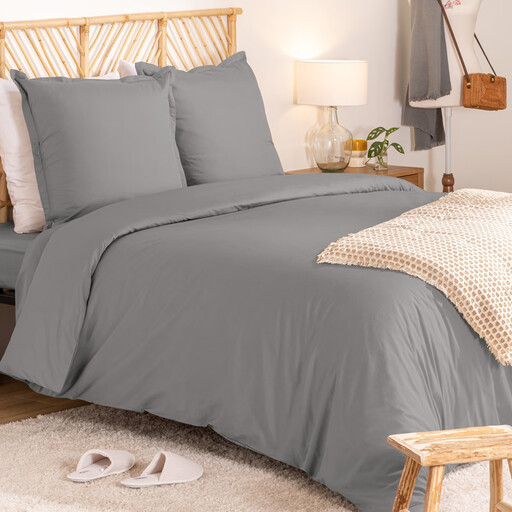
Our take: For anyone who dreams of that cool, lightweight feeling of hotel linen. Percale is a great ally for people who tend to get warm at night, thanks to its impeccable breathability.
It doesn't just settle for a vague "100% cotton" claim, but specifies "cotton percale". This guarantees a tight weave, a crisp feel, and an objectively superior quality.
Cool and lightweight feel, breathable and durable fabric, a very contemporary matte finish, and generous dimensions of 240 x 220 cm.
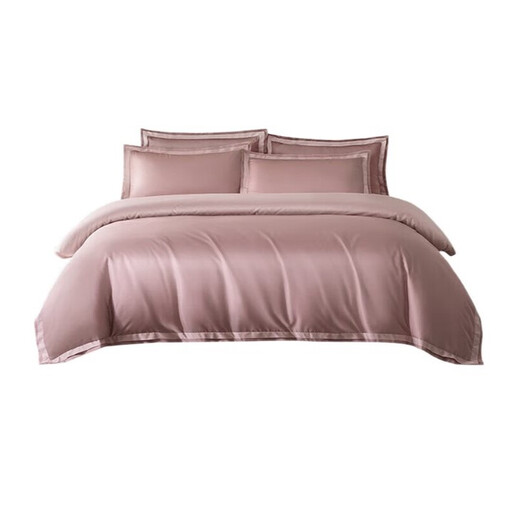
Our take: For those who prioritise softness above all else and seek a luxurious sleep experience. This is a true investment in the quality of your nights, with a softness that gets even better over time.
It highlights the ultimate criterion: fibre quality. The 100s long-staple cotton is a spec sheet in itself, guaranteeing a level of softness and strength that is in a class of its own, far beyond the simple question of thread count.
Exceptional, silky-soft feel, excellent breathability for four-season comfort, and enhanced durability (retains softness and colour wash after wash).
Discover other bedding sets that meet our criteria for quality, comfort, and safety.
Absolutely. A 100% cotton set with a 57 threads/cm? weave is an excellent baseline in the European market. It's a tight enough weave to ensure good longevity and a very pleasant softness, on one condition: that the quality of the cotton fibres is also high. It's the reliable and smart choice for everyday use.
It's all in the weaving technique. Cotton percale uses a simple, tight one-thread-over, one-thread-under weave, which gives it its matte finish and famous cool, "crisp" feel. Cotton sateen, on the other hand, uses a more complex one-thread-under, three-or-four-threads-over weave. This technique exposes more of the thread's surface, creating a silky, slightly shiny finish that feels warmer to the touch. In short: percale = cool and matte; sateen = silky and warm.
To preserve the softness of your linen, wash it at 40°C with similar colours. Avoid overloading the machine's drum to ensure a proper rinse. Using a tumble dryer on a low heat setting will help relax the fibres and soften the fabric. One last tip: limit the use of chemical fabric softeners. Over time, they can clog the fibres and reduce their absorbency.